A mother dreams of her child’s wedding being the happiest day of their life. However, Catherine’s good intentions have backfired, causing significant tension with her future daughter-in-law, Zoe. The trouble began with an email Catherine sent. She shared her side of the story, and we offered her some advice on how to handle the situation.
This is Catherine’s letter:
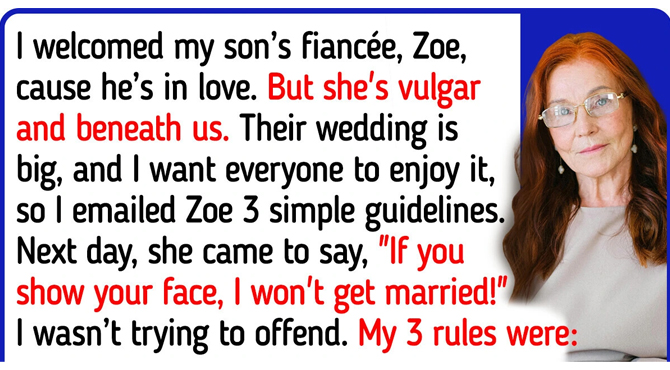
I welcomed my son’s fiancée, Zoe, into our family because he’s in love. But she’s vulgar and beneath us—and her family’s even worse.
The wedding is big and important, and I want everyone to enjoy it. So, I emailed Zoe 3 simple guidelines.
The next day, she came and said, “If you show your face there, I won’t get married!” I wasn’t trying to offend. I simply wrote that I had some rules. My 3 rules were:
1) Guest List Restrictions: Due to past behavior, Zoe’s uncle Steve and cousin Joey are not invited. This decision was made to ensure everyone’s safety and enjoyment.
2) Limited Plus-Ones for Zoe’s Family: To keep things manageable, Zoe’s family can only bring immediate family members. Friends and distant relatives are out.
3) Reception Seating Arrangements: To avoid conflict, certain members of Zoe’s family will be seated far away from the head table and our side of the family.
I’m convinced I wasn’t out of line-I was just being a protective mother who was trying to save her son’s wedding from becoming a joke.
Am I wrong for setting these boundaries? Catherine
Thanks for sharing your story with us, Catherine! Here are a few tips that can help you navigate through this situation.
Direct mediation with Zoe.
Arrange a calm and private meeting with Zoe to discuss the rules and the underlying issues directly. Explain that the intent behind the rules is to ensure a smooth and enjoyable wedding for everyone, not to offend or exclude. Acknowledge her concerns and be open to negotiating certain aspects of the rules if it helps resolve the tension.
Involve a neutral third party.
Consider bringing in a neutral mediator, such as a family therapist or a respected mutual friend, to help facilitate communication between you, Zoe, and possibly your son. This can provide an unbiased perspective and help manage emotions, making it easier to reach a compromise that everyone can accept.
Clarify the rules in a written agreement.
Send a follow-up email or letter detailing the rules with clear, specific explanations and justifications for each one. This can help mitigate misunderstandings and show that the rules are based on ensuring the wedding’s success rather than personal grievances. Make sure to express willingness to discuss any concerns.
Offer compromises for specific concerns.
If negotiations with Zoe fail, make a compromise and consider revising the guest list to accommodate as many of her family members as possible while still managing potential conflicts. For example, you could clearly outline specific seating arrangements to manage potential conflicts.
This approach shows flexibility and a desire to include her family without harming the event’s integrity.