When my mom died, something in me cracked wide open.
I was 14. One minute, she was helping me pick out nail polish for homecoming. Next, she was gone, like a candle blown out in the middle of a storm. There was no time to say goodbye, no last hug, no last words I could hold on to — just silence. And after the funeral, that silence stretched over our house like a shadow.
Dad tried.
He really did. He stopped cooking and started burning things, but he still tried. He’d sit with me at night sometimes, eyes rimmed red, and whisper, “We’re going to be okay, kiddo. I promise.”
But even he couldn’t mask the hollow space my mom left behind.
Two years later, he met someone new.
Her name was Eleanor. She had warm hazel eyes, a soft voice, and that kind of careful smile people wear when they know they’re stepping into someone else’s story. Dad called her “kind,” “patient,” and said she was “good for us.”
But I never liked her.
It wasn’t that she was mean or fake. Not exactly. She made lasagna on Wednesdays, said good morning like she meant it, and always asked me how school was going. Sometimes she left little notes in my lunchbox, things like “You’ve got this!” with a smiley face. Normal stuff. Thoughtful, even.
But it felt wrong.
She was stepping into a space that didn’t belong to her, acting as if it hadn’t already been filled.
As if my mom had never been there at all.
That’s what made my chest twist whenever she sat beside Dad on the couch, or when she hung a new photo on the wall. One that had her in it.
It wasn’t hate. Not exactly. It was more of a quiet, simmering resentment I didn’t know how to let go of. No matter how many times Dad said, “She’s not replacing your mom, Kristen,” it still felt as if she was standing in her place.
I kept my distance.
Polite nods. One-word replies. I stopped eating dinner with them most nights and stayed in my room with headphones on. I figured if I could ignore her long enough, she might get the hint. Maybe she’d leave. Or maybe I’d just stop caring. Either way, it felt safer than opening myself up again.
But a few nights ago, everything changed.
It was late. The kind of quiet where the clock ticking sounds like a drumbeat. I’d been tossing and turning, wrapped in a hoodie three sizes too big, scrolling on my phone to stay distracted from everything I didn’t want to think about.
Then I heard it.
The soft click of the front door.
I froze.
Footsteps. Careful. Slow. Like someone was trying not to be heard.
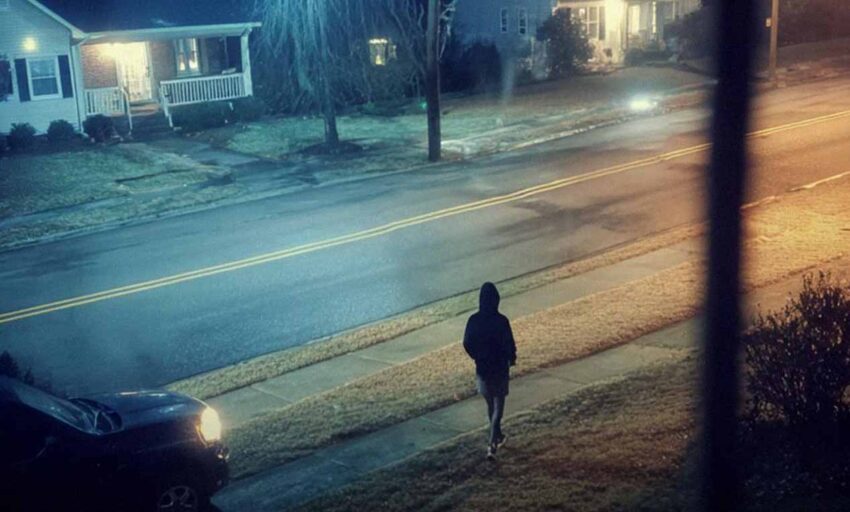
I pulled back my curtain just an inch and peeked outside. The porch light was off. Streetlamps cast long shadows across the sidewalk. And then I saw her — Eleanor — slipping down the front steps in a long coat, her hair pulled back in a loose braid.
She didn’t look around or hesitate.
She just walked, quiet and steady, down the road and into the dark.
Without thinking, I grabbed my sneakers, shoved my arms through my hoodie, and slipped out the back door like muscle memory. My heart pounded in my ears. Every crunch of gravel beneath my feet felt loud enough to wake the whole block, but she never turned around.
I followed from a distance.
Not too close. Just far enough to stay in the shadows. I couldn’t tell why. Curiosity? Suspicion? That nagging voice in my head whispering, See? She’s hiding something.
The streets were empty. A dog barked in the distance. Somewhere, a car door slammed. But she kept walking.
And then my stomach dropped.
I realized where she was going.
The cemetery.
My breath caught in my throat.
My steps faltered, just for a second. The wrought-iron gates loomed ahead, black and unmoving, the kind that squeaked when the wind blew too hard. Eleanor walked right through them without pausing. Like she’d been here before.
I followed, barely breathing.
The gravel path curved between rows of graves, each one like a frozen moment in time. My shoes crunched quietly as I moved behind her, staying low behind headstones, ducking when I had to.
She finally stopped.
Right in front of one grave.
I didn’t need to see the name to know whose it was.
My mother’s.
I froze behind a tree, the cold bark pressed against my fingertips. My chest felt tight, like I couldn’t take a full breath. My feet wouldn’t move.
And then… she stepped closer.
I squinted through the shadows, trying to make out what she was doing. Her back was to me, but she crouched slowly, not as if she were mourning, but as if she were reaching for something.
I wanted to run.
I wanted to scream. I wanted to demand answers.
But all I could do was watch.
Eleanor knelt in front of my mom’s grave, her coat pooling at her knees, her hands moving gently along the edge of the stone. I couldn’t see her face, but something about the way she moved made my throat tighten. It wasn’t rushed or dramatic. It was quiet, practiced.
Like she’d done this before.
She reached into her bag and pulled out a small towel, a bottle of water, and a plastic container. I watched as she poured the water onto the towel and began wiping the headstone in slow, careful strokes, as if she were tracing each letter with her fingers.
I didn’t move. I just stood there behind the tree, frozen, confused, and suddenly a little cold.
There was a part of me that wanted to storm up and yell, “What are you doing here?”
Another part — a smaller, shakier one — just wanted to understand.
Eleanor placed a single white lily at the base of the stone, right in the center, then sat back on her heels. I thought she might speak, maybe whisper something to my mom, the way people do in movies. But she didn’t. She just sat there, breathing in the silence with her hands resting in her lap.
It felt as if the world around us had gone still. No wind, no rustling leaves. Just the faint hum of distant traffic and the pounding of my heart in my ears.
I stepped out from behind the tree before I could second-guess myself.
The gravel shifted beneath my shoes, and she turned quickly, startled.
Her eyes met mine.
She didn’t speak at first. Neither did I. For a moment, we just stared at each other, both of us caught in a space we weren’t supposed to share.
“I didn’t mean to scare you,” I said, my voice barely above a whisper.
Eleanor blinked slowly, then gave the smallest nod. “You followed me.”
It wasn’t a question. More like a quiet realization.
“I saw you leave,” I admitted, stepping closer. “I didn’t know where you were going.”
Her shoulders rose with a breath and then sank.
She looked back at the grave.
“I come here sometimes,” she said softly. “When the house is quiet. Or when I can’t sleep.”
“But… why?” My voice cracked. “She wasn’t your — I mean…”
She didn’t look offended. Just tired. The kind of tired that lives in your bones.
“I know I’m not your mom, Kristen,” she said, still facing the headstone. “I’ve never tried to be. But I knew her.”
My heart thudded. “What?”
She finally turned to face me.
In the moonlight, her face looked different.
Softer, less guarded. I noticed faint lines around her eyes that I hadn’t seen before.
“I met your mother years ago,” she said. “Long before she got sick. We volunteered at the same shelter downtown. I was fresh out of college, trying to figure out what to do with my life. She… she had it all together. Or at least, she made it look that way.”
My stomach dropped. I tried to picture it — my mom, younger, happy, full of life — standing next to the woman I’d spent two years resenting.
“She helped me through a really bad time,” Eleanor went on. “When my dad passed away, I couldn’t get out of bed for days. Your mom showed up with soup and clean socks. I didn’t even ask. She just knew.”
She paused.
“I never forgot that.”
I didn’t know what to say. My feet felt rooted to the ground, and everything in me buzzed like static.
“I didn’t tell your dad when we met again,” she said quietly. “I didn’t think it mattered. It wasn’t planned. But when I realized who he was, and who you were, I didn’t know what to do.”
“So you just… kept it a secret?” My voice was harsher than I intended, but I couldn’t stop it. “You visited her grave without saying anything? You just—”
“I wasn’t trying to hide it,” she interrupted gently.
“I just… didn’t know how to explain it without making it worse. You already hated me.”
I flinched. The words hit harder than I expected.
She sighed and looked back at the grave. “Your mom meant a lot to me. She still does. Coming here… It’s my way of staying close to that time in my life. To her.”
For a long moment, all I could do was stare at the headstone. My mom’s name was carved into the smooth stone, quiet and final. The dates sat beneath it, untouched. Beside them were the flowers Eleanor had brought, carefully placed and still fresh.
She didn’t have to do this.
No one made her.
I sat down beside her, slowly, knees brushing the cold ground.
“I thought you were trying to replace her,” I said, barely able to get the words out. “I thought if I let you in, I’d lose what I had left of her.”
Eleanor didn’t say anything. She just listened.
“I don’t remember the last thing I said to her,” I whispered. “I was mad that she wouldn’t let me go to a party. I slammed the door. I never said sorry.”
A sharp ache crawled up my chest.
My throat burned.
“I know,” Eleanor said gently. “She told me about you. About how strong you are. How much you loved to read. She said you had a fierce little heart.”
A single tear slipped down my cheek, and I didn’t bother wiping it away.
“She said you were going to change the world someday.”
My shoulders shook.
“I miss her,” I choked.
“I do too,” she whispered.
We sat there for what felt like hours, the cold seeping into my jeans, the silence between us no longer uncomfortable but simply shared.
Finally, Eleanor stood and brushed off her coat. “Do you want to come back here together sometime?”
I nodded.
And for the first time since she moved in, I meant it.
As we walked back home, side by side beneath the dim glow of the streetlamps, something inside me loosened. It felt like a knot I had been holding onto for too long. I didn’t reach for her hand, but I didn’t walk away either.
We didn’t speak.
We didn’t need to.
It’s been a few weeks since that night at the cemetery.
The memory of it still lives in the quiet moments. When I walk past the photo shelf in the hallway, or when I hear Eleanor humming softly in the kitchen while stirring pasta. Not much has changed on the outside. She still signs my school notes, still asks how my day was, and still folds my laundry with that weird habit of turning every sock inside out.
But inside me?
Something shifted.
We haven’t had some grand heart-to-heart. There was no tearful hug in the rain, no dramatic breakthrough where everything suddenly made sense. That’s not how real life works. But something settled in me that night. Like the walls I’d built so high had finally cracked enough to let a little light through.
I still miss my mom every single day.
That doesn’t go away. Not when I laugh at something and instinctively look for her reaction. Not when I ace a test and realize she’s not there to say, “I’m proud of you.”
Grief isn’t a moment.
It’s a season that changes shape but never fully leaves.
But I think my heart has room for more than just missing her now.
The next time Eleanor went to the cemetery, she didn’t go alone.
I asked her if we could pick out fresh flowers together. We stood in the aisle at the florist’s for 20 minutes arguing over tulips or lilies.
In the end, we picked both.
And we walked side by side through the gates, no secrets between us this time.
When we reached my mom’s grave, Eleanor stepped back and let me kneel first.
I cleared the old leaves away, placed the bouquet carefully at the base, and whispered, “I still think about you every day.”
Then I looked up, and Eleanor was already kneeling beside me, silent but steady.
We stayed there, not as strangers, not as replacements, but as two people who loved the same woman in different ways.
And somehow, that felt like enough.
Maybe even more than enough.