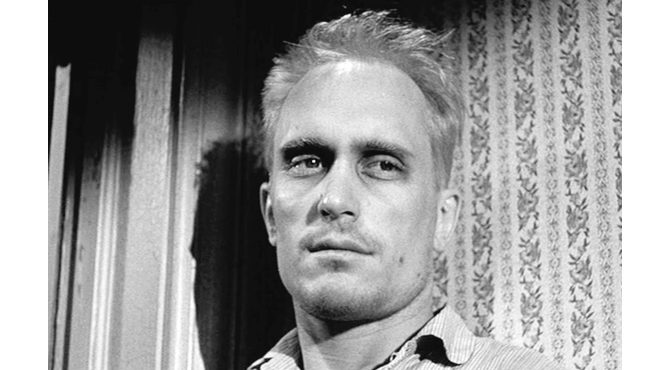
Robert Duvall, the steely-eyed actor whose performances in the first two Godfather films, Apocalypse Now, The Great Santini, Lonesome Dove and The Apostle made him one of the finest actors of any generation, has died. He was 95.
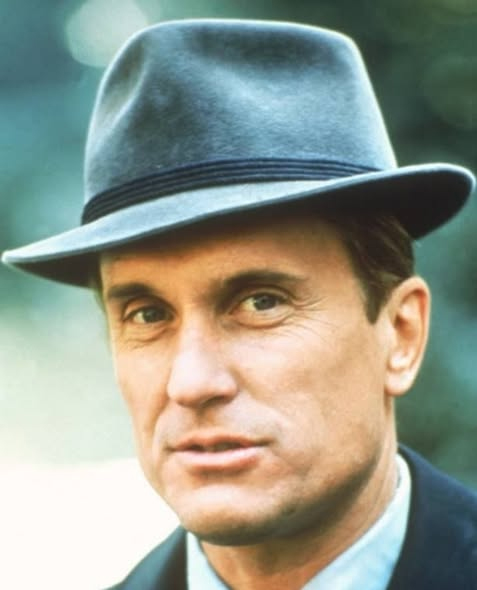
Duvall, who received an Academy Award — one of his seven Oscar nominations — for his performance as an alcoholic country singer in Tender Mercies (1983), died Sunday at home on his Virginia ranch “surrounded by love and comfort,” his wife, Luciana, announced.
“To the world, he was an Academy Award-winning actor, a director, a storyteller. To me, he was simply everything,” she said in a statement. “His passion for his craft was matched only by his deep love for characters, a great meal, and holding court. For each of his many roles, Bob gave everything to his characters and to the truth of the human spirit they represented. In doing so, he leaves something lasting and unforgettable to us all. Thank you for the years of support you showed Bob and for giving us this time and privacy to celebrate the memories he leaves behind.”
Duvall distinguished himself as an actor of major promise — even though he didn’t have a line of dialogue — when he portrayed the reclusive Boo Radley in To Kill a Mockingbird (1962). Horton Foote, the film’s screenwriter, personally recommended him for the role after seeing Duvall onstage in New York a few years earlier in Foote’s The Midnight Caller.
Foote was a major influence on Duvall; he also wrote the screenplays for Tender Mercies and another excellent Duvall film, Tomorrow (1972), and the actor starred in The Chase (1966), an adaptation of a Foote novel and play.
So too was director Francis Ford Coppola, who first cast Duvall in The Rain People (1969), then hired him to play the trusted family lawyer Tom Hagen in The Godfather (1972) and The Godfather Part II (1974) and the surfing-crazy Lt. Col. Kilgore in Apocalypse Now (1979).
Duvall’s line in Apocalypse Now, “I love the smell of napalm in the morning,” became the stuff of movie legend. With jets flying overhead and shells exploding nearby, the scene, shot in the Philippines, was done, amazingly, in one take.
“There wasn’t any time to think,” Duvall told Roger Ebert in 1983. “I heard over the intercom that we only had the use of the jets for 20 minutes. One flyby and that was it. I just got completely into the character, and if he wouldn’t flinch, I wouldn’t flinch.”
However, in a lifetime of great roles, Duvall’s favorite was playing ex-Texas Ranger Augustus McCrae in the 1989 CBS miniseries Lonesome Dove, based on the Larry McMurtry Pulitzer Prize-winning novel. He got the part when James Garner, the first choice, said he wouldn’t be able to ride a horse for long stretches. (Duvall, on the other hand, was an expert rider, having spent summers as a kid on his uncle’s ranch in Montana.)
“I walked into the wardrobe room one day on Lonesome Dove and said, ‘Boys, we’re making the Godfather of Westerns,’” he told Stephen Colbert in 2021. “They were the two biggest things in the last part of the 20th century, I think.”
A private, unpretentious person who eschewed the Hollywood limelight, the longtime Virginia resident composed and performed his own country ballads for his character, Mac Sledge, in his understated Tender Mercies performance.
Duvall also received Oscar noms for his work as Hagen and Kilgore and for portraying tough-as-nails Marine pilot Bull Meechum in The Great Santini (1979); for starring as Pentecostal preacher Eulis “Sonny” Dewey in The Apostle (1997), which he also wrote, sang in, directed and financed; for playing the vicious but somehow charming corporate lawyer Jerome Facher in A Civil Action (1998); and for appearing as small-town magistrate Joseph Palmer, the father of Robert Downey Jr.’s character, in The Judge (2015).
As a quick-triggered outlaw, Duvall engaged John Wayne in a memorable shootout in True Grit (1969), and he stood out as the incompetent Major Frank Burns in Robert Altman‘s MAS*H (1970), as an automaton in George Lucas’ THX 1138 (1971) and as Mississippi cotton farmer Jackson Fentry in Tomorrow.
He played Dr. Watson in The Seven Per-Cent Solution (1976), a ruthless TV executive in Network (1976), a sportswriter in The Natural (1984) and a NASCAR crew chief in Days of Thunder (1990). As cops, he was in his element in The Detective (1968), True Confessions (1981) and Colors (1988).
More recently, Duvall starred as a Texas rancher in the family drama Wild Horses (2015), appeared in an adaptation of John Steinbeck’s In Dubious Battle (2016), played a Chicago power broker in Steve McQueen’s Widows (2018) and had cameos in 12 Mighty Orphans (2021) and Adam Sandler’s Hustle (2022).
Whether it was a blockbuster or an indie film (he was an early champion of Robert Redford‘s Sundance Film Festival, trekking to Park City before it became the “in” thing to do), Duvall without fail delivered finely honed performances, mixing in layers of individuality and never resorting to stock portrayals.
“I had my own theory within a scene, where you trick yourself: To get a result that’s legitimate, let the process take you to the result, rather than just going to the result,” he said in January 2016. “Be willing to start from zero and say, ‘Well, let’s see what happens,’ rather than the old-school, ‘Give me something.’”
Robert Selden Duvall was born in San Diego on Jan. 5, 1931. His father, a career military man who eventually became an admiral, moved the family to the East Coast when he was 10, and the Duvalls resided mostly in the Annapolis, Maryland, area.
Following high school, Duvall enrolled at Principia College in Elsah, Illinois, where he majored in drama. He played an adult in a production of Arthur Miller’s All My Sons and “was like totally at peace,” he said in a 2013 interview with Vanity Fair. “I thought, ‘Oh, wow, maybe I have something here.’”
After two years in the Army, he moved to New York in 1955 and was accepted to study at Sanford Meisner’s Neighborhood Playhouse. While paying his dues, Duvall roomed in a sixth-floor apartment at 109th Street and Broadway with another aspiring actor, Dustin Hoffman. They were pals with another wannabe, Gene Hackman, whose wife cooked for them all the time.
“The feeling was that Bobby was the new Brando. I felt he was the one, and probably I wasn’t,” Hoffman said in the Vanity Fair piece.
Duvall landed roles off-Broadway and on TV on Playhouse 90 and Naked City before Foote remembered him from Meisner’s production of The Midnight Caller and recommended Duvall, then 31, to play the simple-minded Boo in To Kill a Mockingbird.
He quickly followed up with a number of roles, including a small turn as a cab driver in Bullitt (1968). In the years that followed, Duvall delivered eclectic performances in such fare as Joe Kidd (1972), The Outfit (1973), Breakout (1975) and The Killer Elite (1975).
When he wrapped Lonesome Dove, he said: “I can retire now, I’ve done something I can be proud of,” he told American Cowboy magazine. “Playing Augustus McCrae was kind of like my Hamlet.”
His other movies include The Eagle Has Landed (1976), The Greatest (1977), The Betsy (1978), The Stone Boy (1984), The Lightship (1985), Let’s Get Harry (1986), The Handmaid’s Tale (1990), A Show of Force (1990), Rambling Rose (1991), Convicts (1991), Wrestling Ernest Hemingway (1993), Falling Down (1993), Geronimo: An American Legend (1993), The Paper (1994), Sling Blade (1996), Gone in Sixty Seconds (2000), John Q (2002) and Assassination Tango (2002), which he also wrote, directed and produced.
In 1992, Duvall formed Butcher’s Run Films, which produced A Family Thing (1996) and the 1996 TNT telefilm The Man Who Captured Eichmann, in which he played the merciless Nazi Adolph Eichmann.
Survivors include his fourth wife, an Argentina native who acted alongside her husband in Assassination Tango and Wild Horses. He did not have any children.