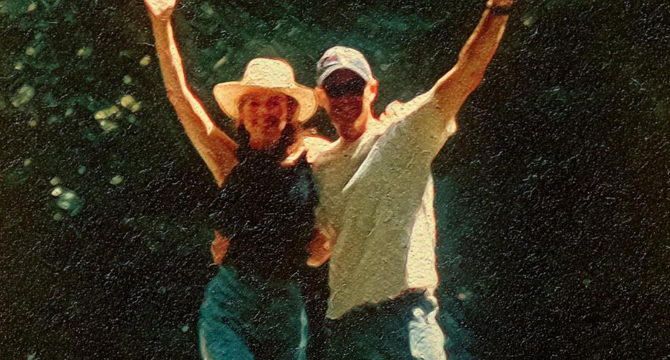
The last time I saw my parents was 17 years ago, when they were preparing for a trip to go boating together in the mountains.
I was five.
At five years old, you do not understand fear the way adults do. You feel it in the air. You taste it in the silence between words.
Even then, something felt off.
They were nervous — too nervous. Boating was their thing. They did it almost every weekend. Usually, they took me with them.
I would sit between them in the small blue boat, my life jacket too big for my tiny body, my mom laughing when I dipped my fingers in the water. My dad would wink at me and say, “Future captain right here.”
But that time was different.
Mom kept checking her phone. Dad paced near the kitchen counter, glancing at the clock every few minutes. They spoke in low voices that stopped whenever I walked into the room.
I remember tugging at Mom’s jeans.
“Can I come?”
She knelt in front of me and smoothed my hair back. Her smile was tight, stretched thin like paper. “Not this time, Gwen. Grandma Lily misses you.”
That part did not make sense. Grandma lived only 20 minutes away. She saw me all the time.
Dad picked up my small pink backpack and forced a cheerful tone. “Just a little trip for Mom and Dad, okay? We’ll be back before you know it.”
They dropped me off at my grandmother’s house.
I never saw them again.
For years, Grandma told me they had to leave on an emergency work assignment that would take a long time.
She said it with such certainty that I believed her.
“Your parents love you very much,” she would remind me every night as she tucked me into bed. “Sometimes grown-ups have responsibilities we can’t explain.”
I clung to that explanation.
At six, I waited by the window every evening, convinced I would see their car pull into the driveway. At seven, I wrote them letters and kept them in a shoebox under my bed.
At eight, I stopped asking when they were coming home because I could see the grief flicker in Grandma’s eyes every time I did.
When I turned ten, she finally admitted the truth: my parents had gone missing.
I remember the exact day.
It was raining, the kind of steady rain that makes the world feel smaller.
I was sitting at the kitchen table doing homework when she sat across from me, her hands wrapped around a mug of tea she did not drink.
“Gwen,” she said softly, “there’s something I need to tell you.”
Her voice trembled. I had never heard it tremble before.
She told me about the boat trip and how they never came back. She described the search teams, the helicopters circling overhead, and the days that stretched into endless weeks. There were no signs of struggle, no wreckage pulled from the water, no bodies recovered.
No bodies. No answers.
I stared at her, trying to understand what “missing” meant.
“So… they’re coming back?” I asked.
Her eyes filled with tears. “I don’t know, sweetheart.”
That was the moment something inside me shifted. Hope turned into a quiet, aching doubt.
I grew up believing they were dead.
Not officially. There was no funeral. No gravestones to visit. But in my heart, I buried them because it hurt less than waiting.
Grandma Lily raised me with a strength I did not appreciate until I was older. She worked long hours at the local library, came home exhausted, and still made sure there was dinner on the table.
She never missed a school play or a parent-teacher conference.
When I had nightmares about dark water and empty boats, she would sit beside my bed and hold my hand until I fell asleep.
As I got older, I started to notice the lines on her face deepening. The way she sometimes stared at old photographs of my parents when she thought I was not looking.
By the time I was 16, I stopped talking about them altogether. It felt easier to pretend I was just another girl raised by her grandmother. I focused on school. On friends. On building a future that did not revolve around a mystery.
Still, every time I saw a woman with dark hair like my mom’s or a man with my dad’s broad shoulders, my chest tightened.
Seventeen years passed.
I am 22 now.
A few days ago, I flew to Miami with friends for vacation. It was my first real trip without Grandma, without responsibilities. The air was warm and salty when we stepped off the plane. Palm trees lined the streets. Everything felt bright, loud, and alive.
Loud music, warm air, neon lights — it felt good to forget everything.
We spent our days on the beach and our nights exploring the city. I laughed more in those three days than I had in months. For once, I was not the girl with the tragic backstory.
We were dancing at a bar when someone bumped into me.
I turned around.
And my heart stopped.
It was my mother.
She looked older, of course. Seventeen years have a way of leaving their mark. But I would have recognized her anywhere. Her eyes were still that soft hazel I used to study when she read me bedtime stories.
The small scar on her arm was still there, the one she got when she burned herself baking cookies with me in the kitchen. And on her shoulder, the delicate bluebird tattoo she got in her 20s rested exactly where I remembered it.
She laughed lightly and kept dancing. “Sorry, sweetie! Didn’t mean to!”
Her voice.
I felt the room spin.
She did not recognize me.
But I knew.
My body froze. The music faded into a dull hum. The crowd blurred around us. I could not breathe. I could not move.
It was her.
The world went silent around me. I stood there, tears streaming down my face.
Seventeen years of grief, unanswered questions, and birthdays spent wishing on impossible hopes crashed into me all at once.
She was alive.
She was here.
She noticed and walked back toward me.
“I’m really sorry, girl,” she said gently. “Did I hurt you?”
Her expression was kind. Concerned. The way you would look at a stranger you accidentally bumped into.
A stranger.
My throat tightened. I wanted to scream, “Mom.” I wanted to throw my arms around her and ask where she had been, why she left, and how she could stand in front of me like this and not see me.
But I could not get the word out.
All I could do was stare at her, my hands shaking, my heart pounding so loudly I thought she might hear it.
Seventeen years ago, my parents disappeared during a boat trip in the mountains.
And now my mother was standing in front of me, alive, asking if she had hurt me.
I swallowed, forcing air into my lungs.
“No,” I managed to whisper. “You didn’t hurt me.”
She offered a small, apologetic smile. Up close, I could see faint lines around her eyes. She looked healthy. Rested. Nothing like someone who had survived a tragic accident in the mountains.
“Are you sure?” she asked, tilting her head. “You look like you’ve seen a ghost.”
If only she knew.
“I just… thought you were someone else.” My voice shook, and I hated that I sounded like a child again.
She laughed softly. “Well, I hope I’m not your evil twin.”
The casual joke pierced me. I searched her face for recognition, for a flicker of memory. There was none. Just polite concern.
“Can I ask you something?”
“Sure,” she replied easily.
“What’s your name?”
She did not hesitate. “Anna.”
The name hit me like ice water.
Anna.
Not Hannah.
She extended her hand.
I stared at her hand but did not take it.
“You’re not from around here, are you?” she asked gently.
“No,” I said. “I’m visiting.”
“Same. I moved here about ten years ago.” She smiled again, but this time it felt guarded. “Best decision I ever made.”
Ten years ago.
That would have made me 12 years old.
My chest tightened. “Did you ever live in North Carolina?”
Her eyes flickered. It was quick, almost invisible, but I saw it.
“I’ve lived in a lot of places,” she replied, brushing it off. “Why?”
My heart pounded. “Did you ever go boating in the mountains?”
Her expression changed. The warmth drained from her face.
“I think you’re confusing me with someone else,” she said, her voice cooler now.
“I’m not,” I whispered.
She took a small step back. “Listen, I’m sorry if I remind you of someone. That must be hard.”
“Your name isn’t Anna,” I said, the words trembling out of me. “It’s Hannah.”
For a second, the world stood still.
Her lips parted slightly, and something in her eyes shifted. Fear.
“I don’t know what you’re talking about.”
“Yes, you do.” My tears returned, but I did not wipe them away. “Seventeen years ago, you and Dad went on a boating trip in the mountains. You dropped me off at Grandma Lily’s house. You said you’d be back soon.”
She went pale.
“I was five,” I continued, my voice breaking. “You told me Grandma missed me.”
She looked around, as if searching for an escape. The music was loud again, people laughing and moving around us, unaware that my entire world was collapsing.
“Gwen?” she whispered.
Hearing my name in her voice shattered whatever fragile strength I had left.
“You do remember.”
She closed her eyes briefly. When she opened them, the woman who had called herself Anna was gone. My mother stood in front of me.
“I can’t do this here,” she said under her breath. “Come outside.”
I followed her through the crowd, my legs weak.
The humid Miami air hit us as we stepped onto the sidewalk. The neon lights felt harsh now.
She turned to face me, wrapping her arms around herself.
“You’re not supposed to be here.”
“I’m not supposed to be here?” I repeated, disbelief flooding me. “You disappeared. You let me think you were dead.”
Her jaw tightened. “We didn’t have a choice.”
“We?” I asked. “Where’s Dad?”
She looked away.
“Where is he?” I demanded.
“He’s alive,” she said quietly.
Alive.
The word echoed in my head.
“He’s alive?” I stepped closer. “So, both of you just decided to vanish? To abandon your five-year-old daughter?”
Tears filled her eyes, but I did not feel sorry for her.
“It wasn’t supposed to happen like that. Your father got involved with people he shouldn’t have. There were debts. Serious ones. We were threatened, Gwen. Not just us. You.”
My stomach twisted.
“They told us if we didn’t disappear, they would come after our family. After you. Faking our deaths was the only way to keep you safe.”
I stared at her, trying to process every word.
“So you left me,” I said slowly. “You left me to grow up without parents. You let Grandma struggle alone. You let me believe you were dead.”
“We thought it would be temporary,” she insisted. “A few years at most. But the situation got worse. We had to change our names. Move constantly. We couldn’t contact anyone without risking exposure.”
“You could have watched from a distance,” I whispered. “Sent a letter. Something. Anything…”
She shook her head.
“We were monitored at first. We couldn’t take that chance.”
I thought of Grandma Lily sitting at the kitchen table, hands wrapped around a mug of tea. Of the rain tapping against the windows as she told me my parents were missing.
“Grandma knew?” I asked suddenly.
My mother hesitated.
“She knew we were alive,” she admitted. “We told her the truth before we left. She agreed it was safer if you believed we were gone.”
The betrayal hit harder than anything else.
“She lied to me for seventeen years.”
“She protected you,” Mom said softly.
“No,” I replied. “She protected YOU.”
Silence settled between us, heavy and thick.
“I never stopped loving you,” she said finally, her voice breaking. “Not for a single day.”
I searched her face for the mother who used to braid my hair, who sang off-key in the kitchen. I could see glimpses of her. But I also saw a stranger who had built a whole new life without me.
“Does Dad live here too?”
She nodded.
“A few hours away.”
“And you were just… dancing tonight? Like nothing happened?”
Her expression crumpled. “I’ve spent 17 years looking over my shoulder. Trying to survive. I don’t know how to be anything else.”
I wiped my cheeks. My tears were slowing now, replaced by a hollow ache.
“All this time, I thought you were dead. I grieved you. I defended you when people said maybe you ran away. I told myself you would never choose to leave me.”
She reached for my hand. This time, I let her hold it.
“We thought losing us would hurt you less than losing your life.”
I pulled my hand back gently.
“You should have trusted me with the truth one day,” I said. “When I was older. You took that choice from me.”
She nodded, unable to argue.
“What happens now?” she asked cautiously.
I looked at the city around us, bright and alive, so different from the quiet life I had built with Grandma.
“I don’t know,” I admitted. “You don’t get to just step back in as if nothing happened.”
“I understand,” she whispered.
For the first time that night, I felt something other than shock. I felt clarity.
They had left to protect me. Maybe that was true. Maybe it was not. But the little girl who waited by the window every night had grown up.
“I need time,” I said firmly. “If you really care about me, you’ll give me that.”
She nodded. “Anything.”
I took a step back, then another.
“I’m not five anymore,” I told her. “You don’t get to decide my life for me.”
As I walked away, my heart ached in a way I could not fully name. My parents were alive. The mystery that shaped my entire childhood had an answer.
But answers do not erase pain.
That night, under the neon lights of Miami, I realized something important.
They had disappeared to save me.
Now I had to decide whether I could ever let them back into my life.