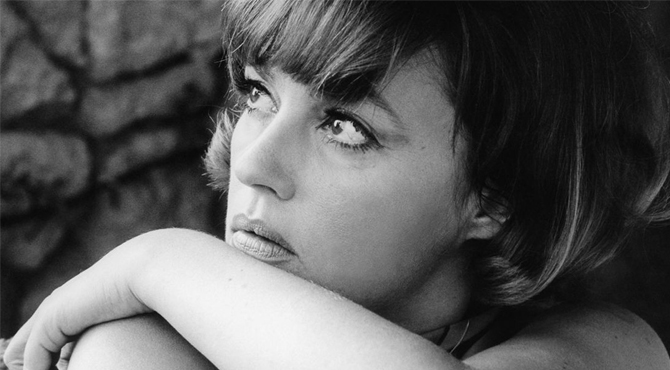
Some artists perform. Some artists entertain. And then there are those rare souls who transform the screen into something deeply human — fragile, mysterious, intelligent, aching, unforgettable. Jeanne Moreau belonged to that rare category.
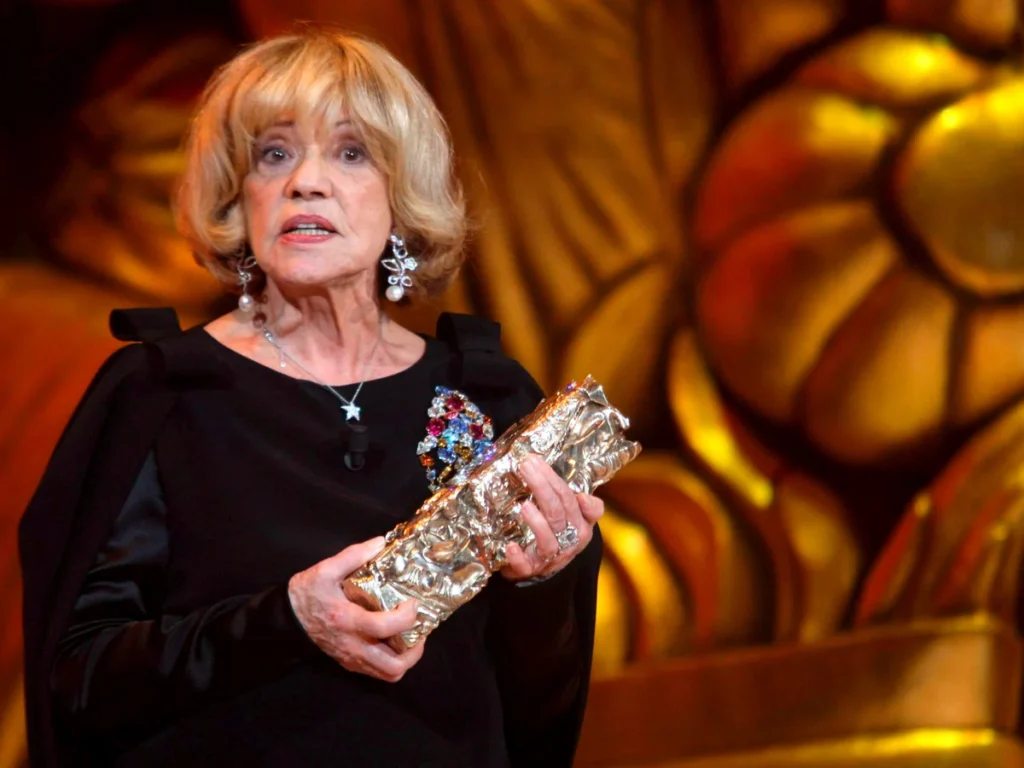
She was not simply an actress. She was atmosphere. Presence. A voice that carried history, longing, rebellion, seduction, and sorrow all at once. When Jeanne Moreau appeared on screen, cinema itself seemed to slow down and breathe differently.
Today, we remember not only a legendary performer, but a woman who changed the language of film forever. A woman who made complexity beautiful. A woman who proved that intelligence could be magnetic, silence could be louder than dialogue, and imperfection could be more powerful than glamour.
From the smoky streets of Paris to the grand stages of world cinema, Jeanne Moreau became the face of artistic freedom. She inspired generations of filmmakers, writers, actors, and dreamers — not by chasing stardom, but by chasing truth in every role she played.
Her legacy does not fade because her work was never tied to trends. It was tied to emotion. To humanity. To courage.
And that is eternal.
There are actors who become famous, and then there are actors who become immortal. Jeanne Moreau was immortal long before the world realized it.
Born in Paris in 1928, she emerged from post-war French culture with a spirit that could not be contained by conventional cinema. At a time when many actresses were expected to fit into narrow definitions of beauty or femininity, Moreau shattered expectations completely. She was intellectual without arrogance, sensual without performance, vulnerable without weakness. She carried contradictions naturally — and that is what made her mesmerizing.
The camera loved her because she never tried to dominate it. She simply existed truthfully within a moment. Her eyes could express exhaustion, passion, loneliness, danger, tenderness, and irony all in the same scene. Few performers in cinematic history possessed that kind of emotional depth.
Her collaborations with some of the greatest directors in history became landmarks of world cinema. In Jules and Jim, directed by François Truffaut, she gave the world one of the most iconic performances ever captured on film. Catherine — wild, free, impossible to define — became more than a character. She became a symbol of freedom itself. Jeanne Moreau did not merely act the role; she embodied an era of emotional revolution.
And then there was Elevator to the Gallows by Louis Malle, where she wandered through rainy nighttime streets with heartbreak written across her face while the haunting music of Miles Davis played like a pulse beneath the film. Those scenes remain some of the most hypnotic moments in cinema history. No dramatic speeches. No exaggerated emotion. Just Jeanne Moreau walking through darkness — and somehow revealing the entire human condition.
She worked with giants because giants recognized greatness. Orson Welles deeply admired her talent. Michelangelo Antonioni, Luis Buñuel, Jean-Luc Godard, and countless others understood that Jeanne Moreau brought something rare to cinema: unpredictability. She never seemed manufactured. She felt alive.
What made her extraordinary was not only her beauty or artistry, but her fearlessness. She refused to become trapped inside one image. She embraced morally complicated women, emotionally damaged women, passionate women, aging women, lonely women — real women. At a time when the film industry often reduced female characters to fantasies, Jeanne Moreau insisted on humanity.
She also possessed one of the most unforgettable voices in cinema — smoky, intimate, reflective. When she spoke, it felt less like dialogue and more like memory. Her voice carried experience. It carried intelligence. It carried time itself.
Beyond acting, she became a symbol of artistic independence. She directed films, sang, wrote, and remained fiercely devoted to creativity throughout her life. She represented a generation of European artists who believed cinema could be literature, philosophy, confession, and poetry all at once.
Yet despite the acclaim, there was always something elusive about her. Jeanne Moreau never fully explained herself to the world, and perhaps that mystery was part of her magic. Great artists leave room for interpretation. They do not hand us answers; they hand us emotions.
Watching her films today still feels astonishingly modern. Younger audiences continue discovering her work and realizing how contemporary she remains. That is the mark of true artistry — timelessness. She never belonged to one decade because human emotion never belongs to one decade.
Jeanne Moreau showed us that strength can be quiet. That vulnerability can be powerful. That elegance is not perfection, but authenticity. She taught cinema how to feel more deeply.
When news of her passing came in 2017, it felt as though the world had lost not just an actress, but an entire era of artistic courage. Yet legends do not disappear. They remain alive in every frame they touched, every story they transformed, every artist they inspired afterward.
And Jeanne Moreau remains everywhere in cinema.
In every fearless performance.
In every complicated female character allowed to exist fully.
In every filmmaker brave enough to embrace ambiguity.
In every black-and-white close-up where emotion speaks louder than words.
She left behind more than films. She left behind a philosophy of art: be truthful, be daring, be human.
So today we honor Jeanne Moreau not with sadness alone, but with gratitude. Gratitude for the beauty she created. Gratitude for the boundaries she broke. Gratitude for the honesty she brought to the screen.
The lights dim.
The projector hums.
A face appears in black and white.
A gaze full of mystery meets ours across time.
And suddenly, cinema feels alive again.
Rest in eternal elegance, Jeanne Moreau.
You were never merely watched.
You were felt.