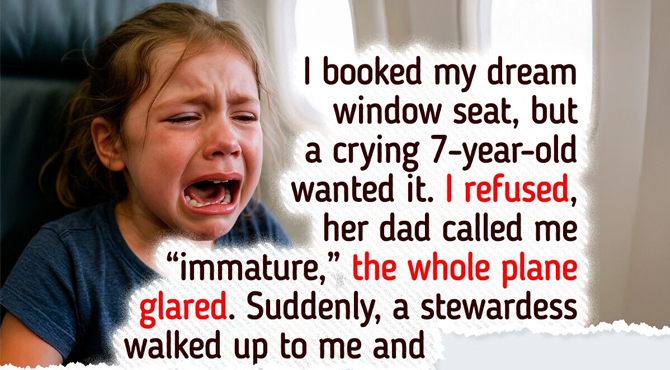
Sandra boarded her long flight expecting nothing more than a few quiet hours by the window. But the peace didn’t last—soon, a determined child insisted that her reserved seat should be his. Sandra refused to give in, standing her ground firmly. She thought that would be the end of it… but what happened next took an unbelievable turn that no one on the plane expected.
Sandra shared her story in a letter
I had carefully chosen a window seat, excited to enjoy the view thousands of feet above the ground. But soon after takeoff, the 7-year-old girl sitting next to me began to cry. She wanted to see outside, and her father asked me to switch seats with her. When I refused, he snapped: “You’re a grown woman, but still very immature.” His words stung, but I stayed firm. After all, I had paid for that seat.
The girl’s crying only grew louder, filling the entire cabin with tension. Passengers were staring, her father kept glaring,
and I felt like the villain in a story I never asked to be part of. Then, unexpectedly, a stewardess came over and asked me to follow her. For a moment, my heart sank-was I about to get in trouble for refusing to move?
But instead, she leaned in and quietly made me an offer I never expected: if I gave up my seat to the child, I could move to an empty business class seat at the front. Shocked but thrilled, I immediately agreed. I gathered my things, walked past the rows of curious passengers, and settled into my new, much more comfortable seat.
In the end, it worked out for everyone: the spoiled child got her window seat, and I got an unexpected upgrade. Still, I stand by my choice. I paid for a window seat, and I don’t believe I should have given it up for anyone-even a child.
So, what do you think? Was I wrong to stand my ground, or was I right?
Sandra
Hi Sandra! Thanks for opening up and sharing your story. We’ve put together some tips that might help anyone who finds themselves in a similar situation.
Stand by Your Rights
If you’ve paid for a specific seat, you absolutely have the right to keep it. Choosing a seat—whether it’s by the window for the view, the aisle for more freedom, or near the front for convenience—is part of what you pay for when booking your ticket. Don’t let anyone make you feel guilty for wanting to sit where you planned.
Of course, it’s important to stay polite when refusing. A calm but firm “I’m sorry, but I booked and paid for this seat” is enough to set clear boundaries without escalating the conflict. Remember, saying no to an unreasonable request doesn’t make you selfish—it just means you’re standing up for what you fairly deserve.
In fact, giving in to pressure when you don’t want to can leave you uncomfortable and resentful for the entire flight. That’s not fair to you, especially when air travel is already tiring. Holding your ground respectfully shows confidence, and sometimes even earns the support of other passengers or the crew.
Don’t engage in arguments with emotional people.
When the father insulted you by calling you “immature,” you did the right thing by not escalating the situation. Engaging with people who use guilt trips and personal attacks only fuels their sense of entitlement.
If someone tries to pressure you into doing something, staying neutral and disengaging is often the best way to maintain control of the situation.
Next time, consider noise-canceling headphones.
While you stood by your decision, the crying child made the flight stressful. If you fly often and want to avoid similar situations in the future, investing in noise-canceling headphones could help you completely block out unnecessary drama. That way, even if someone throws a tantrum, you won’t be affected by it—and you can enjoy your window seat in peace.
Involve the Flight Crew When Necessary
Flight attendants are trained to handle disputes and usually know the best way to defuse tension. If the situation becomes uncomfortable or the other party won’t back down, don’t hesitate to call for assistance. Crew members can step in as neutral mediators, and sometimes they’ll even find solutions that benefit you. By letting professionals manage the situation, you protect yourself from unnecessary stress and avoid direct confrontation.