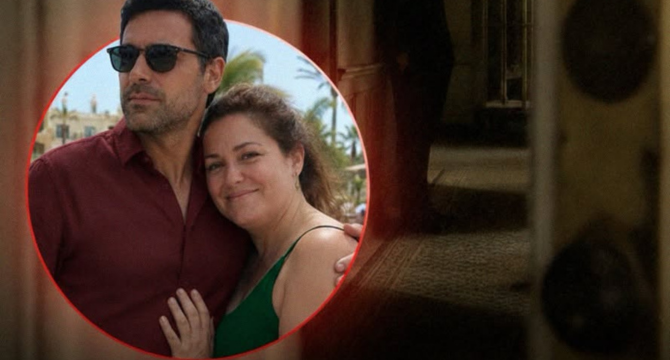
My husband told me this vacation was supposed to save our marriage.
He said it like he was offering me something fragile with both hands. Like if he held it carefully enough, it would not break before it got to me.
“We need a reset,” Daniel said when he booked the resort.
“No work. No phones at dinner. Just us.”
We had been married 14 years by then. Long enough to know each other’s coffee order, bad moods, and the exact kind of silence that means something is wrong. Ours had become that last kind. Not explosive. Not dramatic. No cheating scandals. No plates thrown. No screaming in kitchens.
Just distance.
A cold drift.
We had become two people who still shared a bed but somehow stopped reaching across it.
So when he surprised me with a week at a luxury beachfront resort, I let myself believe him. I let myself think maybe this was what we needed. Sunlight. Ocean air. Expensive sheets. Maybe enough beauty could soften whatever had grown hard between us.
For the first two days, it almost worked.
Daniel was warm in a way I had not seen in years. He took my hand at breakfast. He kissed my shoulder while I put on sunscreen. He made me laugh over dinner when he tried to pronounce the name of a wine neither of us could afford back home. We swam until sunset. We sat barefoot in lounge chairs and watched the sky turn pink and gold over the water.
I remember thinking, There you are.
Not there is my husband.
There you are.
Like I had lost him long before I admitted it.
The first night he left our room, I barely woke up. I felt the mattress shift and heard the careful click of the balcony door. I opened one eye and saw the digital clock glowing 11:03. When he came back, maybe an hour later, I was half asleep and didn’t ask.
The second night, it happened again. Same time, same careful movements, as if he was trying not to wake me. This time, I stayed still and listened to the door close.
When he came back, I asked, soft and sleepy, “Where’d you go?”
He smiled in the dark and slid into bed beside me.
“Just taking a walk.”
I wanted to believe that. I really did. But something in his voice made my stomach tighten. By the third night, I was wide awake before 11:00, eyes closed, body limp, pretending to sleep.
At exactly 11:02, he got up.
Not 10:50. Not 11:15. Exactly the same time. He dressed quietly, took his room key, and left. It is strange how fast your mind can destroy you when you already feel unloved.
By 11:05, I had imagined another woman. By 11:10, I had given her a face. By 11:20, I had built a whole secret life for him. A woman at the resort. A mistress from before. Someone he had been texting while I thought we were fixing things.
Because that made sense to me in the saddest possible way. Not because Daniel had ever cheated, but because some ugly part of me had started believing I was not enough to hold anyone’s attention for very long.
His distance over the last few years had done that to me. Or maybe life had. Maybe age had. Maybe marriage had. I just knew that once suspicion crawled under my skin, I could not pull it back out.
The next morning, I acted normal.
So did he.
He kissed my forehead by the pool. He ordered me a drink with too much pineapple in it because he knew I liked it that way. He asked if I wanted to book a couples massage.
I watched his face the entire time, searching for cracks.
There were none. That scared me more.
On the fourth night, I decided I would follow him. I did not feel proud of it. I felt sick, humiliated, and angry that I had become the kind of wife who watched the clock and tracked footsteps. Angry that he had turned me into someone suspicious and small.
At 11:02, Daniel left again.
I counted to 30 before I slipped out after him.
The resort grounds were quiet, all soft lighting and expensive landscaping. Palm trees moved in the breeze. Somewhere farther off, I could hear music from a late bar near the beach. Daniel did not head that way. He crossed the main courtyard, passed the closed spa, and kept walking toward the far edge of the property.
I stayed back, my sandals in my hand, heart pounding so hard I could hear it. He reached a fence hidden behind thick hedges. On the other side was an older section of the resort I had never seen on any map or brochure. Low buildings sat in darkness, their paint worn pale by salt and time. Most of the windows were dark.
Daniel looked around once.
Then he swiped a key card against a panel beside the gate.
The lock clicked open.
I stopped breathing for a second. That was not our room card.
He went through and disappeared into one of the buildings.
I stood there frozen, every terrible theory in my head falling apart and somehow becoming worse. Because if it was not another woman, then what was it? Why did he have access to some hidden part of the property? Why had he lied?
After a minute, I followed.
Inside, the building smelled like old wood, dust, and industrial cleaner. The lights were dim, buzzing overhead. The lobby looked abandoned, but not fully empty. There were chairs stacked along one wall. A reception desk with no computer. A faded painting of the ocean crooked on the far side.
Then I heard voices upstairs.
Low. Wavering. More than one.
I moved slowly up the staircase, gripping the railing with damp hands. At the end of the hallway, one door stood partly open, and warm light spilled through the gap.
I stepped close enough to look inside, and everything I thought I knew tilted.
Daniel was sitting in a circle with eight elderly people.
That is what made me go cold. Not romance. Not cheating. Not betrayal in the shape I expected.
A room full of old people.
Some were in wheelchairs. One man had an oxygen tube. A woman with silver hair clutched Daniel’s hand in both of hers and cried openly. Another man leaned over and squeezed Daniel’s shoulder and said, in a rough voice full of affection, “My boy.”
My husband bowed his head like the words hurt.
Or healed.
I had never seen any of them in my life.
I must have made some sound, because Daniel looked toward the door.
I stepped back before he could fully see me, then walked as quietly and quickly as I could down the hall, down the stairs, out through the gate, and across the resort grounds until I was back in our room, shaking so hard I could barely hold the water glass in my hand.
When he came back, I was in bed facing the wall. He stood in the dark for a long moment.
Then he slipped under the covers and whispered, “You awake?”
I kept my breathing even. He did not ask again.
The next morning, I told him I wanted to spend the day alone at the spa.
He looked almost relieved.
“Of course,” he said. “Take your time.”
That hurt more than it should have.
Instead of going to the spa, I found the oldest-looking employee I could, a maintenance man smoking by a service path near the back buildings. He wore a faded resort polo and moved like his knees bothered him.
I asked, casual at first, “What’s that old section behind the hedge?”
He looked at me for a beat too long.
“Storage,” he said.
I smiled. “That must be why I saw wheelchairs going in there.”
He did not answer.
I tried again. “My husband was back there last night.”
That made him study me differently. After a long pause, he sighed and put out his cigarette with the toe of his shoe.
“That area used to be attached to a care residence,” he said. “Years ago. Before the company split and went bankrupt. Some residents got moved. A few didn’t. Private arrangement after that.”
“Private arrangement?”
He shrugged. “Private money. Private staff. Off the books, mostly. Easier not to advertise old age next to paradise.”
I felt sick. “And my husband?”
The man rubbed at his jaw. “You’d have to ask him that.”
But I must have looked desperate, because his face softened.
“He started coming years ago,” he said. “Not often at first. Then regular. Pays for medicine, staff, upkeep. Brings things they ask for. Sits with them. Especially that group upstairs.”
“Why?”
He shook his head. “Lady, people don’t spend that kind of money and time for strangers.”
That night, I did not wait for him to leave.
At 10:58, while he stood at the sink brushing his teeth, I said, “Who are they?”
The toothbrush stopped moving.
He looked at me in the mirror, foam at the corner of his mouth, his face draining of color.
“I don’t know what you mean.”
“Yes, you do.” My voice shook. “The people in that building. The ones you visit every night.”
For a second, something like fear flashed across his face. Not guilt. Not anger.
Fear.
He rinsed his mouth. Set the toothbrush down carefully.
“You followed me.”
I laughed once, sharp and ugly. “You disappeared every night at the exact same time and lied to my face. What did you think I was going to do, Daniel? Knit?”
He sat on the edge of the bed and stared at his hands.
“Please say something.”
He was quiet for so long, I thought he might refuse. Then he said, very softly, “I didn’t know how to tell you.”
“Tell me what?”
He looked up, and I saw a kind of shame in him I had never seen before.
“I was in foster care,” he said.
Everything in me went still.
“What?”
“Before I met you. Before college. Before any of the parts of my life you know. I was in foster care for years.”
I sat down across from him because my legs suddenly felt weak.
Daniel swallowed hard. “One of the homes was bad. Really bad. I was 12 when I ran away.”
He stared at the floor while he spoke, like he could not bear to watch my face.
“I got as far as a bus station two towns over before someone called the police. I hadn’t eaten properly in days. I was filthy. I was… I was not in good shape.”
His voice broke on the last words.
I had never seen Daniel break. Never. He was the calm one. The contained one. The man who held his feelings like papers in a locked drawer.
He took a breath and kept going.
“There was an older couple there. Mae and Arthur. They were volunteering with a church outreach thing. They sat with me until the police came. Then they kept showing up. They brought me food, clothes and pushed to get me transferred. They kept showing up after that too.”
His eyes lifted to mine.
“They had friends. Other retirees. Widowed, lonely, stubborn, kind. People with time and just enough money to make a difference. They sort of… assembled around me.”
A sad smile touched his mouth. “Like a committee for one scared kid.”
I covered my mouth with my hand.
“Arthur paid for my school shoes,” he said. “Len taught me how to drive. June got me my first winter coat that actually fit. Teresa bought my school supplies every September and pretended she had coupons. Mae paid for guitar lessons after I mentioned once that I wanted to play.”
He looked away again. “That first guitar in our guest room? The one you asked me why I never get rid of? That was from them.”
I had asked him that years ago. He had just shrugged and said, “Sentimental reasons.”
Oh, God.
“Why didn’t you tell me?” I whispered.
He laughed, but there was no humor in it. “Because I was ashamed.”
I felt something crack open inside me.
“Of being hurt?” I asked.
“Of needing people that much. Of coming from nothing. Of not being… the person you thought I was.”
I moved closer without thinking. “Daniel, I never thought you had to come from somewhere polished to be worth loving.”
He rubbed a hand over his face. “You say that now. But once I started building a life with you, once I had a career and a home and all these normal adult things, I got good at acting like I’d always belonged there. I told myself the past was over. That I could lock it away.”
He looked at me then, raw and open.
“But every time I imagined telling you, I pictured you seeing me differently. Like I was some damaged thing that slipped through.”
My eyes filled so fast it hurt. Because while he had been hiding, I had been inventing reasons why I was not enough. And all that time, he had been protecting the ugliest story he knew about himself.
“When you got distant,” I said, “I thought you regretted me.”
His face crumpled.
“Esther, no.”
“Then why did you pull away?”
He went quiet. Then, “Because the better my life got, the more terrified I became of losing it.”
I stared at him.
“I know that doesn’t make sense.”
“It does,” I said, and it did in the saddest way.
He nodded once. “One of them upstairs, Arthur, is dying. They called a month ago. I booked this trip because this place was the only way I could come see them without explaining everything. Cowardly, I know.”
“No,” I said. “Human.”
He closed his eyes, and for a moment, he looked so tired.
The next night, he asked, “Will you come with me?”
So I did.
The room upstairs looked less eerie when I walked in beside him. Still old. Still worn. But now warm in a way our hotel room had not been all week.
Mae was the one who cried the night I first saw them. She took my face in both hands and said, “So you’re Esther.”
Like she had known me for years.
“I’ve heard about you,” June said from her wheelchair. “He talks like you’re sunlight.”
Daniel looked embarrassed. I almost laughed through my tears.
That night, they told me stories. Not the tidy version. The true one.
About a boy who flinched when doors slammed. A boy who hid food in his pockets. A boy who slept with the light on for months because dark meant he might wake up somewhere bad. A boy who did not speak much at first, then one day picked up a guitar and played until everyone in the room went silent.
“Stubborn little thing,” Len said affectionately.
“Polite, though,” Mae corrected.
“He stole all my lemon candies,” Teresa added.
Daniel groaned. “I was 13.”
“And shameless.”
For the first time in years, I understood my husband not as a puzzle I had failed to solve, but as a person who had survived things he never had words for.
I also understood our marriage differently.
His distance had not come from lack of love. It had come from a terrible belief that love could be revoked if people saw the full truth. That his good life was temporary. Borrowed. A clerical error, the universe might fix at any moment.
And in my own way, I had done something similar. I had read his silence as proof that I was not enough. We had been standing back to back with our private fears, each mistaking the other’s pain for rejection.
On our last night there, Arthur was weaker.
His skin had that paper-thin look illness gives people when the body has started letting go. Daniel sat beside him for almost an hour, holding his hand. When it was time to leave, Mae stopped him.
“Wait,” she said.
She reached into her handbag and pulled out a sealed envelope, yellowed with age. Her hands shook as she gave it to him.
“It’s time you know the truth.”
Daniel frowned. “What is this?”
Mae’s eyes filled. “A letter. Your mother wrote it before everything went wrong.”
He went very still.
“My mother?” he said, like the word itself hurt.
I had always assumed he knew nothing. That there was just absence.
A blank wall.
Mae looked at me, then back at him. “We were told not to give it to you unless… unless we had no other choice. Arthur always thought we should wait until you were steady enough. Old enough. Safe enough. Then time kept passing.”
Daniel stared at the envelope like it might burn him.
“Who told you not to give it to me?”
Mae’s mouth trembled. “Your aunt. At least, that’s who she said she was.”
The room seemed to tilt.
“I had family?” Daniel asked.
“No blood family that took you in,” Mae said quickly. “But yes. There was someone. She came with paperwork after your mother disappeared. She said your mother was unstable. Said it was best if you started over and never looked back. We were suspicious, but by then the state already had you. We were just trying to stay in your life however we could.”
Daniel’s face had gone white.
His fingers barely worked as he opened the envelope. Inside was a single folded letter, worn at the creases.
He read it once in silence.
Then again.
Halfway through, his hand started shaking. I did not ask to see it until he handed it to me.
My sweet boy,
“If you ever read this, then something happened that I prayed would not. I have tried to keep you with me. I have tried to keep them from deciding your life for you. If they tell you I gave you away, do not believe them. If they tell you I did not want you, do not believe them.
…Your aunt Miriam has been trying to take control since your father died. She says she can give you a better home and manage the money your father left. I think that is what this is really about. If anything happens to me, find Pastor Reid in Baylor County. He knows the truth. He promised me he would help. I love you beyond language. Whatever they say, remember that.”
Mama
Daniel sat down hard in the nearest chair.
For a long moment, nobody spoke.
The whole week had been peeling back one hidden layer after another, but this changed the shape of everything. He had not just been a lost kid failed by the system. Someone had helped erase him. Someone had separated him from his family on purpose.
I looked at him and saw not the man who had lied to me, not the stranger I had followed through the dark, but a boy standing at the center of a story that had been stolen from him before he was old enough to fight back.
His eyes were wet, stunned, furious.
“I don’t know what’s real anymore,” he said.
I took his hand. Not to fix it, not to soothe it away, not to tell him it would all be okay.
Just to be there.
He looked at our hands like he could not believe I was still holding on.
“I thought if you knew everything,” he said quietly, “you’d see me differently.”
“I do,” I said.
Pain moved across his face.
Then I squeezed his hand and said, “I see how long you’ve been carrying this alone.”
Something in him gave way then. His shoulders shook once, twice, and Daniel, my careful, private husband, cried in a room full of the people who had raised him and the wife he had been too afraid to trust with the truth.
I held on.
That was the moment our marriage changed.
Not at the beach. Not at dinner. Not because of the resort or the romantic idea of a second chance.
It changed in an old building no guest was meant to see, with dust in the corners and weak lights overhead, while my husband let himself be known.
We left the resort two days later with no neat answers. Arthur died the following week. Daniel cried again in our kitchen when the call came. We started looking into Baylor County, Pastor Reid, and the name Miriam. There are records to find. Graves to visit.
Questions that may never get clean answers.
But this is what I know:
The vacation did save something. Just not in the way either of us expected.
It did not save us by making us feel young again, desirable again, or romantic again. It saved us by destroying the lie between us.