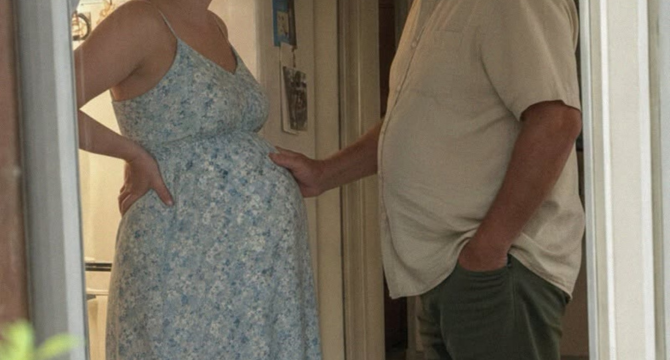
For most of my life, I believed that if a man worked hard enough, his family would eventually catch a break.
I wasn’t afraid of long hours, frozen crawl spaces, or jobs that left rust under my fingernails for days. Plumbing wasn’t glamorous, but it paid our bills, and I took pride in leaving every house better than I found it.
What I couldn’t seem to fix was my own.
Plumbing wasn’t glamorous, but it paid our bills.
Every raise vanished into rent, groceries, daycare, or another repair on the used minivan. No matter how carefully Renee and I planned, our savings account always looked like it was holding its breath.
My wife never blamed me.
That almost made it worse.
Renee had a way of making hard seasons feel temporary. When our landlord raised the rent again, she folded the notice, tucked it into the kitchen drawer, and said, “We’ll figure it out.”
My wife never blamed me.
When the water heater failed three days before Christmas, she helped me mop the floor, kissed my cheek, and laughed because we’d always wanted hardwood instead of stained carpet.
She carried hope easily.
I carried guilt.
Our son, Eli, had just turned two, and every evening he dragged me toward the narrow strip of grass behind our rental with his plastic soccer ball tucked under one arm. The poor kid could take three running steps before he reached the fence.
I carried guilt.
One night, he pointed toward the neighbors’ big backyard, where two boys were chasing each other through a sprinkler.
“Daddy, I want one.”
I knew exactly what he meant.
“One day,” I told him, “you’ll have a yard so big I’ll need binoculars to find you.”
He laughed like I’d already bought it.
From the kitchen window, Renee smiled without saying a word.
“Daddy, I want one.”
Eight months ago, after Eli was asleep, she sat across from me at our kitchen table with both hands wrapped around untouched tea.
“I signed up to become a surrogate,” she said.
For a second, I couldn’t answer.
“The agency pays almost $70,000,” she continued. “Enough for a down payment.”
I pushed my chair back. “No.”
“Calvin…”
“The agency pays almost $70,000.”
“No. There has to be another way.”
“I’ve looked.”
“I’ll work more, Ren.”
“You already leave before sunrise,” she whispered.
“I’ll take weekends.”
“You already miss enough weekends.”
“I’ll work more, Ren.”
I walked around the table and knelt beside her. “Renee, this isn’t something you should have to do because I can’t earn enough.”
She touched my face.
“We’re married. Let me carry some of this too.”
Then she told me the embryo transfer was already scheduled.
We argued for nearly three hours. I offered loans, overtime, moving farther away, selling the van, waiting five more years. She listened to every idea before gently shaking her head.
The embryo transfer was already scheduled.
By morning, I knew I wasn’t changing her mind.
The months that followed hurt in ways I never admitted.
Renee left for appointment after appointment. Some lasted an hour. Others took half the day. She came home exhausted, her shoulders aching and her hands sore.
Sometimes she fell asleep on Eli’s bedroom floor while reading to him, and I’d cover them both with a blanket because neither had made it to bed.
The months that followed hurt.
Every tired smile Renee forced felt like proof that I had failed her.
At work, I’d catch myself doing useless math. If I’d started my own company sooner. If I’d worked more Saturdays. If I’d been better with money.
The answer never changed.
I wasn’t enough.
Every night before turning out the light, I’d kneel beside our bed, kiss her cheek, and whisper, “Thank you.”
I wasn’t enough.
She’d run her fingers through my hair without answering.
I thought Renee was trying not to cry.
Last Tuesday, I forgot my torque wrench at home.
Daniel, my boss, waved at me from the apartment building we were renovating.
“Hey Cal, all good?”
I gestured with a thumbs up. Didn’t find it necessary to tell him I was heading home.
Last Tuesday, I forgot my torque wrench at home.
I’d worked for Daniel for six years. He’d taught me half the trade, attended Eli’s birthday parties, and once slipped an extra Christmas bonus into my paycheck while pretending it was a bookkeeping error.
I trusted him.
That was why, when I saw his truck parked outside my house 20 minutes later, I didn’t immediately panic, though I was surprised.
I parked the truck outside the gate and walked up. The kitchen window was open.
I trusted him.
As I walked toward the porch, I heard Daniel’s voice.
“So… he still believes the surrogacy story?”
I stopped.
Renee laughed softly.
“Every single word.”
My heartbeat filled my ears.
“So… he still believes the surrogacy story?”
Daniel said something too low for me to catch.
Then Renee answered, “Next week we’ll finally move in.”
I never heard the rest.
My knees buckled, and I slid down the siding until I was sitting in the flower bed, mulch damp beneath my palms.
Move in?
Daniel had keys to every renovation property we worked on. My mind didn’t wonder which house Renee meant.
“Next week we’ll finally move in.”
By the time I climbed back into my truck, the worst answer had already settled inside me.
I never went in.
Back at work hours later, Daniel looked up from the open wall where he was measuring pipe.
“Everything okay?”
I forced myself to nod. “Yeah.”
He smiled and handed me a fitting.
Nothing about him looked guilty.
That made it worse.
Nothing about him looked guilty.
For the rest of the afternoon, I barely spoke. Every memory from the past seven months rearranged itself. The appointments. The whispered calls Renee took outside. The evenings she came home smelling faintly of paint, which I’d blamed on a clinic renovation she mentioned once.
Now every detail looked like evidence.
When I got home, Eli ran to me wearing one of my old baseball caps backward.
“Daddy, look! I’m you.”
I picked him up and held him so tightly he squirmed.
Every detail looked like evidence.
Renee appeared in the kitchen doorway, wiping her hands on a towel.
“Dinner’s ready.”
She looked exactly like the woman I’d loved for six years.
For one dangerous moment, I almost believed I’d imagined everything.
Then I heard her voice again.
Every single word with Daniel.
I almost believed I’d imagined everything.
Dinner was painfully ordinary. Eli told us green beans made him “strong like Daddy.” Renee laughed and kissed the top of his head. I smiled when I had to, but every ordinary thing felt staged now.
After Eli fell asleep, Renee sat beside me on the couch with two mugs of tea.
“You’ve been quiet.”
“Long day.”
She studied me. “Work?”
I almost asked her who was moving in next week.
Every ordinary thing felt staged.
Instead, I took the mug and said, “Thanks.”
She looked relieved.
That relief broke something in me.
Before sunrise, while she took Eli to daycare, I packed a duffel bag and left my wedding ring on the dresser.
By noon, I was at my brother Mason’s house.
She looked relieved.
Renee called before I’d even unpacked.
Then again.
Then again.
By nightfall, my phone held 11 missed calls and seven texts.
Calvin, please answer.
You’re scaring me.
I don’t understand.
Please come home.
I read every message and answered none.
You’re scaring me.
Two days later, I met with a divorce attorney.
Saying it out loud made me sick.
“I think my wife has been lying to me for months.”
The attorney didn’t rush me. She only slid a folder across the desk and said, “You don’t have to file today. Sometimes people just need to know their options.”
I left with the folder under my arm, feeling like I was carrying a death certificate for a marriage that was still breathing.
“I think my wife has been lying to me for months.”
Renee kept trying.
She left lasagna on Mason’s porch.
She sent pictures of Eli holding a crayon sign that said, Come home Daddy.
Then she tucked a handwritten letter under my windshield wiper.
It began with three words.
Please trust me.
I couldn’t.
Please trust me.
Not because I didn’t want answers.
Because I didn’t know how much another lie would cost me.
Three evenings later, Daniel knocked on Mason’s door.
“I know you’re angry,” he said, standing on the porch with his hands in his jacket pockets. “You have every right to be.”
“I don’t have anything to say to you, Daniel.”
“I figured.”
I didn’t know how much another lie would cost me.
He glanced toward my truck.
“But before you make a decision you can’t undo, give me one hour tomorrow morning.”
“I heard enough that day when you were talking to my wife in my house.”
“No,” he said quietly. “You heard half a conversation.”
He placed an envelope on the porch railing.
“Address is inside.”
“You heard half a conversation.”
The next morning, curiosity beat pride.
The address led to a quiet street on the edge of town, where a white craftsman house sat beneath two huge maple trees. Fresh mulch lined the flower beds. Blue balloons were tied to the mailbox.
Daniel stood in the driveway with several members of our crew.
Then I saw Renee on the porch.
She wore old jeans, work boots, and a faded sweatshirt marked with dried paint. For the first time in months, I really looked at her hands.
The address led to a quiet street on the edge of town.
Tiny cuts crossed her knuckles.
The skin around her fingertips was rough and cracked.
Not from clinic appointments.
From work.
Daniel handed me a thick envelope.
“Open it.”
Inside was a deed.
The names printed across the top were mine and Renee’s.
I stared at the page.
Inside was a deed.
Daniel nodded toward the house. “Your landlord planned to sell your rental. Renee came to me asking for work because she wanted to help buy a house before you were forced out.”
My throat tightened.
“She asked me to teach her construction,” he continued. “She worked afternoons, weekends, every spare hour she could find. Instead of paying her weekly, we rolled her share into the property.”
“The seventy thousand?”
“Her share of the renovation profit.”
“She wanted to help buy a house.”
I looked at Renee.
Her eyes were already wet.
“I thought surprising you with a home would heal everything,” she whispered. “Instead, I almost destroyed the only home that really mattered.”
That’s when I noticed her flat stomach.
“The pregnancy?”
I noticed her flat stomach.
Renee’s shoulders sagged. “There never was one.” She unzipped her bag, took out the foam pregnancy bump she’d hidden inside, and held it between us. “I should’ve told you long before it came to this.”
Everything clicked into place.
Renee’s refusal when I offered to accompany her to the clinic.
Her constant exhaustion.
She didn’t want me to find out about the surprise she had been planning.
Everything clicked into place.
I walked inside without answering.
The house was beautiful, but not perfect in the way new houses in magazines are perfect. It was better than that.
It carried her.
The kitchen cabinets had tiny brush marks inside the corners because Renee always rushed the hidden places. One backyard fence post leaned slightly, the way every shelf she’d ever hung leaned until I fixed it. Behind the pantry door, sealed beneath clear paint, were two small blue handprints.
Eli’s.
The house was beautiful.
“He helped one afternoon,” she said from behind me. “Daniel’s wife watched him. I told him it was a secret project for Daddy.”
I closed my eyes.
Every appointment.
Every bruise.
Every night I thanked her.
She hadn’t been carrying someone else’s child. She’d been carrying every board, every brushstroke, every dream we’d planned together.
She hadn’t been carrying someone else’s child.
In the living room, Daniel and the crew quietly stepped outside until only Renee and I remained.
“You should have trusted me,” I said.
“I know.”
“You made me believe I wasn’t enough.”
Her face crumpled.
“I kissed your stomach every night and thanked you for something that wasn’t real.”
“You made me believe I wasn’t enough.”
Tears spilled down her cheeks, but she did not step closer.
“I know, Calvin.”
There was nothing else she could say.
The lie had come from love.
It was still a lie.
The lie had come from love.
We didn’t move in immediately.
First came counseling. Hard conversations. Long silences. Nights when I slept at Mason’s because I couldn’t look at Renee without hearing that laugh through the window.
She never defended the lie.
That mattered.
She said she had wanted to hand me a dream so badly that she forgot dreams were supposed to be shared before they were built.
She never defended the lie.
Three days later, we moved in.
Not because everything was fixed.
Because we had decided to fix it together.
After the last box was unpacked, I found a wooden plaque hanging beside the back door.
“The strongest homes are built together.”
Outside, Eli kicked his soccer ball across the yard until he tired himself out and dropped laughing into the grass.
“The strongest homes are built together.”
Renee stepped beside me on the porch and slipped a spare key into my palm.
“This house belongs to both of us,” she said softly. Then she wiped her cheek. “So does every dream after this.”
I closed my fingers around the key.
For seven months, I had thanked my wife for carrying another family’s child.
Only then did I understand: All along, she had been carrying our family’s future.
This time, we would carry it together.