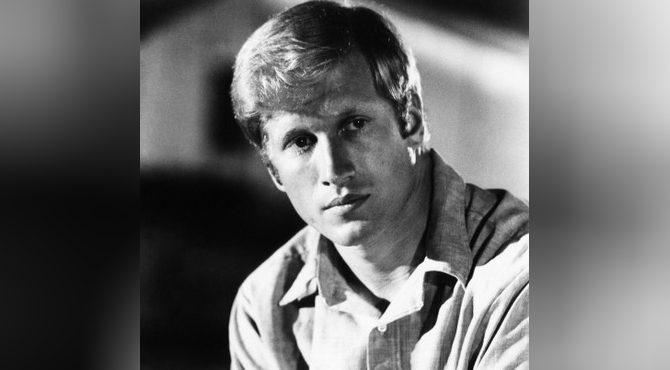
Ken Howard was one of those rare performers whose career reached far beyond the screen. Over nearly five decades, he established himself as a respected Broadway actor, television star, film performer, teacher, author and advocate for his fellow artists.
To millions of television viewers, he will always be remembered as Coach Ken Reeves from The White Shadow. To theater audiences, he was a Tony Award-winning Broadway performer. To fellow actors, he became an important union leader who helped guide the historic merger that created SAG-AFTRA.
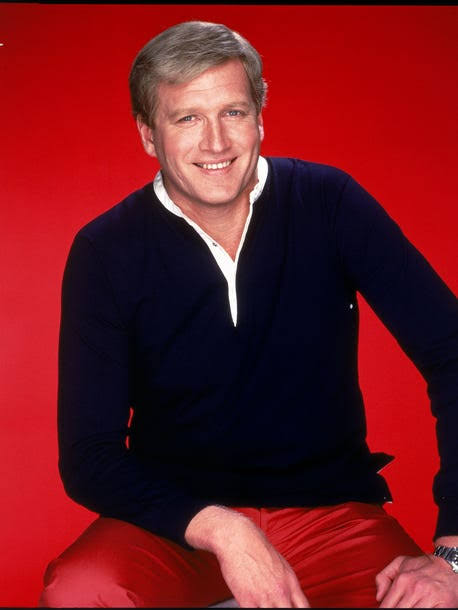
Ken Howard died on March 23, 2016, at the age of 71, leaving behind a remarkable career and a legacy that continues to be remembered by audiences and performers alike.
Early Life
Kenneth Joseph Howard Jr. was born on March 28, 1944, in El Centro, California. His family later lived in Manhasset, New York, where Howard developed a love of sports, music and performance.
He was an accomplished basketball player and stood more than six feet six inches tall. Athletics was an important part of his youth, but acting gradually became an equally powerful interest.
Howard performed in school productions and sang in his church choir. At Amherst College, he became a featured soloist with the Zumbyes, a student singing group that toured internationally.
He eventually attended the Yale School of Drama, where he received professional theatrical training.
That education would become the foundation for a career that eventually encompassed Broadway, television and film.
Broadway Success
Ken Howard made his Broadway debut in 1968 in Promises, Promises.
His stage career quickly developed. In 1969, he portrayed Thomas Jefferson in the musical 1776, a role that earned him a Theater World Award.
The following year, he appeared in Child’s Play and won the Tony Award for Best Featured Actor in a Play for his performance.
Howard continued returning to the stage throughout his career. His Broadway credits included productions such as Seesaw, The Norman Conquests, 1600 Pennsylvania Avenue and According to Tip.
Although television and film eventually made him widely recognizable, Howard never lost his connection to theater.
Becoming Coach Ken Reeves
Howard’s most famous television role arrived in 1978 when he was cast as Ken Reeves in The White Shadow.
The series followed a former professional basketball player who becomes a high-school basketball coach in an inner-city Los Angeles school.
The program was more than a sports drama. It dealt with issues involving race, education, family, poverty, discipline, friendship and opportunity.
Howard’s own experience as a young basketball player helped him connect with the role. He had been the only white player on his high-school basketball team, an experience that gave him an unusual personal perspective on the character.
The White Shadow ran from 1978 to 1982 and became one of the defining television roles of Howard’s career.
For many viewers, Ken Reeves represented a demanding but caring mentor who believed that young people could overcome difficult circumstances.
Even years after the program ended, Howard continued to be recognized by fans as “Coach.”
A Long Television Career
The success of The White Shadow did not limit Howard to one type of role.
He continued working steadily in television for decades, appearing in dramas, comedies, miniseries and made-for-television productions.
His credits included Dynasty, The Colbys, The Thorn Birds, Crossing Jordan, Boston Legal, Cold Case, Brothers & Sisters, The West Wing, Law & Order: Special Victims Unit, Curb Your Enthusiasm, 30 Rock and Blue Bloods.
His role on 30 Rock introduced him to another generation of viewers. He played Hank Hooper, the colorful head of Kabletown, allowing him to demonstrate a more comedic side of his personality.
In 2009, Howard won a Primetime Emmy Award for his performance in HBO’s acclaimed production Grey Gardens.
His Film Career
Howard also maintained an active film career.
Among his movie appearances were 1776, Clear and Present Danger, In Her Shoes, Michael Clayton, J. Edgar, The Judge and Joy.
He frequently played authoritative and professional characters, including lawyers, executives, politicians and other figures of responsibility.
His commanding height and distinctive voice gave him an immediate presence, while his extensive stage experience allowed him to bring depth to even supporting roles.
A Passion for Teaching
Acting was not Howard’s only passion.
He was also deeply interested in education and mentoring younger performers.
He taught at institutions including Harvard and Amherst College and conducted acting and communication master classes.
In 2003, he published Act Natural: How to Speak to Any Audience, a book about communication and public speaking.
Teaching gave Howard an opportunity to share lessons accumulated during decades of professional experience.
For an actor who had worked on Broadway, in Hollywood and in television, he had a great deal of knowledge to pass on to the next generation.
Leadership in the Entertainment Industry
One of the most significant chapters of Howard’s life came when he became involved in the Screen Actors Guild.
In 2008, he joined the organization’s national board. The following year, he was elected president of the Screen Actors Guild.
Howard became a leading advocate for the merger of the Screen Actors Guild and the American Federation of Television and Radio Artists.
That historic merger was completed in 2012, creating SAG-AFTRA.
Howard became the first president of the newly merged organization and was reelected in 2015.
His leadership represented a remarkable transition from performer to advocate.
Having spent decades working as an actor, Howard understood the realities faced by performers trying to build careers in an unpredictable industry.
He devoted much of his later career to issues affecting actors and other entertainment professionals.
A Life of Service
Howard’s commitment to helping others extended beyond his union work.
He was involved with organizations supporting performers, including the Actors Fund and the SAG-AFTRA Foundation.
He was also involved in charitable causes relating to health and organ donation.
Howard himself had received a kidney transplant, and he became an advocate for organ donation and kidney health.
His willingness to use his public profile to help others became another important part of his legacy.
His Final Years
Howard remained professionally active during his final years.
Even after decades in the entertainment industry, he continued acting, teaching and working on behalf of his fellow performers.
In 2015, he was reelected as president of SAG-AFTRA.
He died at his home near Los Angeles on March 23, 2016, just five days before his 72nd birthday.
He was 71 years old.
His death brought tributes from across the entertainment industry. Colleagues remembered not only his accomplishments as an actor but also his generosity, leadership and commitment to other performers.
Remembering Ken Howard
Ken Howard’s career cannot easily be reduced to one role.
For television audiences, he was Coach Ken Reeves.
For theater fans, he was the Tony Award-winning performer from Child’s Play and the Thomas Jefferson of 1776.
For film audiences, he was a familiar and dependable character actor.
For students, he was a teacher.
For his fellow performers, he became a union leader and advocate.
That combination made his career unusual.
Howard had the opportunity to become a successful actor, but he also used his experience to help others. His work demonstrated that a long career in entertainment can be about more than fame or recognition.
It can also be about mentorship, service and leaving something useful behind.
A Lasting Legacy
Ken Howard spent almost 50 years working in the entertainment industry.
He performed on Broadway.
He appeared in films.
He became a television star.
He taught aspiring performers.
He wrote about communication.
He advocated for working actors.
And he helped lead one of the most significant organizational changes in the history of American performers’ unions.
His most famous character may have been Coach Ken Reeves, but the values associated with that character—discipline, responsibility, encouragement and mentorship—also reflected important parts of Howard’s life outside the fictional basketball court.
When he died in 2016, the entertainment world lost a versatile actor and an experienced leader.
But his work remains.
His performances continue to be watched, his stage career remains part of Broadway history, and his contributions to the professional community of performers continue to form an important part of his legacy.
Ken Howard was 71 when he died, but the career he built over those seven decades left an impression far greater than the number of years he lived.
He will be remembered as an actor who could command a stage, a television screen or a film scene—but also as a teacher, mentor and advocate who devoted much of his life to the people who shared his profession.
For those who grew up watching The White Shadow, he will forever be Coach.
For those who knew his broader body of work, he was much more.
Ken Howard was a performer, a leader and a man who spent his life communicating with others.
And long after the final curtain, that remains a legacy worth remembering.