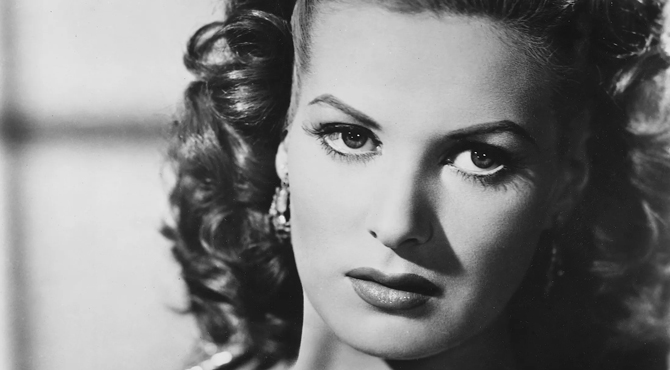
There are certain stars who belong to a particular era of cinema, and then there are those rare performers whose presence seems to transcend time itself. Maureen O’Hara was one of those extraordinary stars.
With her striking red hair, vivid green eyes, unmistakable Irish spirit, and commanding screen presence, O’Hara became one of the most recognizable actresses of Hollywood’s golden age. She could be passionate, humorous, romantic, determined, and formidable, often within the same performance. She possessed the rare ability to stand alongside some of the biggest leading men of her generation without ever disappearing into their shadows.

When Maureen O’Hara died on October 24, 2015, at the age of 95, Hollywood lost one of its great links to the golden age of cinema. But her passing also reminded movie lovers of something more enduring: great performances never truly disappear. They remain alive every time an old film is shown and every time a new generation discovers a classic.
For millions of movie lovers, Maureen O’Hara will forever be remembered as Mary Kate Danaher in The Quiet Man. But her story was far larger than one beloved film.
A Dublin Girl With a Love of Performance
Maureen O’Hara was born Maureen FitzSimons in Ranelagh, Dublin, in August 1920. She grew up in a large family surrounded by music, performance, and Irish culture.
Her mother, Marguerita, was an accomplished singer, and young Maureen developed an interest in performing at an early age. She trained at the Abbey School of Acting in Dublin and soon began pursuing a career on stage and screen.
Her early opportunities eventually took her to London, where she received a screen test that helped change the course of her life.
She appeared in several British productions before attracting the attention of actor Charles Laughton. He recognized her potential and helped her secure an important role in Alfred Hitchcock’s Jamaica Inn.
Soon afterward, she appeared alongside Laughton in The Hunchback of Notre Dame, playing Esmeralda. The film introduced the young actress to a much wider international audience.
Hollywood was waiting.
The Arrival of a New Hollywood Star
O’Hara arrived in Hollywood in 1939, at one of the most exciting moments in the history of American cinema.
The studio system was at its height, Technicolor was transforming the look of movies, and Hollywood was creating some of the most enduring stars in film history.
Into this world came an Irish actress whose appearance seemed almost made for the new color cinematography.
Her red hair and green eyes quickly became part of her famous image, but reducing O’Hara to her beauty would overlook one of her greatest qualities.
She had strength.
O’Hara brought an unusual authority to her characters. She frequently played women who were intelligent, independent, outspoken, and capable of standing up for themselves.
She could be glamorous without seeming fragile.
She could be romantic without losing her independence.
And she could be funny without losing her dignity.
These qualities helped distinguish her from many of the actresses working in Hollywood at the time.
The Quiet Man
Of all the films associated with Maureen O’Hara, none is more beloved than The Quiet Man.
Directed by John Ford and released in 1952, the film paired O’Hara with John Wayne and created one of the most memorable screen partnerships in classic Hollywood.
O’Hara played Mary Kate Danaher, a strong-willed Irish woman whose personality was every bit as powerful as that of the man who wanted to marry her.
The film presented a romanticized version of Ireland, but O’Hara gave Mary Kate a fiery personality that made the character unforgettable.
She was not simply the beautiful woman waiting for the hero.
She was a force in her own right.
The chemistry between O’Hara and Wayne became one of the defining elements of the movie. Their partnership would continue in several other films, including Rio Grande, The Wings of Eagles, and McLintock!.
For generations of viewers, O’Hara walking through the beautiful Irish landscape of The Quiet Man became one of the defining images of classic cinema.
More Than The Quiet Man
Although The Quiet Man remains her most famous film, Maureen O’Hara’s career was much broader.
She appeared in historical adventures, romantic dramas, westerns, comedies, and family films.
Among her important movies was How Green Was My Valley, John Ford’s acclaimed 1941 drama. She also starred in Miracle on 34th Street, the beloved 1947 Christmas classic.
In Miracle on 34th Street, O’Hara played Doris Walker, a practical and intelligent mother whose beliefs are challenged by the arrival of a mysterious department-store Santa Claus.
The performance demonstrated another side of her talent. She could bring warmth and humanity to a story without allowing it to become overly sentimental.
She also appeared in adventure films such as The Spanish Main and Sinbad the Sailor, showing that her talents extended far beyond romantic roles.
A Star Who Could Hold Her Own
One of the most remarkable aspects of O’Hara’s career was the way she occupied the screen.
Classic Hollywood was often dominated by its male stars. Leading actresses were frequently expected to serve primarily as romantic partners.
O’Hara was different.
She had a toughness that made her characters feel capable of fighting their own battles.
This was particularly evident in her films with John Wayne.
Wayne was one of the biggest personalities in American cinema, but O’Hara had no trouble matching his energy.
Their scenes together could feel like a contest between equals.
That was part of their appeal.
Their screen relationship was not simply based on romance. It was built around humor, conflict, personality, and mutual strength.
Audiences believed that these characters could challenge one another.
And audiences loved watching them do it.
The Queen of Technicolor
Maureen O’Hara became closely associated with the Technicolor era and was often referred to as the “Queen of Technicolor.”
It was an appropriate description.
Her striking appearance seemed perfectly suited to the rich colors of mid-century filmmaking.
But her appeal went far beyond her appearance.
O’Hara had the rare screen presence that allowed her to command attention the moment she appeared.
A glance, a smile, a raised eyebrow, or a flash of temper could transform an entire scene.
That quality is one of the things that separates a true movie star from an ordinary performer.
A Career That Spanned Generations
As Hollywood changed during the 1960s and 1970s, many stars from the golden age found themselves working less frequently.
O’Hara continued to work.
She appeared in films including The Deadly Companions, Spencer’s Mountain, McLintock!, and Big Jake.
Her career eventually stretched across more than six decades.
She had entered the movie business during the 1930s and remained recognizable to audiences long after the traditional Hollywood studio system had disappeared.
That longevity was remarkable.
Few actors from the golden age managed to remain so closely associated with classic Hollywood while successfully continuing their careers into later decades.
Proudly Irish
Perhaps the most important part of Maureen O’Hara’s identity was not Hollywood at all.
It was Ireland.
Although she became an American citizen in 1946, O’Hara maintained a deep connection with her homeland throughout her life.
She regularly returned to Ireland and retained a home in County Cork for many years.
Her relationship with Ireland was much more than a Hollywood publicity image.
She genuinely loved the country, its people, and its culture.
She remained proud of her Dublin roots and frequently spoke about the influence Ireland had on her life.
Her connection to The Quiet Man also remained strong throughout the decades.
In later life, she returned to Cong, County Mayo, where the film had been made, for celebrations connected with the movie.
For many Irish people, Maureen O’Hara represented a remarkable journey: a girl from Dublin who crossed the Atlantic and became an internationally recognized star while never abandoning the identity that had shaped her.
Recognition From Hollywood
For much of her career, O’Hara was celebrated by audiences more than by Hollywood’s awards establishment.
She never received a competitive Academy Award nomination.
But in 2014, the Academy finally honored her with an Honorary Oscar for her contributions to cinema.
It was a particularly special moment.
At the age of 94, O’Hara stood on the Academy stage and accepted the Oscar that had eluded her during the height of her career.
The honor represented recognition of an extraordinary body of work that had entertained audiences for generations.
She received a standing ovation.
For an actress whose career had begun in the 1930s, it was a fitting celebration near the end of her remarkable journey.
Beyond Acting
Maureen O’Hara’s accomplishments extended beyond the screen.
She was an accomplished singer and remained active in business and aviation.
She also made history as the first woman president of a commercially scheduled airline in the United States.
Later in life, she published her autobiography, ‘Tis Herself, in which she reflected on her extraordinary journey through Hollywood and beyond.
The book offered another glimpse into the woman behind the glamorous movie-star image.
O’Hara was never known as someone who was afraid to speak her mind.
She possessed confidence, independence, and a strong sense of herself.
Those qualities were evident both in her career and in the characters she portrayed.
The Passing of a Legend
In October 2015, Maureen O’Hara died peacefully in her sleep at her home in Boise, Idaho.
She was 95 years old.
Her death marked the passing of one of the last great links to Hollywood’s golden age.
She had been born in Dublin in 1920.
She had entered the film business before the Second World War.
She had worked with legendary directors and actors.
She had appeared in some of the most beloved films of the twentieth century.
She had become an international symbol of Irish beauty and strength.
She had raised a family, written about her life, remained connected to Ireland, and continued to work for decades.
And shortly before her death, she received the Academy’s recognition for the remarkable career she had built.
A Legacy That Lives On
What makes an actress immortal?
It is not simply appearing in famous movies.
It is leaving behind performances that continue to mean something.
More than seven decades after The Quiet Man, audiences still discover Mary Kate Danaher for the first time.
Families still watch Miracle on 34th Street every Christmas season.
Film lovers continue to revisit The Hunchback of Notre Dame, How Green Was My Valley, Rio Grande, McLintock!, and the many other films that shaped O’Hara’s extraordinary career.
Her image remains instantly recognizable.
Her voice remains unmistakable.
And her performances continue to introduce her to people who were not even born when she was at the height of her fame.
That is the special power of cinema.
The actor may leave us.
The film remains.
And through the film, the actor continues to live.
Farewell to Maureen O’Hara
Maureen O’Hara crossed an ocean to pursue a dream.
She became one of Hollywood’s most distinctive leading ladies, but she never stopped being the proud Irishwoman from Dublin.
She was beautiful, certainly, but beauty alone could never explain her extraordinary career.
She was strong.
She was spirited.
She was funny.
She was determined.
She was independent.
And she possessed the kind of screen presence that could not be manufactured by a studio publicity department.
When we remember Maureen O’Hara today, we should remember more than the red hair, the Technicolor glamour, or the unforgettable scenes with John Wayne.
We should remember the remarkable journey.
A young Irish actress entered the world of cinema in the 1930s and built a career that lasted more than six decades.
She became one of the great faces of classic Hollywood.
She carried her Irish identity with pride.
And when she left us in 2015, she left behind something that time can never take away: a body of work that continues to bring her back to life.
Every time The Quiet Man begins, Maureen O’Hara returns.
Every time Mary Kate Danaher appears on the screen, the spirit of her remarkable star returns with her.
And every time a new generation discovers one of her films, another chapter of her legacy begins.
Rest in peace, Maureen O’Hara — a remarkable actress, a proud Irishwoman, and one of the unforgettable stars of classic Hollywood.
Your films remain.
Your memory remains.
And the screen will always have a place for you.