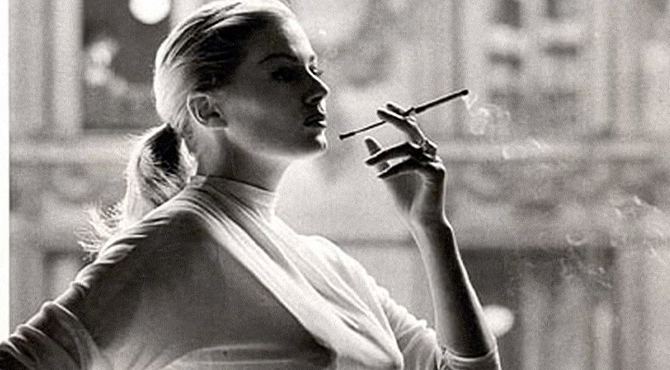
There are certain faces in cinema history that time can never erase. They belong not only to the films in which they appeared but also to the collective memory of generations who fell in love with the magic of the silver screen. Anita Ekberg was one such extraordinary figure. With her striking blue eyes, golden-blonde hair, commanding screen presence, and unmistakable glamour, she became one of the most recognizable actresses of the 1950s and 1960s. Her name remains forever associated with the golden age of international cinema and, above all, with one of the most unforgettable moments ever captured on film: her appearance in the Trevi Fountain in Federico Fellini’s masterpiece La Dolce Vita.
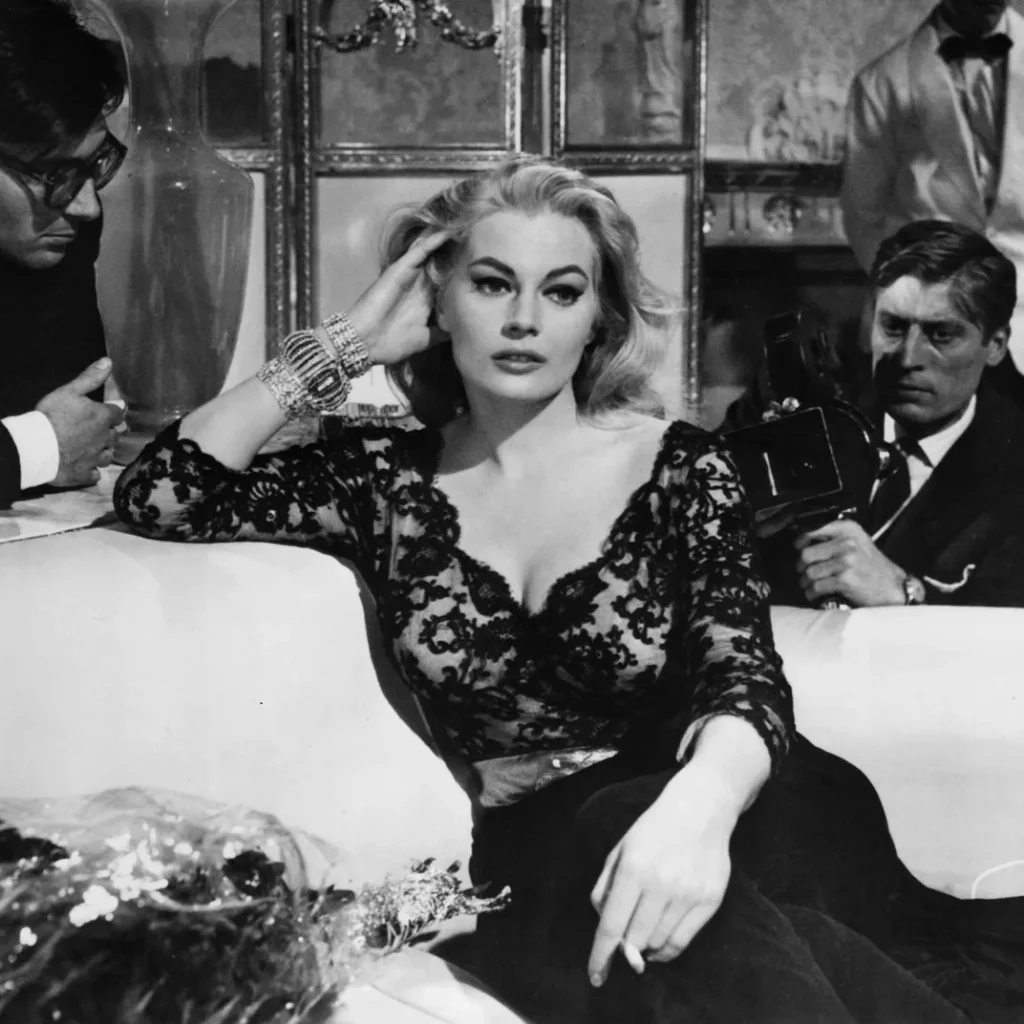
Anita Ekberg passed away on January 11, 2015, at the age of 83. Although more than a decade has passed since her death, her image continues to inspire admiration among classic-film enthusiasts, historians, photographers, and admirers of Hollywood’s glamorous past. She was a woman whose beauty captured worldwide attention, whose career carried her from Sweden to Hollywood and Italy, and whose most famous performance became a permanent part of cinema history.
Yet Anita Ekberg’s story was about more than beauty and fame. It was the story of a young Swedish woman who ventured far from home in pursuit of a dream, found herself in the center of an international entertainment industry, and ultimately became immortal through a single cinematic moment that seemed to capture the spirit of an entire era.
A Beautiful Beginning in Sweden
Kerstin Anita Marianne Ekberg was born on September 29, 1931, in Malmö, Sweden. She was one of eight children in a family whose life was far removed from the glamorous world she would eventually enter. Her father worked as a dockworker, and her early years were shaped by the everyday realities of family life in a Swedish port city.
As a young woman, Ekberg attracted attention for her striking appearance and natural confidence. Like many aspiring performers of her generation, she began exploring opportunities in modeling and beauty competitions. Her early success would soon open doors that might otherwise have remained closed to a young woman from outside the established entertainment capitals of the world.
In 1950, she won the Miss Sweden competition. That achievement became an important turning point in her life, bringing her international attention and encouraging her to pursue opportunities abroad. The following year, she traveled to the United States in connection with the Miss Universe pageant.
America represented a world of possibility. Hollywood was still one of the most powerful symbols of glamour and celebrity, and its studios attracted ambitious young performers from across the globe. For Ekberg, the journey across the Atlantic was the beginning of an extraordinary transformation: from a Swedish beauty contestant into an internationally recognized screen personality.
Her early journey also revealed a quality that would remain associated with her public image throughout her life. She possessed a strong sense of presence. She was not simply someone who looked beautiful in photographs; she had a distinctive personality that attracted attention wherever she appeared.
Her Arrival in Hollywood
Hollywood in the 1950s was an industry built around movie stars, carefully cultivated images, and the extraordinary influence of studio publicity. Audiences admired the elegance of established leading ladies while discovering new faces who promised a fresh kind of screen glamour.
Ekberg entered this world at a time when the studios were eager to introduce new performers to American audiences. Her appearance made an immediate impression, and she soon began receiving film opportunities.
One of her early screen appearances came in the science-fiction comedy Abbott and Costello Go to Mars in 1953. Although the role was small, it marked an important step in her film career. She subsequently appeared in productions such as Artists and Models (1955), starring Dean Martin and Jerry Lewis, and Hollywood or Bust (1956).
These early films often presented Ekberg primarily as a glamorous presence. The entertainment industry of that period frequently emphasized the appearance of young actresses, sometimes placing greater attention on their beauty than on their acting abilities. Ekberg became a familiar face in publicity photographs and entertainment magazines, quickly developing an image that audiences could recognize.
Nevertheless, her career was not confined to light comedies. She continued to pursue roles in different kinds of productions, gradually building experience and working alongside established performers.
For an actress arriving from Sweden, the Hollywood environment presented both opportunity and limitation. It could introduce her to millions of people, but it could also define her according to an image that was difficult to escape. Ekberg would eventually discover both sides of that experience.
A Rising Star Among the Greats
During the middle years of the 1950s, Ekberg’s career continued to develop. She appeared in Blood Alley (1955), a film starring John Wayne and Lauren Bacall, and in King Vidor’s ambitious adaptation of War and Peace (1956), alongside Audrey Hepburn and Henry Fonda.
Her appearance in War and Peace was particularly significant because the production brought together internationally recognized performers in a lavish historical drama. For Ekberg, such projects provided opportunities to work within major productions and reach audiences beyond the United States.
In 1956, she received a Golden Globe Award for Most Promising Newcomer, sharing the honor with actresses Victoria Shaw and Dana Wynter. The recognition reflected the attention she had attracted during her early years in the film industry.
Ekberg also became a prominent figure in popular culture. Her photographs circulated widely, and her name became familiar to readers of entertainment magazines. Her glamorous image was frequently compared with those of other celebrated screen beauties of the period, although Ekberg possessed a distinctive Nordic appearance and a personality that set her apart.
At the height of her early fame, she seemed to embody the international glamour of the postwar film industry. She was Swedish by birth, worked in American cinema, and would eventually find her most enduring artistic recognition in Italy.
That international journey would become one of the defining characteristics of her life.
Finding a New Home in Italian Cinema
Although Hollywood introduced Anita Ekberg to a worldwide audience, Italy would become the country most closely associated with her enduring legacy.
During the 1950s, Italian cinema was attracting increasing international attention. Italian filmmakers were creating works that explored modern society, personal freedom, wealth, loneliness, social change, and the complicated relationship between public appearances and private realities.
Ekberg’s journey into Italian cinema began with her involvement in War and Peace, which brought her to Italy. There, she became part of an artistic environment that would ultimately give her the role for which she is remembered around the world.
Italy offered a different cinematic landscape from the Hollywood studio system. Its filmmakers could combine visual beauty with satire, social observation, psychological complexity, and unconventional storytelling. For an actress whose public image had already become closely connected with glamour, this environment offered the possibility of becoming part of something more culturally enduring.
The turning point came when she met the celebrated Italian filmmaker Federico Fellini.
Fellini was known for his extraordinary imagination, visual inventiveness, and ability to transform ordinary experiences into dreamlike cinematic sequences. He understood that a film image could become much more than a simple representation of a character. In the right setting, it could become a symbol of an entire society.
In Ekberg, he found a performer whose appearance and screen presence could serve a very particular artistic purpose.
The result was La Dolce Vita, released in 1960.
La Dolce Vita: The Film That Made Her Immortal
Few films have shaped the international image of an actress as profoundly as La Dolce Vita shaped the legacy of Anita Ekberg.
Directed by Federico Fellini, the film explored the fashionable nightlife, emotional emptiness, celebrity culture, and moral uncertainty of modern Rome. Its central character, Marcello Rubini, played by Marcello Mastroianni, is a journalist moving through a world of glamorous parties, wealthy personalities, fleeting relationships, and spiritual dissatisfaction.
Ekberg played Sylvia, a glamorous visiting film star whose presence fascinates the people around her. She appears to represent everything the world of celebrity promises: beauty, excitement, sensuality, freedom, and the possibility of escape from ordinary life.
Yet Fellini’s film was more complicated than a celebration of glamour. Beneath its beautiful images lay questions about the emptiness that can accompany fame and the difference between appearing to possess everything and finding genuine fulfillment.
Ekberg’s performance became central to the film’s visual identity.
Her character was not simply another beautiful woman in a fashionable setting. She became a larger-than-life figure, seemingly belonging to a dream world that existed beyond the reach of ordinary experience.
The contrast between Sylvia’s dazzling presence and Marcello’s restless dissatisfaction helped give the film its emotional and thematic power. Through her role, Ekberg became part of a work that would influence generations of filmmakers and establish itself as one of the defining achievements of European cinema.
Even viewers who have never watched the entire film often recognize the name La Dolce Vita. That recognition owes much to the extraordinary image of Ekberg in the Trevi Fountain.
The Trevi Fountain Scene That Entered Film History
There are unforgettable moments in cinema, and then there are moments that seem to exist beyond the film itself.
Anita Ekberg’s appearance in Rome’s Trevi Fountain belongs to the latter category.
In one of the most famous sequences in La Dolce Vita, Sylvia wanders into the fountain in the early hours of the morning. Dressed in a striking black evening gown, she enters the water with an almost dreamlike sense of freedom. Her movements, the flowing water, the monumental architecture, and the nighttime atmosphere combine to create an image of extraordinary visual power.
She calls to Marcello, inviting him to join her. He follows, drawn into a moment that seems to suspend the ordinary rules of the world.
The scene is beautiful, playful, mysterious, and strangely melancholy. It captures the excitement of a night that appears to have no end, while the surrounding city stands as a reminder that the dream cannot last forever.
Ekberg’s presence is the heart of the sequence. Her confidence and natural ease make Sylvia seem both real and unreal: a glamorous actress enjoying an impulsive moment, yet also a figure from a modern fairy tale.
The scene was famously uncomfortable to film. Ekberg later recalled the bitter cold of the water and described how difficult it was to remain in the fountain during the shoot. What audiences see as effortless cinematic magic required patience and physical endurance.
The finished sequence, however, gives little indication of the discomfort involved. On screen, Ekberg seems completely at home in the extraordinary setting.
The image became one of the most recognizable in the history of international cinema. It has been reproduced in photographs, posters, retrospectives, documentaries, and discussions of the greatest movie moments ever filmed.
The Trevi Fountain itself became inseparable from the memory of the film. Visitors to Rome continued to associate the famous landmark with the actress who transformed it into a cinematic dreamscape.
For Ekberg, the scene brought worldwide recognition. For cinema, it created an image that could communicate glamour, longing, and the allure of a vanished era without requiring a single explanation.
It is a rare achievement for an actor to become associated with a moment that remains meaningful decades later. Ekberg accomplished precisely that.
More Than a Single Famous Scene
It would be easy to remember Anita Ekberg only for the Trevi Fountain sequence. After all, few actors have a single image that has traveled so widely across generations and cultures.
But her career deserves a broader appreciation.
Before La Dolce Vita, she had already appeared in numerous American productions and worked alongside established Hollywood performers. After the film’s international success, she continued to act in European and American productions, building a career that extended across several decades.
In 1962, she appeared in Boccaccio ’70, an anthology film featuring work by major Italian directors, including Fellini. The production offered another opportunity for her to participate in Italian cinema’s exploration of modern relationships, social expectations, and changing cultural attitudes.
She also appeared in 4 for Texas (1963), a Western comedy featuring Frank Sinatra and Dean Martin. The film connected her once again with major American entertainment personalities and demonstrated her continued presence in international productions.
Her later filmography included a variety of European genre films and other projects. Not every role achieved the artistic distinction of La Dolce Vita, but her continued work demonstrated that her professional life extended well beyond her most famous performance.
In 1987, she appeared in Fellini’s Intervista. The film included a memorable return to the world of La Dolce Vita, bringing Ekberg and Mastroianni together in a reflective encounter with their own cinematic past.
The reunion carried a special emotional resonance. The performers were older, the cultural landscape had changed, and the world that had surrounded the original film had become history. Yet the images they had created together remained alive.
Their appearance served as a reminder that cinema preserves moments that human life cannot hold still. Actors grow older, cities change, and audiences move from one generation to another, but a great film can bring the past into the present whenever it is screened.
Ekberg’s career was not defined by the number of leading roles she received or by the consistency of her later projects. Her importance lies partly in the remarkable cultural life of the images she helped create.
A Glamorous Star With a Distinctive Personality
Anita Ekberg’s public image was inseparable from glamour, but she was also known for her strong personality and independent manner.
In an entertainment industry that often expected women to conform to carefully managed public identities, Ekberg could appear outspoken and unwilling to become an entirely passive figure in her own story. She attracted intense media attention, and her personal life was frequently discussed in the popular press.
Like many famous women of her generation, she experienced the complicated relationship between celebrity and privacy. Public fascination could bring professional opportunities, but it could also turn ordinary personal difficulties into entertainment for strangers.
Her marriages to British actor Anthony Steel and American actor Rik Van Nutter ended in divorce. She did not have children, and later accounts of her life reflected on the personal disappointments and difficulties she experienced away from the screen.
It is important to remember that a public image can never tell the whole story of a person. The glamorous woman photographed at premieres and parties was also a human being who experienced change, uncertainty, loss, and the ordinary passage of time.
Ekberg’s life illustrates the contrast between the image of a movie star and the reality of living as one. The world could continue to remember her as the radiant Sylvia of 1960, even as her own circumstances changed dramatically.
Her legacy therefore deserves more than a simple celebration of physical beauty. It deserves recognition of a performer whose image became a part of world culture, whose life crossed national and artistic boundaries, and whose story reveals something about the demands and contradictions of fame.
Life Away From the Spotlight
As the decades passed, the film industry changed. The studio systems of the 1950s gave way to new approaches to filmmaking, and the kinds of stars who dominated popular culture also changed.
Ekberg spent much of her adult life in Italy, a country that had become closely associated with both her personal and professional history. Although she remained recognizable to admirers of classic cinema, her later years were less glamorous than the public image that had followed her throughout her early career.
Reports in the final years of her life described serious health difficulties and financial concerns. She had suffered a hip injury and experienced declining mobility. In 2011, she sought assistance from the Fellini Foundation, highlighting the contrast between her extraordinary fame and the practical difficulties she faced in later life.
These circumstances offer a sobering reminder that fame does not provide permanent protection against hardship. The entertainment industry can celebrate a person as an international sensation, but the attention may diminish as tastes change and new generations of performers emerge.
For admirers who remember Ekberg through the radiant images of La Dolce Vita, the knowledge of her later difficulties can be painful. Yet her life should not be reduced to either its glamorous beginning or its difficult ending.
She experienced an unusually international career, became part of one of cinema’s most celebrated films, and left behind images that remain influential long after the immediate circumstances of her life have faded from public memory.
The final chapters of her life remind us that a screen legend is still a person. Behind every iconic photograph is a human story, and behind every celebrated performance is a life that continues long after the cameras stop rolling.
Anita Ekberg’s Final Years and Death
Anita Ekberg died on January 11, 2015, in Rocca di Papa, near Rome, at the age of 83, following a period of illness.
Her death was reported by international news organizations and prompted tributes from publications that had followed her career and recognized her place in film history. The reports recalled her Swedish origins, her rise in Hollywood, and the role that had made her internationally famous.
For many people, the news brought back memories of La Dolce Vita and its unforgettable fountain sequence. The image of Ekberg standing in the water, surrounded by Rome’s architecture and the atmosphere of an endless night, seemed to belong to a world that could never truly disappear.
Her death also encouraged a wider reassessment of her life and work. Beyond the familiar photographs and the famous scene, there was a woman who had traveled across continents, worked in different film industries, and lived through enormous changes in popular culture.
Ekberg was laid to rest according to her wishes, with her remains returned to Sweden. The country where her story began remained part of her identity, even after decades spent living and working abroad.
Her passing marked the end of a long life, but it did not end her relationship with audiences. Cinema had preserved her in a form that could continue to be encountered by people who were not yet born when she first appeared on screen.
Why Anita Ekberg Is Still Remembered Today
The enduring appeal of Anita Ekberg lies in the unusual combination of personal image, cinematic artistry, and cultural history that surrounds her name.
First, there is the visual power of her most famous performance. The Trevi Fountain sequence remains instantly recognizable because it combines a remarkable performer, a magnificent location, and a director with an exceptional sense of cinematic imagery.
Second, Ekberg represents an important period in international film culture. Her journey from Sweden to Hollywood and then to Italian cinema reflects the increasingly international character of entertainment during the middle decades of the twentieth century.
Third, her story illustrates the complicated nature of celebrity. She became famous for an image that the public could easily recognize, yet her life and career were more varied than that single image might suggest. Her experiences reflect the opportunities and limitations faced by actresses whose public identities were shaped heavily by glamour and appearance.
Finally, Ekberg remains a reminder of the enduring power of classic films. A movie made in 1960 can still introduce a performer to new audiences more than half a century later. Viewers can discover La Dolce Vita through a film festival, a restored print, a television broadcast, a streaming service, or a book about cinema history.
Each new viewing creates another opportunity for her work to be appreciated.
For younger audiences, Ekberg may be a discovery. For older film lovers, she may be a familiar presence associated with memories of classic cinema. For historians, she represents a link between Hollywood’s star-making culture and the artistic ambitions of European filmmakers.
These different perspectives can coexist. Her importance does not depend on everyone remembering her in exactly the same way. It rests on the fact that her work continues to invite attention, discussion, and admiration.
A Lasting Symbol of Hollywood and European Glamour
The story of Anita Ekberg crosses borders. Born in Sweden, introduced to international audiences through American entertainment, and immortalized in an Italian film, she belonged to no single national cinema.
Her career reflected the international movement of performers and the power of cinema to create images that belong to the world.
In Hollywood, she became known for her beauty and screen presence. In Italy, she became the face of a cinematic moment that explored the complicated relationship between glamour and emptiness. Across the decades, her name came to symbolize a particular kind of silver-screen elegance associated with the middle years of the twentieth century.
Her fame also reminds us that a film’s cultural influence can far exceed its original release. The Rome of La Dolce Vita has changed, the audiences who first watched it have grown older, and the entertainment industry has been transformed by technologies that Fellini could scarcely have imagined.
Yet Ekberg’s image continues to speak to viewers.
It speaks of the allure of a city at night, of the excitement of celebrity, of the freedom suggested by a spontaneous gesture, and of the melancholy that can hide beneath an apparently perfect moment. It also speaks of the extraordinary ability of cinema to preserve beauty without stopping time itself.
The Trevi Fountain scene remains powerful not merely because Ekberg looked magnificent in it, but because it captures an entire atmosphere. It transforms a public landmark into a private dream and a fleeting performance into a permanent cultural memory.
That is the kind of achievement that allows an actor to remain present in the imagination long after death.
Remembering the Woman Behind the Legend
When we remember Anita Ekberg, it is natural to begin with her beauty. Her striking appearance helped open the doors of the entertainment industry and made her one of the most recognizable actresses of her generation.
But a meaningful tribute should go further.
We should remember the young woman who left Sweden in search of opportunity. We should remember the performer who worked through the Hollywood system, appeared in international productions, and became part of Federico Fellini’s artistic world. We should remember the actress whose most famous scene demanded physical endurance, whose career extended beyond a single role, and whose later life revealed the vulnerability that exists behind every public image.
Most of all, we should remember that Anita Ekberg was more than a photograph, a headline, or a symbol of glamour. She was a human being whose life unfolded in ways that no film could fully capture.
The fascination surrounding her image sometimes obscured the person behind it. Yet time offers a chance to look again, with greater perspective and understanding. We can appreciate the glamour while recognizing the complexity of the life that accompanied it.
Her legacy is not that she remained forever young or that she escaped the difficulties of ordinary existence. Her legacy is that she created something memorable enough to survive the passing of time.
Farewell to a Timeless Screen Legend
Anita Ekberg passed away on January 11, 2015, but her place in cinema history remains secure.
She will always be remembered as the unforgettable Sylvia in La Dolce Vita, the glamorous Swedish actress who entered Rome’s Trevi Fountain and became part of one of the most celebrated sequences in film history. Yet her legacy reaches beyond that extraordinary moment. It includes her early ambition, her years in Hollywood, her work in European cinema, and the fascinating journey that took her from Malmö to international stardom.
Her life was marked by achievement, reinvention, public fascination, and personal challenges. Like the lives of so many people who become famous, it contained contrasts that a single image could never explain. But through her work, she left behind a lasting connection with audiences around the world.
Today, when her famous scene appears on a screen, we are reminded of the magic that cinema can create. For a few moments, time seems to stop. The fountain sparkles, Rome becomes a dream, and Anita Ekberg returns to the screen with the same extraordinary presence that captivated audiences decades ago.
That is the quiet miracle of a lasting cinematic legacy. The person is gone, but the performance remains. The years pass, but the image endures. New generations discover what earlier audiences already knew: that certain moments in film possess a beauty and emotional power that cannot be measured by the passage of time.
Anita Ekberg was one of those rare performers whose image became larger than a single film, whose story connected different cultures, and whose most celebrated moment continues to live in the imagination of movie lovers everywhere.
May her memory continue to inspire those who cherish classic cinema, appreciate the artistry of great filmmakers, and believe in the enduring magic of the silver screen.
Rest in peace, Anita Ekberg. Your journey may have ended in 2015, but your place in the history of world cinema will never fade.