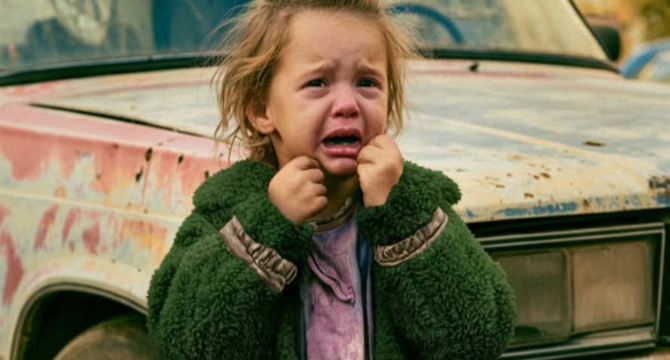
I used to avoid the woman and her daughter living in the old car outside our building.
I am not proud of that now.
Back then, I told myself I was just being careful. That was the word I used every time guilt tried to creep in.
Careful.
A single woman living alone in the city had to be careful. A woman who came home late from work had to keep her eyes forward, keys between her fingers, and her steps quick.
That was what I told myself whenever I passed the dented gray sedan parked near the curb.
The woman looked rough. Unwashed hair. Layers of old clothes. She was always sitting in the driver’s seat, staring into space.
Her car had been there for weeks before I finally admitted to myself that she was not just waiting for someone. At first, I thought she was visiting a tenant in our building.
Then I noticed the fogged windows in the morning, the plastic grocery bags stuffed into the back seat, the folded blanket pressed against the rear window, and the little girl who climbed out every day with a pink backpack that had one broken strap.
The girl was small.
Maybe nine or ten years old. Her dark hair was often tied into two uneven braids, and she carried herself with the strange quietness of a child who had learned not to ask for much.
I later learned her name was Irina.
Her mother’s name was Esther.
But for weeks, I did not know that. To me, they were simply the woman in the car and the child who lived there with her.
Every morning, I walked past them on my way to the bus stop. Every evening, I passed them again on my way home. Our building was old, with cracked steps and a front door that stuck whenever it rained.
It was not fancy, but it was home. Seeing that car outside made the whole street feel different, like something sad had settled there and no one knew what to do with it.
Sometimes she tried to talk to me when I walked by.
“Excuse me,” she said once, her voice hoarse through the half-open window.
I kept walking.
Another time, she raised her hand slightly and said, “Miss, do you know if there’s a shelter nearby?”
I pretended I hadn’t heard her because I had earbuds in, even though there was no music playing.
I hated myself a little for that, but fear moved faster than kindness.
I had grown up being told not to stop for strangers. My mother used to say, “Jennifer, people can look helpless and still hurt you.” She had said it so often that it became part of how I moved through the world.
So when Esther looked at me with tired eyes and tried to speak, I turned my face away.
I never stopped. To be honest, she scared me. A few times, I even thought about calling the police.
I would stand by my apartment window on the third floor and look down at the sedan.
Sometimes Esther sat motionless behind the wheel for so long that I wondered if she was asleep or sick. Other times, she talked softly to Irina, brushing the girl’s hair with her fingers or sharing something from a paper bag.
It was never loud.
There was no shouting. No fighting. No bottles scattered around the car. Nothing that gave me a real reason to call anyone.
Still, I thought about it.
I told myself it might be better for the child. Maybe the police would connect them with services. Maybe someone official would know what to do. But there was always another thought underneath it.
I wanted them gone.
That truth sat badly in my chest.
One chilly Tuesday morning, I saw Irina sitting on the curb while Esther tied her shoe.
The girl laughed at something her mother said, a bright little laugh that seemed too cheerful for their situation. Esther smiled back, and for a second, she looked younger. Not rough. Not scary. Just tired.
I slowed down without meaning to.
Esther looked up and caught my eye.
“Good morning,” she said.
I nodded once and hurried away.
At work that day, I could not focus. I worked at a small insurance office downtown, answering calls from people who were usually upset before I even said hello. Normally, I was good at staying calm. That day, every voice seemed to blur together.
By lunchtime, my coworker Sloane noticed.
“You look like you didn’t sleep,” she said, leaning against my desk with a paper cup of coffee.
“I’m fine.”
“That means you’re not.”
I almost told her about the woman in the car. About the little girl. About the way the child’s laugh had followed me all the way to the bus stop.
Instead, I shrugged.
“Just tired.”
Sloane studied me for another second, then left me alone.
That evening, the sky turned the color of wet cement. A cold wind moved between the buildings, carrying the smell of rain and exhaust. I got off the bus two blocks from my apartment and pulled my coat tighter around me.
I remember thinking only about getting upstairs, taking off my shoes, and heating the leftover soup in my fridge.
Then I heard the scream.
At first, I did not understand what it was. The sound cut through the traffic and bounced off the brick walls around me. It was high and sharp, full of panic.
I stopped on the sidewalk.
Another scream came.
“Please help! Somebody help my mom!”
My head snapped toward the curb.
The little girl was standing beside the car, waving desperately at people passing by.
Irina’s pink backpack hung from one shoulder. Her face was red from crying, and her hands shook as she reached toward strangers who moved around her like water around a stone.
“Please!” she sobbed. “My mom won’t wake up!”
A man in a dark coat glanced at her and kept walking.
A woman holding grocery bags pulled her child closer and crossed the street.
Two teenagers slowed down, stared, then laughed nervously and moved on.
Most kept walking.
For a moment, my body wanted to do the same. My old fear rose up so quickly that I actually took one step toward my building.
Then Irina looked straight at me.
Her eyes were wide, wet, and desperate.
“Please,” she cried. “Please help my mom!”
Something inside me cracked.
For some reason, this time I decided to stop.
I turned and hurried toward her, my heart beating hard against my ribs.
“What happened?” I asked.
Irina grabbed my sleeve with both hands.
“She was talking, and then she stopped. I called her, but she didn’t answer. I shook her, but she won’t wake up.”
Her words tumbled out so fast I almost missed them.
“Is she breathing?”
“I don’t know,” Irina wailed. “I don’t know!”
As I got closer, something about the girl’s face felt strangely familiar.
It was not just her eyes, though I had noticed them before. Dark brown, almost black, with a slight upward tilt at the corners. It was the shape of her mouth when she cried, the small dimple in her left cheek, and the way her eyebrows pulled together in fear.
A memory I couldn’t quite place.
I had seen that expression before.
Somewhere.
On someone.
The feeling moved through me like a cold hand brushing the back of my neck.
“Irina,” I said gently, though I did not know why her name suddenly felt heavy on my tongue, ‘move back for me, okay?”
She stepped aside, still crying.
Then I looked through the window.
And what I saw inside made my heart stop.
Esther was slumped sideways in the driver’s seat, one hand hanging near the gearshift, her face pale beneath the dirty strands of hair stuck to her cheeks.
For one terrifying second, I thought she was dead.
Then I saw the faint rise of her chest.
“She’s breathing,” I said, though my own voice shook. “Irina, listen to me. I need you to stand right beside me and stay calm.”
“I can’t,” she cried. “I can’t be calm.”
“You can. I’m right here.”
I pulled out my phone and called 911. While the operator asked questions, I tried the car door.
It was unlocked.
The smell inside hit me first. Cold air, old blankets, stale food, and something sharp, like medicine spilled on fabric. Esther’s lips were dry, and her skin felt too warm when I touched her wrist.
“She has a pulse,” I told the operator. “She’s unconscious. She’s in a car with her daughter.”
Irina climbed halfway into the back seat, sobbing.
“Mommy, please wake up. Please.”
The way she said Mommy broke something in me.
I reached back and held her shoulder.
“Sweetheart, the ambulance is coming.”
“She said she was just tired,” Irina whispered. “She said if I counted the blue cars, she’d feel better when I got to ten.”
I looked down the street, praying for sirens.
A minute later, Esther’s eyelids fluttered. She made a small sound, like she was trying to speak from underwater.
“Esther?” I said. “Can you hear me?”
Her eyes opened a little.
For a moment, she did not seem to know where she was. Then she saw me, and panic flashed across her face.
“No,” she rasped. “No hospital.”
“You passed out,” I said. “You need help.”
“Irina,” she breathed, trying to turn her head. “Where’s Irina?”
“I’m here!” the girl cried, grabbing her mother’s sleeve. “I’m here, Mommy.”
Esther’s hand trembled as she reached for her daughter.
The ambulance arrived moments later, followed by two paramedics who moved with quick, practiced care.
They asked Esther questions, but she could barely answer.
Her blood sugar was dangerously low. She was dehydrated. Exhausted. Sick in a way that had probably been building for days.
“Are you family?” one paramedic asked me.
“No,” I replied automatically.
Irina’s fingers tightened around mine.
The paramedic glanced at the child, then at me. “Can you ride with her?”
Before I could think of all the reasons not to, Irina whispered, “Please don’t leave us.”
So I climbed into the ambulance.
At the hospital, everything moved too quickly. Nurses took Esther behind a curtain. A social worker appeared with a clipboard. Irina sat beside me in a plastic chair, her small body pressed against my side.
“What’s your last name?” the social worker asked her gently.
“Vale,” she answered.
The name struck me so sharply that I almost stopped breathing.
Vale.
My sister’s married name.
I stared at the child. The dark eyes. The dimple. The shape of her mouth when she was scared.
A memory finally opened.
My sister, Marianne, laughing in my mother’s kitchen 12 years ago, one hand on her swollen belly, saying, “If it’s a girl, I want her to have my eyes.”
Marianne had died in childbirth.
The baby had survived, but her husband disappeared with her a few months later after a bitter fight with my parents. I was 24 then. Angry. Grieving. Too proud to chase after a man who had blamed us for everything.
For years, we heard nothing.
Eventually, my parents stopped saying the baby’s name because it hurt too much.
Irina.
I turned to the little girl slowly.
“How old are you?” I asked.
“Eleven,” she said, wiping her nose with her sleeve.
My niece would have been 11.
My hands went cold.
Before I could ask another question, Esther’s weak voice came from behind the curtain.
“Jennifer?”
I froze.
Irina looked up at me. “You know my mom?”
I stood and walked toward the curtain.
Esther lay in the hospital bed with an IV in her arm. Without the layers of fear and street dirt around her, she looked even more fragile. Her eyes filled with tears the moment she saw my face.
“You finally saw it,” she whispered.
I gripped the rail of the bed. “Saw what?”
She swallowed hard.
“Her face.”
My heart pounded painfully.
“Who is she?”
Esther closed her eyes, and a tear slipped into her hair.
“She’s your sister’s daughter.”
The room tilted.
I had to sit down.
“No,” I whispered.
“I’m sorry,” Esther said. “I tried to tell you. So many times. You always walked away.”
Her words landed like stones.
I thought of every morning I had hurried past her. Every time she said, “Excuse me,” and I pretended not to hear. Every time I looked at that car from my window and wished it would vanish.
“What happened?” I asked, barely able to speak.
Esther looked toward the curtain, where Irina sat just beyond it.
“Her dad died eight months ago. Heart attack. I was his cousin. He left Irina with me because there was no one else nearby. He had your family’s old address, but your parents had moved, and I only had your name. Jennifer. This building. That was all.”
“You came here looking for me?”
She nodded.
“I lost my job two months after we arrived. Then the room we rented fell through. I kept thinking I would catch you on the right day and explain everything. But you looked so frightened every time I spoke.”
Shame burned through my chest.
“I thought you were asking for money,” I admitted.
“I was asking for family,” Esther murmured.
I covered my mouth as tears blurred my vision.
Behind the curtain, Irina spoke in a small voice.
“Am I really your family?”
I turned.
She stood there holding her backpack strap, looking terrified of the answer.
I went to my knees in front of her.
“You are,” I said, crying now. “You are my niece.”
Her lower lip trembled.
“My dad said I had an aunt named Jennifer, but he said maybe she hated us.”
“No,” I said quickly. “No, sweetheart. I didn’t hate you. I didn’t know.”
“But you walked past us.”
There was no cruelty in her voice. Only hurt.
I nodded, because she deserved the truth.
“I did. And I was wrong. I was scared, but that does not excuse it.”
Irina stared at me for a long moment.
Then she stepped forward and wrapped her thin arms around my neck.
I held her carefully at first, then tighter when she began to sob.
“I was so scared,” she cried into my coat.
“I know,” I whispered. “I’m here now.”
Esther stayed in the hospital for three days. During that time, I called my parents. My mother broke down so hard my father had to take the phone.
They arrived the next morning with red eyes, trembling hands, and a stuffed rabbit they had bought on the way because they did not know what else to bring to an 11-year-old granddaughter they thought they had lost forever.
Irina moved into my apartment that week.
Esther came too, after I insisted. She had protected my niece when no one else had, and I would not let her return to that car.
The old gray sedan was towed a few days later.
I watched it leave from the sidewalk, feeling as if it carried away the worst version of me.
I still think about the people who kept walking that evening.
Then I remember I had been one of them for weeks.
Kindness did not make me brave right away. Shame did. Love came after.
Now, every morning, Irina sits at my kitchen table, eating toast while Esther reminds her to pack her homework. Sometimes my mother calls before school just to hear her voice.
And every time Irina smiles, I see Marianne.
I see what grief almost cost us.
I see the child I nearly abandoned because I was too afraid to stop.