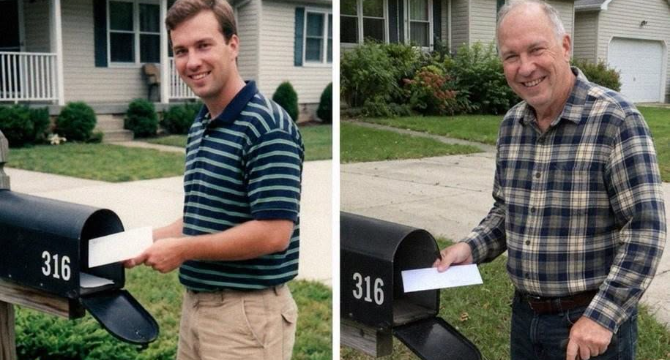
For thirty years, my husband received the same mysterious envelope every birthday. He never told me who sent it, and I never opened one. Then, just before he died, he made me promise I never would.
I was thirty when I married Robert, and for the next three decades, he gave me the kind of marriage I had once believed people exaggerated about.
He was kind, patient, and dependable. He remembered anniversaries, packed lunches when I worked late, coached our son’s baseball team, and cried when our daughter gave us our first grandchild.
Every year, on his birthday, an envelope arrived.
There was only one thing about Robert I never understood.
Every year, on his birthday, an envelope arrived.
No return address.
No company logo.
Just his name written across the front in careful blue handwriting.
The first time, we’d been married less than a year.
Robert looked at the envelope, then slipped it beneath his newspaper.
“Birthday card?” I asked.
Robert looked at the envelope, then slipped it beneath his newspaper.
“Advertising nonsense.”
I laughed.
“Advertisers know your birthday?”
“Apparently they’re getting smarter.”
But advertising didn’t make a man’s hands shake.
I believed him.
At least, I told myself I did.
But advertising didn’t make a man’s hands shake.
The next year, another envelope came.
Same handwriting.
Same blue ink.
When he came out twenty minutes later, the letter was gone.
Robert took it into his study and closed the door.
When he came out twenty minutes later, the letter was gone.
“Secret admirer?” I teased.
He smiled, but it looked forced.
“At my age?”
“You’re thirty-six.”
Some years he seemed relieved afterward. Other years, he became quiet.
“Ancient.”
I kissed him and let it go.
Then it happened again.
And again.
Some years he seemed relieved afterward. Other years, he became quiet.
On his forty-third birthday, he barely spoke after reading it. When Daniel asked what was wrong, Robert blamed a headache.
Once, I found him sitting alone in the garage after midnight.
Ten minutes later, I found his untouched birthday cake in the trash.
I didn’t ask.
By then, I had learned what happened when I did.
Once, I found him sitting alone in the garage after midnight.
The car wasn’t running.
He was simply behind the wheel, staring through the windshield.
“Why are you sitting out here?”
I opened the passenger door.
“Robert?”
He wiped his face quickly.
“You scared me.”
“Why are you sitting out here?”
“Couldn’t sleep.”
“Mary, after all these years, don’t you trust me?”
I noticed the blue envelope beside him.
“Who keeps writing to you?”
He looked down.
Then he reached across and squeezed my hand.
“Mary, after all these years, don’t you trust me?”
That question silenced me.
Robert had never disappeared without explanation.
Because I did trust him.
Robert had never disappeared without explanation. Never guarded his phone. Never given me reason to suspect another woman.
We had two children together, Daniel and Rebecca. Later came four grandchildren who treated Robert like their personal climbing frame.
Whatever was inside seemed to belong to a life before me, and I decided marriage did not entitle me to every part of his past.
So I stopped asking.
The envelopes kept coming.
At first, the doctors talked about treatment.
Every birthday.
For thirty years.
Then Robert got sick.
At first, the doctors talked about treatment.
Later, they started talking about comfort.
Two nights before he died, I was changing his blanket when his hand suddenly closed around my wrist.
Within months, the man who had once carried two grandchildren at once needed my help lifting a glass of water.
His study stayed closed during those final weeks. I wondered whether the letters were hidden inside, but searching felt like breaking an unspoken rule.
Two nights before he died, I was changing his blanket when his hand suddenly closed around my wrist.
“Mary.”
His voice was barely there.
“If another birthday letter comes… don’t open it.”
“I’m here.”
His eyes found mine.
“If another birthday letter comes… don’t open it.”
I froze.
“What?”
“Promise me.”
“You’re frightening me.”
“Robert, who sends them?”
His grip tightened.
“Please.”
“You’re frightening me.”
He closed his eyes.
“Promise.”
He went quietly, before sunrise, with my hand resting against his chest.
I wanted to argue.
Instead, I whispered, “I promise.”
He looked relieved.
Those were the last clear words he ever said to me.
Robert died two days later.
He went quietly, before sunrise, with my hand resting against his chest.
I almost forgot until I opened the mailbox.
Three weeks after the funeral would have been his sixty-first birthday.
I almost forgot until I opened the mailbox.
The envelope was sitting on top.
Blue handwriting.
Robert’s name.
For nearly an hour, I sat at our kitchen table staring at it.
But whoever had sent it clearly didn’t know he was dead.
I had promised.
I knew exactly what Robert had asked of me.
But whoever had sent it clearly didn’t know he was dead.
I turned it over, looking for some clue I’d missed. No initials. No return address. Nothing except the same steady handwriting.
Eventually, I told myself I wasn’t opening it because I was curious.
That excuse lasted until I unfolded the letter.
I was opening it so I could contact the sender.
That excuse lasted until I unfolded the letter.
The first line read:
“Robert, Mom finally forgave you.”
I read it twice.
Then a third time.
I slid onto the kitchen floor with the paper in my hands.
My knees stopped holding me.
I slid onto the kitchen floor with the paper in my hands.
“Oh God, Robert.”
There was a name beneath the greeting.
Claire.
I kept reading.
She never believed the day would come.
She wrote that their mother had finally agreed to see him.
She wrote that after all these years, she never believed the day would come.
Then came the sentence that confused me most.
“I know you’re probably afraid she’ll change her mind again, big brother, but this time I think she means it.”
Big brother.
Robert was an only child.
Then I searched the envelope again.
At least, Robert had always told me he was.
I sat on that floor until my legs went numb.
Thirty years of birthdays rearranged themselves in my head: trembling hands, closed doors, unexplained silences.
Then I searched the envelope again.
Inside was a small card with an address.
The next morning, I drove there.
Two towns away.
I barely slept.
The next morning, I drove there.
The house was modest, with flowerpots on the porch and a wind chime beside the door.
I sat in the car before getting out, still hoping for some harmless explanation—that Claire was a cousin or I’d misunderstood the letter.
A woman in her fifties answered.
Her hand rose to her mouth.
She stared at me.
“Mary?”
My stomach twisted.
“You know me?”
Her hand rose to her mouth.
“You must be Claire.”
“Oh, no.”
“You must be Claire.”
She nodded.
“Where’s Robert?”
I couldn’t answer.
Claire’s face changed.
“No. No, he would’ve told me.”
“No.”
“I’m sorry.”
She grabbed the doorframe.
“No. No, he would’ve told me.”
“He was sick.”
“How sick?”
Behind her, an older woman’s voice called out.
“It took his life, in the end.”
Her eyes filled.
“When?”
“Three weeks ago.”
Claire covered her face.
An elderly woman stood in the hallway.
Behind her, an older woman’s voice called out, “Who is it?”
Claire turned.
“Mom, stay inside.”
I looked past her.
An elderly woman stood in the hallway using a walker.
Then she looked toward the driveway.
She stared at me.
Then she looked toward the driveway.
“Where is my son? I heard his name.”
I understood immediately.
Claire cried.
The old woman looked at me again.
My anger at him disappeared for one second.
“Did Robert come with you?”
My anger at him disappeared for one second.
“I’m Mary.”
She blinked.
“His wife?”
“Yes.”
The sound she made didn’t resemble crying at first.
Her face brightened with desperate hope.
“Then where is he?”
I swallowed.
“Robert died three weeks ago.”
The sound she made didn’t resemble crying at first.
She folded over her walker.
“I waited too long.”
Claire rushed toward her.
“No, no, Mom. Sit down.”
“I waited too long.”
Her voice cracked.
“I waited too long.”
I stood there feeling like I was invading an incredibly private moment.
Eventually, Claire made coffee.
Except Robert was at the center of it.
Eventually, Claire made coffee.
Nobody drank it.
I sat across from her.
“Start at the beginning.”
Claire rubbed her eyes.
“Our father left when Robert was twenty. I was twelve.”
“Did he really never tell you?”
“Tell me what?”
“About us.”
“No.”
She looked hurt, but not surprised.
“Our father left when Robert was twenty. I was twelve.”
“Robert worked constantly after Dad left.”
From the living room, their mother called weakly, “He abandoned us too.”
Claire’s jaw tightened.
“Mom.”
“It’s true.”
Claire turned back to me.
“Robert worked constantly after Dad left. He paid bills. Made my lunches. Walked me to school.”
“Then what happened?”
“He got tired.”
“Robert wanted to leave town.”
Their mother said, “He got selfish.”
Claire stood.
“He was twenty-two.”
“He promised he’d stay.”
“He was twenty-two, Mom.”
Silence followed.
Claire sat again.
“He told me he’d come back for me.”
“Robert wanted to leave town. Mom kept telling him the family needed him.”
“What did he do?”
“One morning, he packed.”
Claire looked toward the window.
“He told me he’d come back for me.”
“Did he?”
“Two years later.”
“Mom wouldn’t let him see me.”
Their mother started crying again.
Claire continued.
“Mom wouldn’t let him see me.”
I stared at the older woman.
“You turned him away?”
She shook her head.
“I told him he’d already made his choice.”
Robert had left, but he had also come back.
Claire’s voice hardened.
“Then she told me Robert didn’t want me anymore.”
The room went quiet.
I felt something cold settle inside me.
Robert had left, but he had also come back. Between his guilt and his mother’s anger, one decision had hardened into decades of separation.
“So how did the letters start?”
“Why didn’t you meet?”
Claire gave a sad smile.
“When I was twenty-nine, I found him.”
“Why didn’t you meet?”
“We nearly did.”
She opened a wooden box sitting beside her chair.
Inside were stacks of envelopes.
All blue ink.
I recognized Robert’s handwriting immediately.
“Instead, I wrote first.”
She handed me one.
I recognized Robert’s handwriting immediately.
Claire said, “I told him I remembered everything. The lunches. School. Birthday presents he couldn’t afford.”
She paused.
“I also told him I remembered him leaving.”
“What did he say?”
She handed me another letter.
“That he was sorry.”
She handed me another letter.
Then another.
“He said he thought he’d come back once he had money and a place for me. When Mom turned him away, he convinced himself I’d be better without him.”
I whispered, “Thirty years.”
“You never met?”
Claire nodded.
“One letter every birthday.”
“You never met?”
“No.”
“Why?”
She gave a helpless laugh.
“At first, I was angry. Then he was ashamed.”
I looked through the letters.
She glanced toward the living room.
“For years, I thought meeting him would mean betraying Mom. By the time I stopped believing that, Robert had convinced himself letters were safer than showing up and being rejected again.”
She looked down at the box.
“Every year, we thought maybe we’d finally meet. Then another birthday came, and another letter felt easier.”
I looked through the letters.
Robert had written about me.
He had even enclosed photographs.
About Daniel.
Rebecca.
Every grandchild.
He had even enclosed photographs.
Claire already knew our entire family.
“We weren’t a secret to you.”
“No.”
That evening, I returned home with the box.
“But you were a secret to us.”
Her eyes lowered.
“I’m sorry.”
That evening, I returned home with the box.
For days, I read.
Robert had not created another life.
He had hidden an old one.
One letter explained more than the others.
That somehow hurt differently.
One letter explained more than the others.
I don’t know how to tell Mary about you without telling her what I did. She thinks I’m a better man than I was. I’m afraid she’ll look at me differently.
I cried when I read it.
Then I got angry.
Then I remembered the garage.
“You idiot,” I said aloud.
He had spent thirty years fearing I would judge the frightened twenty-two-year-old he’d been.
He never gave me the chance.
Then I remembered the garage.
“Mary, after all these years, don’t you trust me?”
For thirty years, I had thought that was the question.
Now I understood it wasn’t.
That hurt more than learning Claire existed.
Robert had trusted me with our children, our money, his illness, and the ordinary pieces of a life. But he had never trusted me enough to show me the part of himself he was most ashamed of.
That hurt more than learning Claire existed.
He had decided, year after year, what I could handle knowing.
For one terrible hour, I considered putting every letter back in the box and saying nothing.
Daniel and Rebecca loved their father.
I could protect that version of him.
They remembered the man who coached baseball, burned pancakes, and let his grandchildren climb all over him.
I could protect that version of him.
I could let them believe the same complete story I had believed.
Then I looked at the box.
That was exactly what Robert had done to me.
He had chosen which truths I was allowed to carry.
A week later, I invited Claire to our house.
I would not make that choice for our children.
A week later, I invited Claire to our house.
Daniel opened the door.
He looked from her to me.
“Mom?”
I said, “This is your aunt Claire.”
Rebecca thought I was joking.
His mouth fell open.
Rebecca thought I was joking.
There were too many questions for one afternoon. I told them what I knew and refused to make Robert a villain or a saint.
He had been their father.
He had also been someone’s missing brother.
Both things were true.
“What was Grandpa like when he was young?”
The grandchildren reacted better.
Our oldest grandson, Ethan, asked Claire, “What was Grandpa like when he was young?”
Claire laughed.
“Terrible cook.”
“Grandpa?”
“Absolutely awful.”
She looked at me.
“He still burned pancakes.”
“Every Sunday, he made pancakes because I loved them. Burned half of them.”
I smiled.
“He still burned pancakes.”
Claire’s eyes filled.
“He kept making them?”
“Every Sunday our children were home.”
For the first time since Robert died, I learned something new about him that didn’t feel like a betrayal.
Claire stayed for dinner.
I was meeting the boy he’d been before me.
Claire stayed for dinner.
When she laughed at something Daniel said, she tipped her head back exactly the way Robert had.
Rebecca noticed it too.
Neither of us said anything.
We didn’t have to.
There was a blue envelope.
The following year, on Robert’s birthday, I opened the mailbox.
There was a blue envelope.
My name was on it.
Seeing that handwriting made my chest ache as it had the year before.
Then I realized I wasn’t afraid of it anymore.
I thought you should have one too.
Inside was one line.
I thought you should have one too. Happy birthday to the man we both loved.
I placed it beside Robert’s photograph.
This time, nobody hid it away.