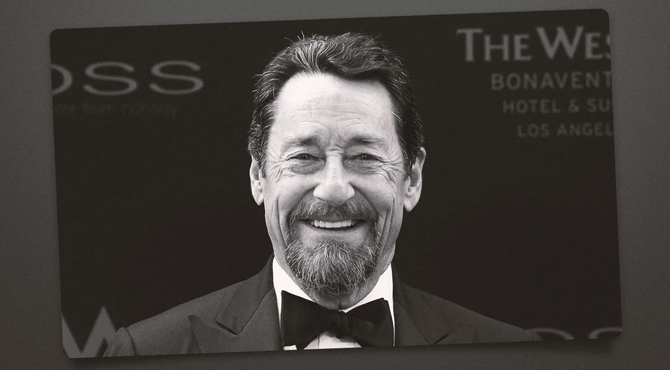
Peter Cullen, the legendary Canadian voice actor best known for bringing Optimus Prime to life in the Transformers franchise and giving the beloved Eeyore his distinctive gloomy voice in Winnie the Pooh, has died at the age of 85.
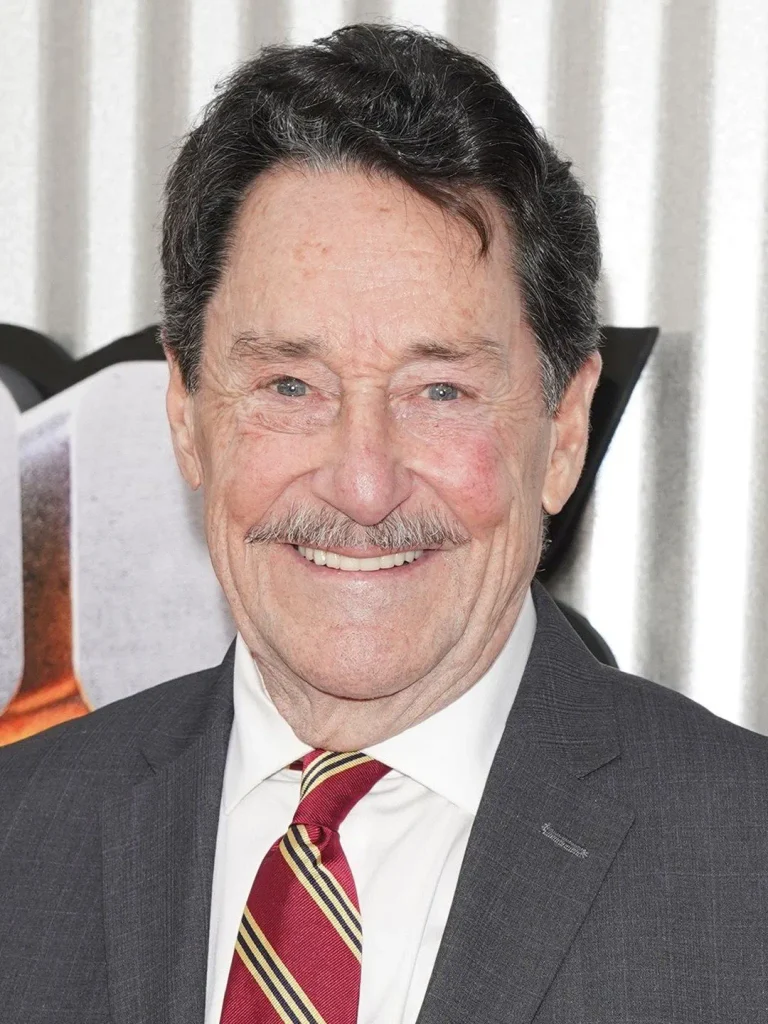
Cullen died Wednesday, August 26, at his home in Los Angeles, according to his agent, Kevin Motley. His family said he passed away peacefully surrounded by those who loved him. No cause of death was publicly disclosed.
In a statement, Cullen’s family asked fans to honor his life not only by remembering his work, but by following the values he believed in — compassion, integrity, loyalty and service to others.
They also shared a message that reflected Cullen’s character: “Be strong enough to be gentle.”
Born Peter Claver Cullen in Montreal on July 28, 1941, Cullen became one of the most recognizable voices in entertainment. His career stretched across more than six decades and included radio, television, film, animation and video games.
For millions of fans, however, his greatest legacy will always be Optimus Prime.
Cullen first voiced the heroic leader of the Autobots in the original Transformers animated series, which ran from 1984 to 1987. The series was based on Hasbro’s popular toy line and introduced audiences to a character who would eventually become one of the most famous figures in animation and science fiction.
Interestingly, Cullen did not initially know exactly what he was auditioning for.
In a 2014 NPR interview, he recalled being told that the character was a hero and that he was also a truck.
“I auditioned like everybody else,” he said.
Cullen won the role and created a voice that would become instantly recognizable. His deep, calm and commanding delivery gave Optimus Prime a sense of strength, wisdom and compassion.
The role also had a deeply personal connection for him.
Cullen said he based some of Optimus Prime’s personality and voice on his older brother, Larry, a decorated U.S. Marine who served in Vietnam from 1965 to 1968.
Cullen remembered that his brother had changed after returning from the war.
“He was quieter and he was a man and a superhero to me,” Cullen said in 2006.
Watching his brother helped Cullen understand the kind of hero he wanted Optimus Prime to be. Rather than simply making the character sound powerful, he gave him the voice of a responsible leader.
“I’d never had an opportunity to do a superhero,” Cullen said. “And when that came, that voice just came right out of me.”
Cullen also voiced Ironhide, the weapons specialist among the Autobots. For that character, he drew inspiration from actor Chill Wills, who was well known for his performances in classic Western films.
Optimus Prime became such an important part of the Transformers franchise that audiences reacted strongly when the character was killed in The Transformers: The Movie in 1986.
Optimus died following his battle with the villainous Megatron, a moment that shocked many young fans. The reaction was far greater than producers had anticipated, and the character was eventually brought back in the 1987 animated production The Return of Optimus Prime.
Nearly two decades later, Cullen returned to the role when director Michael Bay brought Transformers to the big screen in 2007.
The live-action movie starred Shia LaBeouf and introduced Optimus Prime to a new generation of moviegoers. The film became a major worldwide success, earning more than $700 million at the global box office.
For Cullen, returning to Optimus felt surprisingly natural.
He once compared it to putting on an old pair of comfortable shoes after not wearing them for years.
“I just slipped right into them, and they felt as good as the last time I put them on,” he told IGN in 2007.
Cullen went on to voice Optimus Prime in several more live-action Transformers films, including Revenge of the Fallen in 2009, Dark of the Moon in 2011, Age of Extinction in 2014, The Last Knight in 2017, Bumblebee in 2018 and Rise of the Beasts in 2023.
The Transformers movies became enormous global hits, with Dark of the Moon and Age of Extinction each earning around $1.1 billion worldwide.
Although Chris Hemsworth voiced Optimus Prime in the 2024 animated film Transformers One, Cullen remained the voice most closely associated with the character for generations of fans.
But Optimus Prime was only one half of Cullen’s remarkable legacy.
He was also the beloved voice of Eeyore, the gloomy donkey from the Winnie the Pooh universe.
Cullen began voicing Eeyore in The New Adventures of Winnie the Pooh, which aired from 1988 to 1991. He continued playing the character in numerous television programs, films and videos, including Winnie the Pooh: A Very Merry Pooh Year.
Eeyore was almost the complete opposite of Optimus Prime. Instead of a powerful and confident leader, he was quiet, pessimistic and constantly expecting something to go wrong.
Yet Cullen made the character deeply lovable.
He often enjoyed meeting young fans who recognized his voice. On one occasion, he recalled simply speaking to them in Eeyore’s familiar voice and saying, “Hello. Thanks for noticing me.”
The reaction from children showed just how powerful his performances had become.
Cullen’s talents extended far beyond Transformers and Winnie the Pooh.
He voiced King Kong in the 1976 remake and played K.A.R.R., the evil version of the famous talking car K.I.T.T., in Knight Rider. He also returned to the character for the 2009 Knight Rider revival.
One of his most unusual performances came in the 1987 Arnold Schwarzenegger action film Predator.
Cullen provided the terrifying vocal sounds of the Predator, creating the clicks, crackles and strange bubbling noises that became a major part of the creature’s identity.
The story behind the performance was unusual.
Cullen recalled that his agent encouraged him to audition even though he had been working long hours on another project and was seriously ill.
The filmmakers initially did not want to show him what the Predator looked like because they wanted to keep the creature’s appearance secret.
Cullen insisted that he needed to see the character.
He believed that voice acting required him to understand what he was looking at so he could connect emotionally with the character.
When he finally saw the creature, its appearance gave him an immediate idea.
He compared it to an upside-down horseshoe crab dying in the sun on a beach he had visited as a child.
That disturbing image helped inspire the bizarre collection of sounds he created for the Predator.
Cullen’s career included an extraordinary number of other animated roles.
He voiced the cheese-loving mouse Monterey Jack in Chip ‘n Dale: Rescue Rangers and played Coran and King Alfor in Voltron. He also provided voices for Saber Rider and the Star Sheriffs, Vehicle Voltron, Saturday Supercade and Rise of the Teenage Mutant Ninja Turtles.
His work continued for decades, including appearances in animated series, movies and video games.
His performance as Optimus Prime in Transformers: Prime earned him a Daytime Emmy nomination.
Cullen’s career, however, began long before he became a famous voice actor.
He was born in Montreal and was one of four children. His parents, Henry and Muriel, were Americans.
His fascination with voices started when he was young. Cullen spent time on a relative’s farm and discovered that he could imitate the animals around him.
He remembered being able to copy the sounds of cows, calves, chickens and dogs.
That childhood ability would eventually become the foundation of his career.
Cullen graduated from the National Theatre School of Canada in 1963 as part of its first graduating class. He studied acting under operatic coach Bernard Diamant and spent a summer performing Shakespeare in Stratford, Ontario.
He later joined the repertory company at Toronto’s Crest Theatre.
Cullen also worked in Canadian radio and television. He was an announcer at Montreal radio station CKGM and played Commander Bi Bi Latuque on the children’s comedy series The Buddies.
He later starred in Les Anglaises, a CBC radio comedy about a French Canadian man and his English Canadian wife, played by Joan Stuart.
Cullen eventually moved to Hollywood, where he found work on television comedy programs.
In 1967, he became part of The Smothers Brothers Comedy Hour and later appeared in comedy sketches on The Sonny & Cher Comedy Hour and The Hudson Brothers Razzle Dazzle Comedy Show.
At that point, there was little indication that his voice would eventually become known around the world.
His career gradually moved toward animation, where his ability to create completely different voices made him one of the industry’s most respected performers.
He became particularly skilled at giving personality to characters who were not necessarily human, whether they were robots, animals, monsters or machines.
That talent made him an especially valuable performer in animation and science fiction.
Cullen also maintained an interest in science and space exploration. He was involved with NASA and supported the Optimus Prime Spinoff Award, which recognizes young people studying science, technology, engineering and mathematics.
His work on Transformers connected him with generations of children, many of whom grew up to associate his voice with ideas of courage, responsibility and leadership.
Cullen understood that the Transformers phenomenon had become much larger than any individual actor.
“The phenomenon of Transformers itself is mind-shaking,” he once said.
He reflected that being part of the franchise was not simply a professional achievement, but something that had become part of his life.
“I did something in my life that stood out, and I’m really grateful for that. Humbled by it,” he said.
That humility was one of the qualities fans often remembered about Cullen.
He had created some of the most recognizable voices in popular culture, yet he remained grateful for the opportunity to perform them.
For some fans, he was the voice of a heroic robot who always stood up for what was right.
For others, he was the sad but lovable donkey who always seemed to be waiting for the next bad thing to happen.
For movie audiences, he was also the strange and frightening voice of an alien hunter and the sinister personality of a robotic car.
Peter Cullen had the rare ability to make completely different characters feel authentic.
His voice could command attention, inspire trust, create fear or make people laugh.
He is survived by his children, Angus, Claire, Pilar and Clay, who works as a stunt performer and coordinator.
Cullen’s death marks the end of an extraordinary career, but his work will continue to be heard for years to come.
Every time Optimus Prime speaks, every time Eeyore quietly complains about his latest misfortune, or every time fans hear the distinctive sounds of the Predator, they will be hearing echoes of Peter Cullen.
His greatest achievement was not simply creating famous voices.
It was giving those characters personalities that people cared about.
Peter Cullen may be gone, but the voices he created will continue to live on in the hearts of the generations who grew up listening to him.