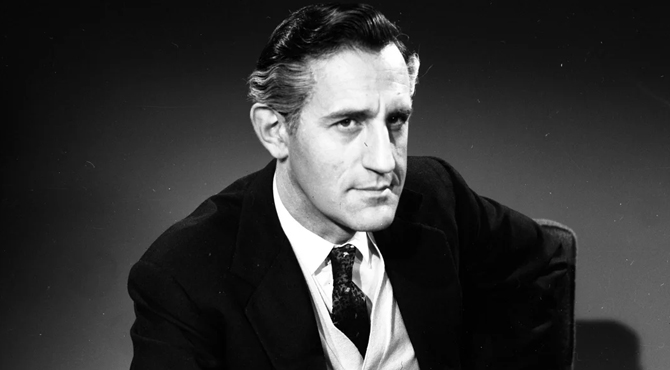
A Life Remembered
Some actors leave behind a collection of memorable performances. Others become so closely associated with a character that their work becomes part of television history.
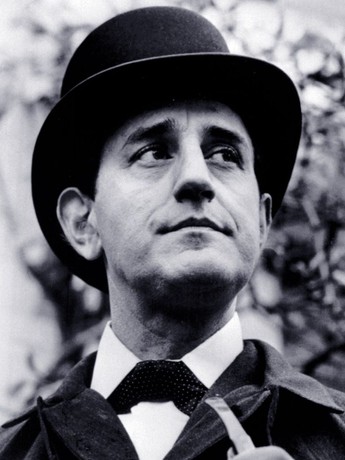
Douglas Wilmer was one of those rare performers.
With his distinguished voice, commanding presence, sharp features and unmistakable screen authority, Wilmer became one of the most memorable actors ever to portray Sir Arthur Conan Doyle’s famous detective, Sherlock Holmes. His performance in the BBC’s 1960s television adaptation earned him a special place in the history of the character and in the hearts of generations of viewers.
But Douglas Wilmer was much more than Sherlock Holmes.
He was a classically trained stage actor, a veteran of the British Army, a respected film performer and a familiar face across British television. His career included appearances in major films such as Richard III, El Cid, Cleopatra, Jason and the Argonauts, The Fall of the Roman Empire, Patton, The Golden Voyage of Sinbad, The Revenge of the Pink Panther and Octopussy.
He worked with some of the most celebrated actors and filmmakers of his generation and built a career that stretched across theater, television and cinema.
When Douglas Wilmer died on March 31, 2016, at the age of 96, the world lost an actor whose career had been closely connected with some of the finest traditions of British performance.
Yet his work, particularly his unforgettable portrayal of Sherlock Holmes, continues to live on.
Early Life in London and Shanghai
Douglas Wilmer was born on January 8, 1920, in Brentford, Middlesex, England.
His childhood was not spent entirely in Britain. His father worked as an accountant in Shanghai, and Wilmer spent part of his early life there before returning to Britain for his education.
He eventually attended The King’s School, Canterbury, and his interest in acting led him toward one of Britain’s most respected institutions for theatrical training: the Royal Academy of Dramatic Art, better known as RADA.
Wilmer won a scholarship to RADA, beginning the formal training that would prepare him for a long career on the stage.
His education, however, was interrupted by the Second World War.
War Service and an Unexpected Beginning
Like many members of his generation, Douglas Wilmer’s early adulthood was shaped by war.
After spending a year at RADA, he was called up for military service. He served in the British Army and became a troop commander in Nigeria and the Gambia.
His military service eventually came to an end after he became seriously ill with tuberculosis.
Returning to civilian life, Wilmer faced the challenge of establishing himself as a professional actor.
His first significant opportunities came through repertory theater.
A fellow RADA student recommended him for work in weekly repertory theater in Rugby. That opportunity helped launch the professional acting career that would eventually take him to London’s West End, Shakespearean theater and, ultimately, international cinema.
Building a Career on the British Stage
For Douglas Wilmer, theater was at the heart of his craft.
He made his West End debut in Antony and Cleopatra at the Piccadilly Theatre in 1946. Two years later, he spent a season at the Shakespeare Memorial Theatre in Stratford-upon-Avon.
In 1951, he joined the Old Vic company, one of Britain’s most important theatrical institutions.
The stage allowed Wilmer to develop the qualities that would later make him such a distinctive screen performer. He had a powerful voice, an imposing physical presence and an ability to convey intelligence and authority without excessive theatrics.
His theater career included a variety of classical and modern roles.
Among his notable performances was King Charles VI in Henry V. Theater critic Kenneth Tynan singled out Wilmer for praise for that performance.
He later played Warwick in St Joan, Claudius in Hamlet and Patrick Delafield in David Hare’s Knuckle.
These stage experiences were important because they established Wilmer as a serious actor long before television audiences came to know him as Sherlock Holmes.
Entering the World of Film
Douglas Wilmer made his film debut in Laurence Olivier’s 1955 adaptation of Shakespeare’s Richard III.
It was an impressive beginning to a screen career that would see him work on some of the biggest productions of the following decades.
His filmography became remarkably varied.
He appeared in historical dramas, adventure films, fantasy pictures, war movies, comedies and major international productions.
In El Cid, he appeared alongside Charlton Heston and Sophia Loren.
In Cleopatra, he joined an enormous cast headed by Elizabeth Taylor, Richard Burton and Rex Harrison.
He appeared in The Fall of the Roman Empire, another major historical epic featuring actors including Stephen Boyd, Alec Guinness and Sophia Loren.
He also worked with Ray Harryhausen’s spectacular fantasy productions, appearing in Jason and the Argonauts and later The Golden Voyage of Sinbad.
For classic-film enthusiasts, Wilmer’s career offers a fascinating journey through some of the most recognizable productions of the 1950s, 1960s and 1970s.
The Man Who Became Sherlock Holmes
Although Douglas Wilmer had already established himself as a respected actor, everything changed when he was cast as Sherlock Holmes.
He first played Holmes for the BBC in 1964.
His interpretation was distinctive.
Rather than portraying Holmes simply as a brilliant gentleman detective, Wilmer presented him as a sharper, more formidable and sometimes arrogant figure.
His Holmes was intelligent, analytical and self-assured. There was a steely quality to the performance that made the character feel both fascinating and intimidating.
Nigel Stock played Dr. Watson alongside him, creating a memorable partnership.
The chemistry between Holmes and Watson was one of the strengths of the production.
For viewers, Wilmer seemed to embody the character described in Conan Doyle’s stories.
A Sherlock Holmes Close to Conan Doyle
Douglas Wilmer believed that his interpretation of Holmes was particularly close to the character created by Arthur Conan Doyle.
He wanted Holmes to possess the arrogance and confidence that he felt were sometimes missing from earlier screen interpretations.
That approach gave his performance a distinctive edge.
Wilmer’s Holmes did not need to explain his intelligence to the audience.
It was simply there.
His posture, expression and voice communicated the character’s extraordinary powers of observation and deduction.
The performance also benefited from Wilmer’s classical acting background.
He understood how to make dialogue important.
A pause could carry meaning.
A glance could suggest that Holmes had noticed something nobody else had seen.
Even when Holmes was simply standing in a room, Wilmer could make him feel like the most intelligent person present.
That quality helped make his interpretation so memorable.
The BBC Sherlock Holmes Series
Wilmer appeared in the BBC’s 1960s adaptation of Conan Doyle’s stories, becoming the Holmes for a generation of British television viewers.
The series brought the detective into living rooms across Britain and helped establish Wilmer as one of the most recognizable screen Holmeses of his era.
His portrayal has continued to attract admiration from Sherlock Holmes enthusiasts.
The performance was particularly notable for its attention to Conan Doyle’s original stories and for Wilmer’s understanding of Holmes as an intelligent, eccentric and sometimes difficult character.
The praise was not simply based on nostalgia.
Wilmer had studied the character carefully, and his performance reflected an understanding of Conan Doyle’s original stories.
That attention to detail became one of the defining features of his Holmes.
Leaving the Series
Despite the popularity of his portrayal, Wilmer did not continue as Holmes for the series’ second run.
He became frustrated with aspects of television production, including limited rehearsal time and disagreements over scripts and direction.
Peter Cushing eventually took over the role.
Yet Wilmer’s association with Sherlock Holmes did not end there.
The character followed him throughout the rest of his career.
Returning to Sherlock Holmes
In 1971, Wilmer played Professor Van Dusen in The Rivals of Sherlock Holmes, another production connected to the tradition of brilliant fictional detectives.
Then, in 1975, he returned to the role of Sherlock Holmes in Gene Wilder’s comedy The Adventure of Sherlock Holmes’ Smarter Brother.
The film was a very different interpretation of the Holmes universe.
It was a comedy rather than a serious detective drama, but Wilmer’s presence provided a delightful connection to the traditional Holmes.
Even years after his original television performance, audiences still recognized him as one of the great screen interpreters of the detective.
A Remarkable Film Career
While Sherlock Holmes became his most famous role, Douglas Wilmer continued to work extensively in film.
He appeared in films across several genres and worked alongside some of the biggest stars of the twentieth century.
His credits included A Shot in the Dark, starring Peter Sellers, Khartoum, featuring Charlton Heston and Laurence Olivier, and Patton, starring George C. Scott.
He also appeared in the Christopher Lee Fu Manchu films The Brides of Fu Manchu and The Vengeance of Fu Manchu, playing Sir Denis Nayland Smith.
The character was a determined opponent of Fu Manchu and allowed Wilmer to play another intelligent and authoritative figure.
He returned to adventure and fantasy films in The Golden Voyage of Sinbad.
Later, he appeared in The Revenge of the Pink Panther alongside Peter Sellers.
And in 1983, he appeared in the James Bond film Octopussy, starring Roger Moore.
It was yet another example of Wilmer’s extraordinary ability to move between genres.
Douglas Wilmer and British Television
Film was only one part of Wilmer’s career.
British television audiences saw him in numerous productions throughout the 1950s, 1960s, 1970s and beyond.
His television credits included The Adventures of Robin Hood, The New Adventures of Charlie Chan, The Invisible Man, The Saint, The Avengers, The Baron, Journey to the Unknown and Space: 1999.
These appearances helped establish him as one of Britain’s most familiar character actors.
He could play aristocrats, military figures, intellectuals, villains, officials and historical characters with equal conviction.
His voice and bearing made him particularly effective in period dramas, but he was equally capable of appearing in contemporary stories.
A Life Beyond Acting
As the years passed, Douglas Wilmer became increasingly selective about acting.
At one point, he stepped away from the profession and opened a wine bar in Woodbridge, Suffolk.
Naturally, given his most famous role, the establishment was called Sherlock’s.
The name was a fitting reminder that even when Wilmer was no longer working regularly as an actor, Sherlock Holmes remained an important part of his identity.
Wilmer also had an interest in painting.
He was a self-taught artist whose watercolors were influenced in part by his visits to Malta. He exhibited his work and became a member of the Ipswich Art Society.
These interests revealed another side of the actor.
Away from the cameras and theater stages, Wilmer remained a creative person with interests extending into art, literature and the world around him.
His Love of Sherlock Holmes Continued
Although Wilmer had stepped back from regular acting, his connection with Sherlock Holmes continued.
He recorded stories by Arthur Conan Doyle for Penguin audiobooks, allowing listeners to experience his distinctive voice once again.
He also wrote an autobiography, Stage Whispers, which provided an account of his life and career.
For fans of classic British acting, the memoir offered an opportunity to hear directly from an actor who had witnessed enormous changes in theater, film and television.
A Special Appearance in Sherlock
In 2012, Douglas Wilmer made a particularly meaningful appearance in the modern BBC series Sherlock, starring Benedict Cumberbatch.
He appeared as a gentleman at the Diogenes Club in the episode “The Reichenbach Fall.”
It was a wonderful piece of casting.
Here was one of the most respected Holmes actors of an earlier generation appearing in a modern interpretation of the character.
For longtime fans, it felt like a bridge between different eras of Sherlock Holmes.
Wilmer’s presence connected the BBC’s contemporary Sherlock with the television history of the character.
It was also one of his final acting appearances.
A Respected Elder of the Sherlock Holmes Tradition
By the final years of his life, Douglas Wilmer had become much more than a former television star.
He was regarded as an important figure in the history of Sherlock Holmes on screen.
He was also admired by younger actors and filmmakers who had grown up watching his work.
Mark Gatiss, who co-created Sherlock and played Mycroft Holmes, publicly expressed his admiration for Wilmer following his death.
Roger Moore also remembered him warmly, describing him as a fine actor and a joy to work with.
Such tributes reflected the affection and respect Wilmer had earned throughout his long career.
His Final Years
Douglas Wilmer continued to maintain his connection with the acting world and with Sherlock Holmes enthusiasts during his later years.
He participated in projects celebrating his work and remained involved with the preservation of his Sherlock Holmes legacy.
When the BBC’s 1960s Sherlock Holmes episodes received renewed attention, Wilmer contributed his time and memories to the celebration of the series.
For an actor whose work had first appeared on television decades earlier, it was a fitting recognition of the importance of his performance.
The Death of Douglas Wilmer
Douglas Wilmer died on March 31, 2016, in Ipswich, Suffolk, England.
He was 96 years old.
His death marked the end of an extraordinary life that had taken him from London and Shanghai to the British Army, the stage, Hollywood films and television screens around the world.
He had lived through enormous changes in the entertainment industry.
He began his professional career in an era when theater dominated the careers of many serious actors.
He witnessed the growth of television.
He appeared in major Hollywood productions during the golden age of epic filmmaking.
And he lived long enough to see a new generation reinterpret Sherlock Holmes for modern audiences.
Few careers could encompass such a remarkable span of history.
Remembering the Actor Behind the Detective
It would be easy to remember Douglas Wilmer only as Sherlock Holmes.
After all, the role became one of the defining achievements of his career.
But doing so would overlook everything else he accomplished.
He was a Shakespearean actor.
He was a West End performer.
He was an Old Vic actor.
He was a film character actor.
He was a television performer.
He was a soldier.
He was a painter.
He was an author.
And, of course, he was one of the most respected actors ever to portray Sherlock Holmes.
His career demonstrated the depth and versatility of the British acting tradition.
Why His Sherlock Holmes Still Matters
Decades after Wilmer first appeared as Sherlock Holmes, his performance continues to attract attention.
Part of the reason is his fidelity to Conan Doyle.
Part of it is his voice.
Part of it is his physical presence.
But perhaps the greatest reason is the intelligence he brought to the character.
Wilmer did not treat Holmes simply as a clever detective.
He understood that Holmes could be arrogant, impatient, eccentric, intense and occasionally difficult.
Those characteristics made the character more human.
His Holmes could be cold when concentrating on a case, but he was never boring.
Every movement appeared deliberate.
Every expression seemed to suggest that Holmes was processing information that everyone else had overlooked.
That is why Wilmer’s interpretation has endured.
A Legacy That Continues
Douglas Wilmer passed away in 2016, but his work remains readily recognizable to fans of classic British cinema and television.
His films continue to introduce him to new audiences.
His television appearances remain part of the history of British broadcasting.
And his portrayal of Sherlock Holmes continues to be discussed whenever memorable screen interpretations of the detective are considered.
His appearance in Sherlock was particularly symbolic.
It showed that even as new generations of actors took on the character, the performances of earlier Holmes actors had not been forgotten.
Douglas Wilmer was part of that tradition.
Indeed, he helped define it.
A Final Tribute to Douglas Wilmer
Douglas Wilmer lived for 96 years and spent much of that extraordinary life in the world of performance.
He worked on stage.
He appeared in television dramas.
He stood alongside some of Hollywood’s greatest stars.
He appeared in historical epics, fantasy adventures, comedies and spy films.
But for millions of viewers, his most enduring image will always be that of Sherlock Holmes.
The sharp eyes.
The commanding voice.
The unmistakable intelligence.
The confidence.
The quiet intensity.
That was Douglas Wilmer’s Holmes.
But behind that famous detective was a man whose career was much richer and more varied than a single role.
He was an actor shaped by theater, whether he was playing Shakespeare, a historical figure, a detective, an adventurer or a supporting, classical training and a lifetime of experience.
He brought intelligence and dignity to his performances, whether he was playing Shakespeare, a historical figure, a detective, an adventurer or a supporting character in a major motion picture.
His career also reminds us of the special place occupied by character actors.
They may not always receive the same attention as leading stars, but they give films and television productions their texture, authenticity and personality.
Douglas Wilmer was one of those actors.
He could enter a scene and immediately make it feel more substantial.
He brought authority to his characters.
He brought experience to every performance.
And he left behind a body of work that spans generations.
Douglas Wilmer: Forever Remembered
Douglas Wilmer died at the age of 96, but the passage of time has done little to diminish his legacy.
For fans of Sherlock Holmes, he remains one of the memorable screen interpreters of Arthur Conan Doyle’s legendary detective.
For lovers of classic British cinema, he remains a familiar and respected face from some of the era’s most memorable productions.
For theater enthusiasts, he represents a generation of classically trained British performers who built their careers through the stage before moving effortlessly between theater, television and film.
And for those who simply remember seeing him on screen, he remains an actor with a rare and unforgettable presence.
Douglas Wilmer gave audiences a lifetime of performances.
He gave Sherlock Holmes intelligence, authority and personality.
He gave classic films memorable supporting characters.
He gave British television decades of distinguished performances.
And he left behind a legacy that continues to be discovered and appreciated.
Douglas Wilmer may have taken his final bow in 2016, but Holmes return to the screen, there will always be a place in that long and distinguished tradition for Douglas his performances remain.
And whenever the deerstalker, magnifying glass and unmistakable silhouette of Sherlock Holmes return to the screen, there will always be a place in that long and distinguished tradition for Douglas Wilmer.
He was not simply an actor who played Sherlock Holmes.
For an entire generation, he was Sherlock Holmes.
And he will always be remembered.