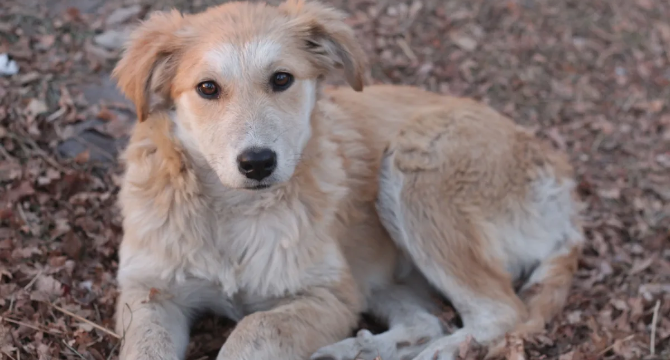
For two years, Sophie believed her beloved dog had died while she was away at summer camp. Then one afternoon, a scratching sound came from the back door, and the dog she had mourned was standing on the porch.
My name is Sophie, and when I was ten years old, the dog I had spent two years mourning scratched at our back door.
Mom and I were doing homework at the kitchen table when we heard it.
Three slow scratches, then a soft whine.
Mom opened the door.
I screamed.
Biscuit stood on the porch.
She was painfully thin, her golden fur filthy and tangled.
Her ribs showed when she breathed.
But I knew those brown eyes before I even dropped to my knees.
“Biscuit!”
She stumbled into me, licking my chin as I buried my face in her fur.
It didn’t make sense.
Biscuit was dead.
At least, that was what Dad had told me.
Mom brought Biscuit home from a shelter when I was five.
She was a scruffy golden mutt, but she’d had extensive obedience training before ending up there.
She knew dozens of commands, could retrieve things by name, and was calmer and more attentive than any dog I’d ever met.
None of that mattered much to me.
To me, Biscuit was simply my best friend.
She slept at the foot of my bed.
She waited at the window for my school bus.
Whenever I cried, she leaned her entire body against my legs until I stopped.
When I was eight, I went to summer camp for two weeks.
It was my first time away from home.
I cried at the bus stop.
Biscuit howled as the bus pulled away.
When I came home, she wasn’t waiting for me.
Dad sat me down in the kitchen.
“I’m so sorry, sweetheart,” he said. “Biscuit got very sick while you were gone. There was nothing the vet could do.”
I was inconsolable.
For weeks, I barely ate.
Mom held me at night while I cried, although I sometimes noticed her looking strangely at Dad.
He had told her the same story, but something about the way he avoided talking about Biscuit had always bothered her.
Months later, Dad brought home another dog.
He was sweet and playful, but I wouldn’t even touch him.
“I don’t want another dog,” I told Dad. “I want Biscuit.”
Dad took the dog back the next day.
Eventually I learned to live without Biscuit.
Then, two years after she supposedly died, she walked back into our kitchen.
Mom was crying almost as hard as I was when Dad came home.
“Biscuit came back!” I shouted.
He stopped in the doorway.
I expected him to stare at her in disbelief.
Instead, all the color disappeared from his face.
“Where did she come from?”
Mom slowly stood.
I didn’t understand what was strange about the question until Mom said, “That’s what you’re asking?”
Dad looked at her.
“You told us she died.”
“I know.”
Mom’s expression changed.
“You don’t look surprised that she’s alive.”
Dad opened his mouth, then closed it.
That was the moment my happiness turned into something else.
“You knew,” I whispered.
“Sophie…”
“You knew she wasn’t dead.”
Dad crouched in front of me.
“It’s complicated.”
I held Biscuit around the neck and hugged her.
“Did you get rid of her?”
He didn’t answer.
That was enough.
I ran upstairs with Biscuit behind me.
She tried to climb onto my bed, but she was too weak.
I lifted her front half while Mom helped with the rest.
Dad stayed downstairs.
The veterinarian examined Biscuit the next morning.
She was dehydrated, underweight, and exhausted, but there was no sign of a serious illness.
We were told to feed her carefully and give her time to regain her strength.
For the next two weeks, Biscuit barely left my side.
She remembered everything.
The first afternoon I came home from school, Mom said Biscuit had started waiting beside the window before the bus arrived.
She remembered where her water bowl used to be.
She remembered the cabinet where Mom kept dog treats.
She even scratched at my bedroom door at bedtime until I let her in.
Every familiar thing she did made me happier.
And angrier.
Dad kept trying to talk to me.
I kept asking the same question.
“Where was she?”
He always answered, “I’ll explain.”
But he didn’t.
Then I remembered the other dog.
One night at dinner, I put down my fork.
“You tried to replace her.”
Dad looked up.
“What?”
“The dog you brought me. Biscuit was alive then, wasn’t she?”
Mom turned toward him.
Dad stared at his plate.
“Yes.”
I pushed back my chair.
“You watched me cry because Biscuit was dead, and then you brought me another dog when you knew she wasn’t?”
“I thought it might help.”
“Help who?”
He had no answer.
After that, I stopped waiting for Dad to tell me the truth.
I started paying attention to Biscuit.
As she grew stronger, Mom and I took her on increasingly long walks.
Biscuit usually followed whatever route we chose, but whenever we passed the far end of our road, she pulled toward a narrow trail leading into the woods.
The first few times, Mom stopped her.
One Saturday, Biscuit pulled toward it again.
“Let her go,” I said.
“Sophie, we don’t know where that leads.”
“She does.”
Mom hesitated.
Then she loosened the leash.
Biscuit took us into the woods.
After nearly 20 minutes, we reached an old house surrounded by a sagging fence.
Biscuit became frantic.
She pulled us toward the gate and whined until Mom opened it.
The house appeared abandoned.
There was no car.
Leaves covered the steps, and several newspapers were piled near the door.
Mom knocked.
Nobody answered.
She knocked again and called, “Hello?”
The door was slightly ajar.
Before Mom could shorten Biscuit’s leash, Biscuit squeezed through the opening, pulling it from Mom’s hand.
“Biscuit!”
Mom called into the house again.
Still nothing.
She looked at me, clearly uncomfortable.
“Stay beside me.”
We stepped inside to retrieve her.
Biscuit had already gone into a small living room.
She walked directly to a worn cushion beside an old armchair and lay down.
My stomach tightened.
“Mom.”
She saw it too.
Two metal bowls sat against the wall.
One had “BISCUIT” written across it in faded marker.
On a hook near the door hung a familiar-looking walking harness.
A white mobility cane leaned against the wall nearby.
Then I noticed the drawings taped above a small table.
Most were obviously done by a child.
In one, an elderly woman walked with a cane while Biscuit trotted beside her.
A little girl held the woman’s other hand.
Above them, in uneven letters, were three names.
“GRANDMA. LILY. BISCUIT.”
There were photographs too.
Biscuit sleeping beside the little girl.
Biscuit sitting at the elderly woman’s feet.
Biscuit carrying a cloth shopping bag in her mouth while the woman laughed.
I stared at them.
This wasn’t where somebody had dumped Biscuit.
This had been her home.
Mom studied one of the photographs without removing it from the wall.
Then she said, “We’re going home.”
Dad was in the garage when we returned.
Mom showed him a picture she’d taken of the photograph on her phone.
His shoulders sagged.
“Who are they?” she asked.
Dad didn’t pretend anymore.
“The woman’s name was Martha. The girl is her granddaughter, Lily.”
I stared at him.
“How do you know them?”
Dad sat down.
He told us that while I was at camp, he’d stopped near a small market and noticed Martha struggling with several bags while Lily tried to help her.
Martha’s eyesight was failing.
She could still see shapes and some detail up close, but getting around had become difficult.
Dad helped them carry their groceries home.
Biscuit happened to be in his truck.
When Biscuit jumped out, Martha immediately liked her.
Over the next several days, Dad checked on them, always bringing Biscuit along.
By the end of that first week, he’d convinced himself he’d found the place where Biscuit was needed most.
Biscuit retrieved things Martha dropped, stayed close when they walked, responded immediately when Martha called, and calmly accompanied her on familiar trips.
Martha still used her cane, but Biscuit’s presence made her feel steadier and less alone.
Lily adored her too.
“And you gave her to them,” I said.
Dad nodded.
“I thought they needed her more than we did.”
My eyes filled with tears.
“She wasn’t yours to give away.”
“I know that now.”
“You could’ve asked me.”
“You were eight.”
“So?”
Dad looked down.
“I convinced myself you’d be upset for a while and then understand someday.”
Mom stared at him.
“You decided that without even talking to me?”
Dad nodded.
“I thought I was helping them.”
“But you told me she died,” I said.
His face tightened.
“When you came home, the first thing you did was run through the house calling for her. I panicked.”
“So you lied.”
“Yes.”
Mom folded her arms.
“And after that?”
Dad was silent.
I remembered crying into Mom’s pillow.
Refusing dinner.
Asking Dad whether Biscuit had been scared when she died.
He had answered me.
Every time.
“Why didn’t you tell me when you saw what it did to me?”
“I almost did.”
“When?”
“Lots of times.”
I laughed bitterly.
“That’s not an answer.”
Dad rubbed both hands over his face.
“The night you said you only wanted Biscuit, I nearly drove over there.”
That hurt more than I expected.
“But you didn’t.”
“No.”
“Why?”
“At first, I told myself Martha depended on her. Lily loved her. Taking Biscuit back would’ve hurt them.”
“At first?”
Dad looked directly at me.
“After a while, that wasn’t the whole reason.”
Mom didn’t rescue him from the silence.
“I was ashamed. Every week I waited made it harder to admit what I’d done. Eventually, I wasn’t protecting Martha. I wasn’t protecting you. I was protecting myself.”
For the first time since Biscuit returned, Dad didn’t ask me to understand.
He just apologized.
I wasn’t ready to forgive him.
There was still something I needed to know.
“What happened to them?”
Dad shook his head.
“I don’t know. I stopped going there after Biscuit settled in. I thought staying away would make everything easier.”
It sounded cowardly.
Maybe that was why I believed him.
Mom began trying to find out what had happened.
Because we knew Martha’s first name and where she’d lived, she was eventually able to confirm through people in the area that Martha had died several weeks earlier.
Lily no longer lived at the house.
That explained why it was empty.
It didn’t explain how Biscuit had gotten out.
More than anything, I wanted to know whether Lily was all right.
Mom contacted the local child-services office and explained that we had Biscuit and believed she had belonged to a girl who’d recently entered care after her grandmother’s death.
They couldn’t tell Mom where Lily was or give us private information, but they agreed to pass our contact details to the adults responsible for her.
Then we waited.
Several days later, Mom received a call.
Lily wanted to meet us.
She came to our house the following Sunday with her foster mother.
She was small for ten, with dark hair pulled into a loose ponytail.
For a few seconds, neither of us knew what to say.
Then Biscuit walked into the room.
Lily gasped.
“Biscuit!”
Biscuit raced toward her.
I hadn’t seen her move that fast since she came home.
Lily dropped to her knees.
Biscuit climbed halfway into her lap, licking her face while Lily laughed and cried.
Something ugly flickered inside me.
Jealousy.
Biscuit was mine.
Then I looked at Lily.
She had lost her grandmother, her home, and Biscuit almost at once.
I’d spent two years grieving one of those things.
Suddenly I couldn’t be angry at her.
Lily spent the afternoon telling me about Biscuit’s other life.
Biscuit accompanied Martha to the small market.
She picked up things Martha dropped.
If Martha called from another room, Biscuit came immediately.
At night, she slept in the hallway between Martha’s bedroom and Lily’s, as if she couldn’t decide who needed her more.
“Grandma said Biscuit made her feel like she could still do things for herself,” Lily told me.
Then I asked the question that had been bothering me.
“How did she get out?”
Lily went quiet.
“The people helping me move said Biscuit couldn’t come where I was going. Someone was supposed to come get her.”
She stroked Biscuit’s ears.
“I didn’t know where they’d take her.”
“What did you do?”
“I opened the gate.”
I stared at her.
Lily’s eyes filled.
“I told her to go. I thought maybe she’d find somebody who’d love her.”
“You just let her go?”
“I didn’t want strangers taking her away.”
That explained the condition Biscuit had been in when she reached us.
She hadn’t walked directly from Martha’s house to ours.
She had been loose long enough to become hungry, dirty, and exhausted before familiar territory finally brought her home.
Biscuit rested her head on Lily’s knee.
I thought about Dad deciding who deserved Biscuit.
Then I thought about Lily opening a gate even though Biscuit was one of the only things she had left.
“You saved her,” I said.
Lily shook her head.
“She saved us first.”
After that, things seemingly went back to normal.
Biscuit stayed with me, but Lily visited whenever the adults caring for her could arrange it.
We became friends slowly, mostly because Biscuit refused to let either of us sit very far apart.
Dad changed too.
Mom was furious with him for a long time, and I was even longer.
He never tried to excuse himself again.
Once, months later, he told me, “I thought doing something for a good reason meant I was doing the right thing.”
I looked at Biscuit sleeping between Lily and me.
“It doesn’t if you don’t let anyone else choose.”
Dad nodded.
“I know.”
That mattered more than another apology.
Eventually, Lily’s belongings were collected from her grandmother’s house.
Among them were the drawings we’d seen on the wall.
For my birthday, Lily gave me one.
It was the picture of Martha, Lily, and Biscuit walking together.
At first, I wasn’t sure I wanted it.
That drawing had once felt like proof that somebody else had gotten the two years that should have been mine.
Eventually, I understood it differently.
Those years were taken from me because Dad made a choice he had no right to make.
His intentions didn’t erase that, and neither did his apology.
But the years themselves weren’t wasted.
Biscuit helped Martha hold on to some independence.
She helped Lily feel safe.
They loved her when I couldn’t be there.
And Lily loved her enough to open a gate.
A few months later, Mom took a photograph of Lily and me sitting on our back steps with Biscuit squeezed between us.
Lily asked if she could have a copy.
I gave her one.
On the back, I wrote our three names.
“LILY. SOPHIE. BISCUIT.”
Dad had believed love gave him the right to decide where Biscuit belonged.
Lily taught me the opposite.
Sometimes loving someone means opening the gate and trusting them to find their way.
Biscuit did.
And somehow, when she came home, she brought all of us with her.