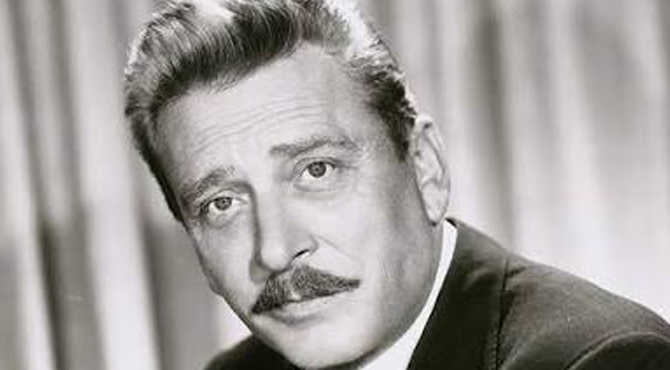
Today, we remember Leon Ames, the distinguished character actor whose unforgettable performances, dignified screen presence, and beloved fatherly roles helped make the Golden Age of Hollywood truly special.
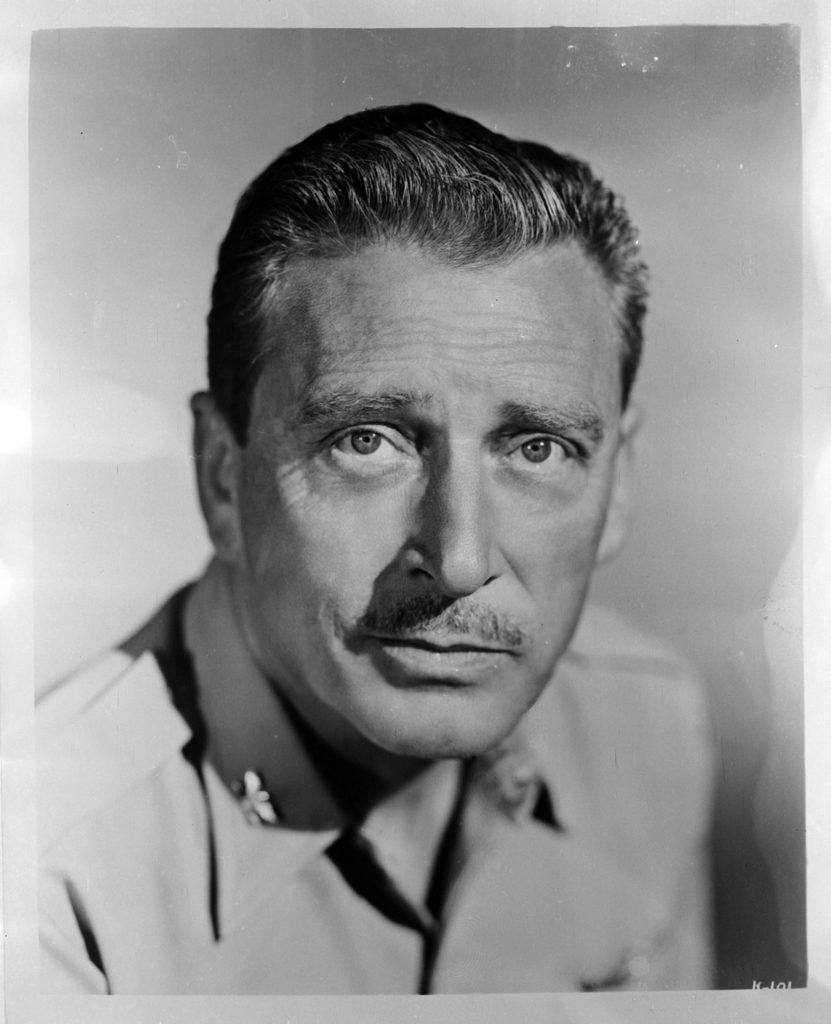
There are actors whose names immediately bring to mind glamorous leading roles, spectacular romances, or unforgettable action sequences. And then there are actors like Leon Ames, whose greatest gift was making the world on screen feel a little more human.
With his distinguished appearance, expressive face, commanding voice, and remarkable ability to portray authority softened by affection, Ames became one of classic Hollywood’s most recognizable character actors. He played fathers, judges, military officers, businessmen, and other figures whose presence gave countless films a sense of warmth, stability, and authenticity.
On October 12, we remember this talented performer, who passed away on the same date in 1993 at the age of 91. More than three decades later, his performances remain part of Hollywood’s enduring cinematic heritage. His legacy lives on through the classic films and television programs that continue to introduce new generations to the artistry of America’s Golden Age of entertainment.
Today, we look back at the life, career, achievements, and lasting legacy of Leon Ames—a familiar face who helped make some of Hollywood’s most cherished stories unforgettable.
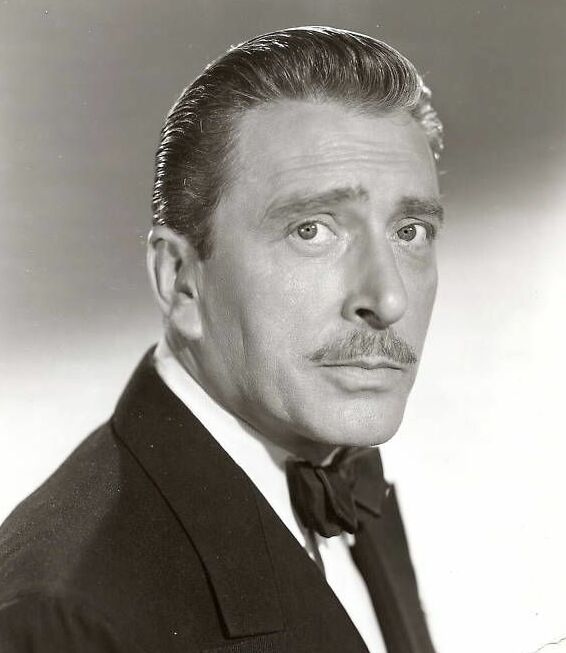
Leon Ames: The Early Life of a Future Hollywood Star
Leon Ames was born on January 20, 1902, in Portland, Indiana. He entered the world long before Hollywood became the global entertainment powerhouse it is today, at a time when the motion-picture industry was still finding its identity.
His early life offered no guarantee of a successful career in the movies. Like many performers of his generation, Ames had to work his way toward the dream of becoming an actor. His journey was shaped by determination, experience, and a willingness to take on opportunities wherever they appeared.
Before becoming a familiar presence on the screen, he gained experience performing with touring theatre companies. The years spent working in theatre helped him develop the timing, discipline, and stage presence that would later distinguish his film performances.
His path was not an overnight success story. It was the story of a working performer who steadily built his craft, learned the demands of the entertainment business, and continued pursuing his ambitions even when success remained uncertain.
Eventually, the young actor found his way into Hollywood. Under the name Leon Waycoff in some of his early work, he began establishing himself in the film industry. He later became widely known as Leon Ames, the name that would be associated with a long and distinguished career.
Finding His Place in Hollywood
Ames entered the motion-picture business during a fascinating period of transformation. The early 1930s saw Hollywood adjusting to sound films, and actors needed more than a photogenic appearance to establish themselves. They also needed a voice that could carry dialogue, a convincing screen presence, and the ability to make characters believable.
Ames possessed many of these qualities.
His early film work gave him opportunities to explore different kinds of characters. He appeared in dramas, mysteries, crime pictures, and other productions that allowed him to develop his screen personality.
Among his early credits was Murders in the Rue Morgue (1932), an atmospheric horror film starring Bela Lugosi. Ames continued working throughout the 1930s, gradually building a filmography that demonstrated his versatility and professionalism.
He also appeared in Bluebeard’s Eighth Wife (1938), the romantic comedy directed by Ernst Lubitsch and starring Gary Cooper and Claudette Colbert.
These early experiences helped prepare Ames for the more prominent supporting roles that would come to define his career. He was not necessarily destined to become the leading man in every production, but he possessed a quality that Hollywood valued enormously: he could make a supporting character feel like a real person rather than simply another name in the credits.
That ability would eventually become his greatest strength.
The Role That Made Leon Ames Unforgettable: Meet Me in St. Louis
For many classic-film enthusiasts, Leon Ames will forever be associated with Meet Me in St. Louis (1944), the beloved MGM musical directed by Vincente Minnelli.
Starring Judy Garland, Margaret O’Brien, Mary Astor, and a talented ensemble cast, the film follows the Smith family through everyday experiences, romantic hopes, family disagreements, and the excitement of life in early twentieth-century St. Louis.
Ames played Alonzo Smith, the father of the family.
It was a role that perfectly suited his talents.
As Alonzo, Ames portrayed a respectable and hardworking father whose responsibilities sometimes placed him at odds with the wishes of his children. He was a man who cared deeply about his family but also believed in maintaining order, protecting his household, and making decisions that he considered best for everyone.
What made the performance so effective was its humanity.
Ames did not portray Alonzo as a perfect father. Instead, he gave the character a mixture of authority, humour, confusion, affection, and vulnerability. His character could be firm when circumstances demanded it, yet he could also be moved by the needs and emotions of the people he loved.
That balance made the Smith household feel authentic.
The film’s enduring appeal rests partly on its ability to turn ordinary family experiences into memorable cinema. The arguments, celebrations, disappointments, and moments of reconciliation feel familiar because the characters are presented as people rather than distant Hollywood creations.
Ames played an important part in establishing that atmosphere.
His performance complemented Judy Garland’s warmth and Margaret O’Brien’s youthful energy, while his scenes with Mary Astor helped give the family dynamic its emotional foundation.
Over the years, Meet Me in St. Louis has become one of the most beloved American musical films. Its songs, including the unforgettable “Have Yourself a Merry Little Christmas,” have secured a place in popular culture.
Yet the film’s emotional power comes from more than its music. It comes from the relationships between its characters, and Ames helped make those relationships convincing.
When audiences remember Alonzo Smith, they remember a father who struggles to balance his responsibilities with the happiness of his family. Through that performance, Leon Ames became part of a cinematic tradition that celebrates the complicated but enduring bonds between parents and children.
A Master of the Beloved Hollywood Father Role
Following the success of Meet Me in St. Louis, Ames became particularly associated with fatherly characters and authoritative professional figures.
Hollywood frequently relied on actors who could establish credibility quickly. A father needed to feel protective and believable. A judge needed to communicate authority. A businessman needed to appear experienced and capable.
Ames could accomplish these things without making his performances feel forced.
His characters often possessed an air of respectability, but he also understood how to introduce humour and vulnerability. Beneath the formal appearance, there was usually a recognizably human personality.
This became one of the defining features of his screen career.
Little Women (1949)
In the 1949 adaptation of Little Women, Ames played Father March, the absent but deeply loved patriarch of the March family.
Based on Louisa May Alcott’s classic novel, the film follows the lives of the March sisters as they navigate family responsibilities, growing up, hardship, and the pursuit of their individual dreams.
Father March represents the family’s moral centre. Although circumstances keep him away from home for much of the story, his influence remains important to the lives of his wife and daughters.
Ames brought dignity and gentleness to the role. His presence complemented the emotional world of the March family and reinforced the film’s themes of devotion, sacrifice, and family loyalty.
It was another example of how he could make a supporting role meaningful without needing to dominate the screen.
On Moonlight Bay (1951)
Ames continued exploring the role of the loving but sometimes exasperated father in On Moonlight Bay, starring Doris Day and Gordon MacRae.
He played George Winfield, the father of the film’s central young characters. Once again, Ames helped establish the family’s emotional atmosphere, portraying a parent who must respond to the changing ambitions and romantic interests of his children.
His performance reflected one of his greatest strengths: the ability to combine traditional authority with the affectionate frustration familiar to many parents.
The film’s popularity led to a sequel, By the Light of the Silvery Moon (1953), in which Ames returned as George Winfield.
Together, these films demonstrate why Hollywood repeatedly turned to him for family-centred stories. He understood the importance of the father figure without reducing that character to a collection of predictable gestures.
Other Memorable Family Roles
Ames’s filmography included numerous productions in which his dependable screen presence added weight to the story.
In A Date with Judy (1948), he appeared in another MGM musical centred on young people, romance, and family life.
His work in The Absent-Minded Professor (1961) and its sequel, Son of Flubber (1963), showed his ability to participate in lighter, family-friendly entertainment.
He also appeared in From the Terrace (1960), where he took on a much less sympathetic paternal character, demonstrating that he was not limited to warm and benevolent roles.
These performances remind us that Ames’s familiar fatherly image was only one part of his talent. He could play characters with very different temperaments, motivations, and moral qualities.
Leon Ames Beyond Family Movies
Although audiences often remember Ames for his roles in family dramas and musicals, his career extended into crime films, war pictures, mysteries, comedies, and serious dramas.
One particularly notable example was The Postman Always Rings Twice (1946), the celebrated film noir starring Lana Turner and John Garfield.
In this darker story of desire, deception, and murder, Ames played Kyle Sackett, a district attorney. The role placed him in a world far removed from the comfortable family settings of Meet Me in St. Louis.
His performance demonstrated the usefulness of his commanding presence. He could bring authority and professional credibility to a story filled with uncertainty and moral danger.
Ames also appeared in Lady in the Lake (1946), a mystery featuring Robert Montgomery, and Battleground (1949), the acclaimed World War II film directed by William A. Wellman.
In Battleground, he played a chaplain, contributing to a story that examined the experiences of American soldiers during the Battle of the Bulge.
Another important credit was They Were Expendable (1945), John Ford’s wartime drama starring Robert Montgomery and John Wayne.
Later, Ames appeared in Tora! Tora! Tora! (1970), the large-scale historical film depicting the events surrounding the Japanese attack on Pearl Harbor. He portrayed Frank Knox, who served as United States secretary of the Navy during the attack.
These films illustrate the breadth of his work. Whether appearing in a domestic musical, a suspenseful crime drama, or a military production, Ames brought a professional consistency that helped the stories around him feel grounded.
He understood that a memorable film depends not only on its stars but also on the actors who build its world, support its central conflicts, and give its characters credibility.
A Successful Career on Television
As Hollywood changed, Leon Ames successfully carried his talents into television.
The growth of television during the 1950s created new opportunities for established film performers. Rather than abandoning the screen, Ames embraced the changing entertainment landscape and continued working in different formats.
One of his notable television projects was Life with Father, in which he played Clarence Day in the television adaptation of the popular family comedy.
The role placed him at the centre of a household filled with domestic disagreements, affection, and comic misunderstandings. It was an ideal setting for an actor who understood the humour that can emerge when strong personalities live under one roof.
In 1961, he also appeared as Stanley Banks in the television series Father of the Bride, taking on a character previously made famous in the film version by Spencer Tracy.
The premise again centred on family life, particularly the emotions and anxieties surrounding a daughter’s wedding. The role allowed Ames to explore the mixture of pride, worry, affection, and bewilderment that can accompany a major family milestone.
He also appeared in the popular television comedy Mister Ed, playing Gordon Kirkwood, a neighbour of the central characters.
These television appearances helped keep Ames familiar to audiences who might not have followed every one of his theatrical film releases.
They also demonstrate his adaptability. He could move between theatrical productions and television without losing the qualities that made him effective: timing, composure, clarity of expression, and a natural understanding of character.
For an actor whose career began during the early years of sound cinema, remaining active across so many decades was a remarkable achievement.
Leon Ames and His Contribution to the Screen Actors Guild
Leon Ames’s legacy extended beyond the characters he played.
In 1933, he became one of the actors involved in the formation of the Screen Actors Guild, the organisation established to represent performers and advocate for their professional interests.
The film industry of the early 1930s operated under conditions very different from those familiar to many actors today. Questions surrounding working hours, compensation, professional treatment, and performers’ collective bargaining rights were important concerns.
Ames’s participation in the guild’s early history placed him among the performers who helped establish a more organised voice for actors.
He later served as president of the Screen Actors Guild from 1957 to 1958, following years of involvement in the organisation’s affairs.
This part of his life deserves recognition because it reveals another dimension of the man behind the familiar screen persona.
Ames was not simply an actor who arrived on a set, performed his scenes, and moved on to the next production. He also contributed to the professional community in which he worked.
The development of a strong organisation representing performers was an important chapter in Hollywood’s history. Ames’s involvement connected his personal career with a broader effort to improve the position of actors within the entertainment industry.
His achievements therefore included both the performances audiences enjoyed and the work he undertook on behalf of his fellow professionals.
A Career That Spanned Generations
One of the most remarkable aspects of Leon Ames’s life was the length of his career.
He began working in films in the early 1930s and continued appearing on screen for more than five decades. During that time, the entertainment industry underwent extraordinary changes.
He worked during the era when Hollywood’s studio system dominated American filmmaking. He witnessed the rise of television, the evolution of popular film genres, and the gradual transformation of the industry into a different kind of entertainment business.
His career connected several generations of performers and audiences.
In his early years, Ames worked in the changing world of pre-Code and early sound cinema. During the 1940s, he appeared in major studio productions that became classics. In the 1950s and 1960s, he continued working in films and television as audiences embraced new forms of entertainment.
Even as he grew older, he remained a familiar presence.
His later credits included On a Clear Day You Can See Forever (1970), a musical starring Barbra Streisand, and Peggy Sue Got Married (1986), the Francis Ford Coppola-directed fantasy comedy starring Kathleen Turner.
In Peggy Sue Got Married, Ames played Barney Alvorg, the grandfather of Turner’s character.
It was a fitting reminder that his work continued into a new era of Hollywood filmmaking. The performer who had helped define the family atmosphere of classic MGM productions could still find a place in a contemporary film more than half a century after his early screen appearances.
His longevity was not simply a matter of accumulating credits. It reflected the enduring usefulness of his craft and the trust filmmakers placed in him.
The Man Behind the Familiar Screen Presence
Public recollections of actors often become closely tied to the characters they portray. For Leon Ames, the association with fatherly figures became particularly strong.
Audiences saw him as the responsible father, the respected professional, the dignified authority figure, or the man attempting to maintain order while everyone around him complicated the situation.
Yet those roles should not obscure the variety of his career.
Ames spent years building his abilities through theatre, early films, and television. He worked across genres and appeared alongside some of the most celebrated performers and filmmakers of his time.
He also maintained a long personal life with his wife, actress Christine Gossett, whom he married in 1938. Their marriage lasted until his death, and they had two children.
Although he was not always the leading attraction on a movie poster, his career illustrates the importance of performers who can bring consistency and depth to an ensemble.
Hollywood history is filled with stars who became famous for one defining character. It is also filled with talented actors whose contributions can be found throughout the films we continue to cherish.
Ames belonged to that second group of essential performers whose work helped make entire cinematic worlds believable.
October 12, 1993: The Day Hollywood Lost Leon Ames
Leon Ames passed away on October 12, 1993, in Laguna Beach, California. He was 91 years old. His death was attributed to a stroke.
The date marked the end of a life that had witnessed nearly the entire development of the modern Hollywood film industry.
He had lived through the silent-film era’s final years, the arrival of talking pictures, the rise of the major studio system, the golden age of Hollywood musicals, the growth of television, and the changing styles of filmmaking that followed.
For more than fifty years, his work had formed part of the entertainment experienced by moviegoers and television viewers.
When Ames died, the film industry lost a veteran performer whose career had crossed generations. His passing also marked the departure of one of the actors who had helped shape the Screen Actors Guild during its formative years.
But the loss of an actor does not mean the disappearance of his work.
Films remain. Performances remain. The moments that once made audiences laugh, cry, reflect, or recognise something of their own lives can continue to speak to people long after the actors themselves are gone.
That is especially true of Ames.
His Alonzo Smith still belongs to the emotional heart of Meet Me in St. Louis. His appearances in Little Women and the On Moonlight Bay films preserve another version of his familiar screen warmth. His dramatic performances demonstrate that his abilities extended far beyond the family roles for which he became best known.
Every time one of those films is watched again, part of his artistic legacy comes alive.
Why Leon Ames Still Deserves to Be Remembered
It is easy to celebrate Hollywood by remembering only its biggest stars. Their names dominate posters, retrospectives, awards discussions, and popular histories.
Yet the strength of classic cinema depended on far more than leading performers.
Character actors helped create believable families, convincing communities, and worlds that audiences wanted to revisit. They provided the emotional context that allowed central characters to develop. They made small moments feel authentic and gave supporting roles an importance that extended beyond their screen time.
Leon Ames was one of those performers.
His career reminds us that an actor does not need to be the centre of every story to leave a lasting impression. Sometimes, the person standing beside the leading star is the one who makes the story feel complete.
Ames brought warmth to family films, authority to dramas, and a sense of familiarity to television. His performances were often understated, but that was precisely what made them effective.
He did not need to demand attention. He earned it through the quiet confidence of his acting.
His contribution to the Screen Actors Guild adds another reason to remember him. He helped establish a professional organisation that became an important part of the entertainment industry, demonstrating a commitment to the community beyond his own career.
And because his work spans so many decades, audiences can discover him in different contexts. Someone who knows him from Meet Me in St. Louis may encounter him next in The Postman Always Rings Twice. A viewer who remembers his television appearances may discover his role in a classic war film.
Each discovery offers another reason to appreciate his craft.
Remembering Leon Ames on the Anniversary of His Death
Today, October 12, we pause to remember Leon Ames, the gifted actor who passed away on this date in 1993.
Anniversaries of death offer an opportunity to reflect not only on the loss of a person but also on what that person contributed to the world.
In Ames’s case, the contribution was substantial. He gave audiences decades of performances, helped bring memorable stories to life, and played a role in the organisation of the profession to which he devoted his working life.
His career was not defined by a single film, even though Meet Me in St. Louis remains an especially powerful reminder of his talent.
It was defined by consistency, versatility, longevity, and a rare ability to make characters feel familiar.
His screen fathers were not always perfect. They worried, argued, misunderstood their children, and struggled to balance their own expectations with the changing world around them. Those imperfections made them believable, and their humanity made them memorable.
In an industry that often celebrates spectacle, Ames demonstrated the enduring power of subtle acting.
He showed that a well-drawn supporting character can give a film its heart. He showed that a long career can be built through professionalism and adaptability. And he showed that the performers who stand beside the stars can become an indispensable part of cinematic history.
As we revisit the films and television programs that preserve his work, we are reminded that the Golden Age of Hollywood was built by many different kinds of talent.
Leon Ames was one of them.
His name deserves to remain part of that history, not merely as the father in a beloved musical, but as a versatile actor, a dedicated professional, and a respected participant in the development of the American entertainment industry.
More than three decades after his passing, his performances still offer warmth, humour, and a connection to a remarkable period in film history.
Leon Ames may have left this world on October 12, 1993, but the characters he brought to life remain with us.
Today, we remember his life, honour his achievements, and celebrate the enduring legacy of a Hollywood actor whose talent helped make countless stories unforgettable.
Rest in peace, Leon Ames (1902–1993). Your performances remain a lasting part of Hollywood history, and your contribution to the world of cinema will not be forgotten.