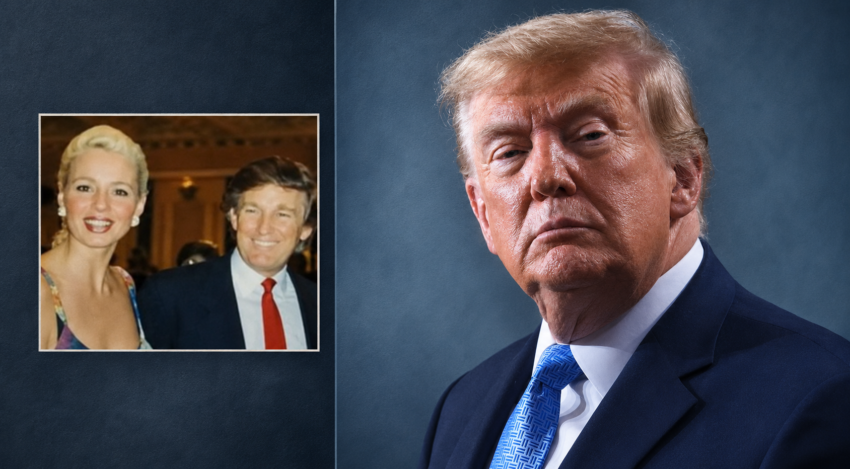
A report released by Democrats on the House Judiciary Committee has brought renewed attention to Beatrice Keul, a former Miss Switzerland contestant who says Donald Trump sexually assaulted her in 1993.
Keul’s account, as described in the report, includes an alleged assault at New York’s Plaza Hotel and a request afterward that she remain silent. Trump has denied the allegations. They have not been established in court, and Keul’s account has not been independently verified.
A pageant invitation to New York
Keul was 24 when she traveled from Switzerland to New York in November 1993 to take part in the American Dream Pageant, an event associated with Trump. She had previously competed in Miss Switzerland and hoped the trip might open doors in modeling.
According to the committee Democrats’ report, Keul said she met Trump at a pageant event at the Plaza Hotel. She recalled him offering to help her obtain a U.S. visa and gain admission to New York University.
Keul also said she met Jeffrey Epstein at the event. In her account, Epstein introduced himself as one of Trump’s close friends and invited her to a party at Trump’s Mar-a-Lago estate.
The report says Keul later received an invitation to meet Trump privately at the Plaza Hotel. Believing it could help her career, she went to his suite.
Former Miss Switzerland Beatrice Keul Alleges Donald Trump Raped Her at the Plaza Hotel in 1993 https://t.co/Eh0QqSeVwJ
— People (@people) October 27, 2026
What Keul alleges happened
Keul had spoken publicly about an encounter with Trump in 2024, describing unwanted touching and kissing. At the time, she said she had resisted him and managed to get away.
The 2026 report recounts a more serious allegation based on information Keul reportedly provided to committee staff. It says she alleged that Trump raped her in the hotel suite, leaving her with injuries. The report also describes her account of what happened afterward: Trump allegedly repeated his offers of help and told her to keep quiet, using the phrase, “The show must go on.”
These details are allegations, not findings by a court. The report was issued by Democrats on the House Judiciary Committee, and its conclusions have not been independently established.
Trump denies the allegation
Trump has denied the accusations. The White House rejected the report’s claims and characterized the report as politically motivated. Trump has not been charged in connection with Keul’s allegation.
The difference between Keul’s earlier public account and the more detailed account described in the 2026 report has also drawn attention. The earlier account described an unwanted encounter that she said she resisted; the later account, as summarized by the report, alleges rape. Keul’s account and the report’s description should therefore be treated with care and attributed clearly.
What the report does—and does not—establish
The report presents Keul’s account alongside other material collected by Democratic committee staff concerning Trump, Epstein and women who said they encountered them. Its publication does not by itself prove the allegations, establish criminal responsibility or amount to a legal finding.
The claims remain disputed. Readers should distinguish between what Keul alleges, what the report says, and what has been independently confirmed.
The renewed attention to Keul’s story has also reopened broader questions about the people and institutions surrounding Epstein. Any further conclusions will depend on reliable evidence, responses from those involved and, where applicable, legal proceedings.